Pope Leo to publish first encyclical responding to AI on 25 May


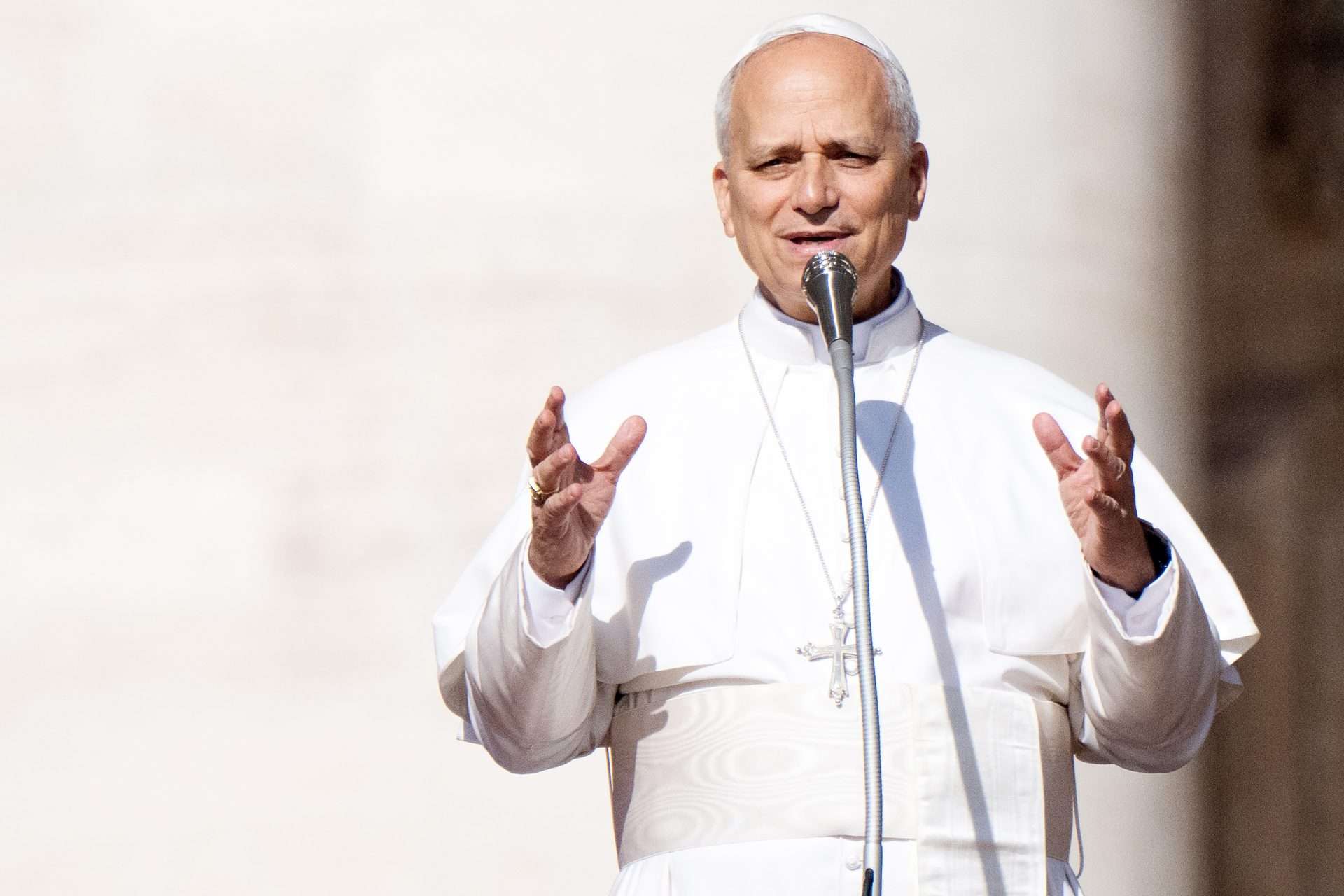
Pope Leo XIV chose his papal name in succession to the author of the social encyclical Rerum Novarum.
Catholic Church in England and Wales / Mazur
‘In this era of artificial intelligence, I encourage everyone to commit themselves to promoting forms of communication that always respect the truth of the human person.’
Pope Leo will publish his first encyclical on 25 May, responding to the challenges posed by artificial intelligence. The document is titled Magnifica humanitas, “on preserving the human person in the age of artificial intelligence”.
The Pope signed the encyclical on 15 May, 135 years to the day after the publication of the encyclical Rerum Novarum in which Pope Leo XIII responded to the Industrial Revolution.
In January, Pope Leo chose the theme “preserving human voices and faces” for World Communications Day on 17 May, and after praying the Regina Caeli on Sunday he referred to his appeal “to cherish the gift of communication as the deepest truth of humanity”.
“By simulating human voices and faces, wisdom and knowledge, consciousness and responsibility, empathy and friendship, the systems known as artificial intelligence not only interfere with information ecosystems, but also encroach upon the deepest level of communication, that of human relationships,” he said in his World Communications Day message.
He told pilgrims in St Peter’s Square: “In this era of artificial intelligence, I encourage everyone to commit themselves to promoting forms of communication that always respect the truth of the human person, on which every technological innovation should be focused.”
Last week the Pope approved the creation of an Interdicasterial Commission on Artificial Intelligence which will address the ethical challenges of AI and its “potential effects on human beings and on humanity as a whole”.
Cardinal Michael Czerny, the prefect of the Dicastery for Promoting Integral Human Development which will initially coordinate the new commission, announced its formation in a rescript published on 16 May.
The commission will include representatives from seven other departments of the Holy See: the Dicastery for Communication, the Dicastery for the Doctrine of the Faith, the Dicastery for Culture and Education, the Pontifical Academy for Life, the Pontifical Academy of Sciences and the Pontifical Academy of Social Sciences.
In his announcement, Cardinal Czerny emphasised the Church’s concern for “the dignity of every human person, especially in relation to their integral development”.
The new body will facilitate collaboration and the exchange of information on projects concerning AI, including policies on its use within the Holy See.
Preserve the ‘human’ amid challenge of AI, plead archbishops
Bishops back call to transform economy to protect dignity of labour
Stay updated — add us as a preferred news source on Google:


Help us keep The Tablet’s voice independent, clear and far-reaching.
Founded in 1840, The Tablet is the leading independent English-language Catholic weekly, celebrated for great writing, astute analysis, brilliant arts and books reviews and trustworthy reporting from correspondents in Britain, Ireland, Rome and across the world.
Independent, high-quality journalism is at the heart of what we do. The Tablet does not have deep pockets and we are not funded by rich donors. If you appreciate our work please consider supporting The Tablet’s Development Fund. It only takes a moment and you can cancel at any time.
- Support with £5 per month
- Support with £10 per month
- Support with other amount.

MOST READ ARTICLES
-
1
Pope returns to Vatican after hospital discharge
-
2
Diverse schools that are 100 per cent Catholic
-
3
Under endless skies
-
4
Battling confession fatigue
-
5
Nigerian bishop scorns suggestion of running in presidential election
-
6
Schismatic Spanish nuns strip contents of convent before eviction
FROM THE EDITOR'S DESK