What’s in a name? The ambiguity of Pope Leo’s choice


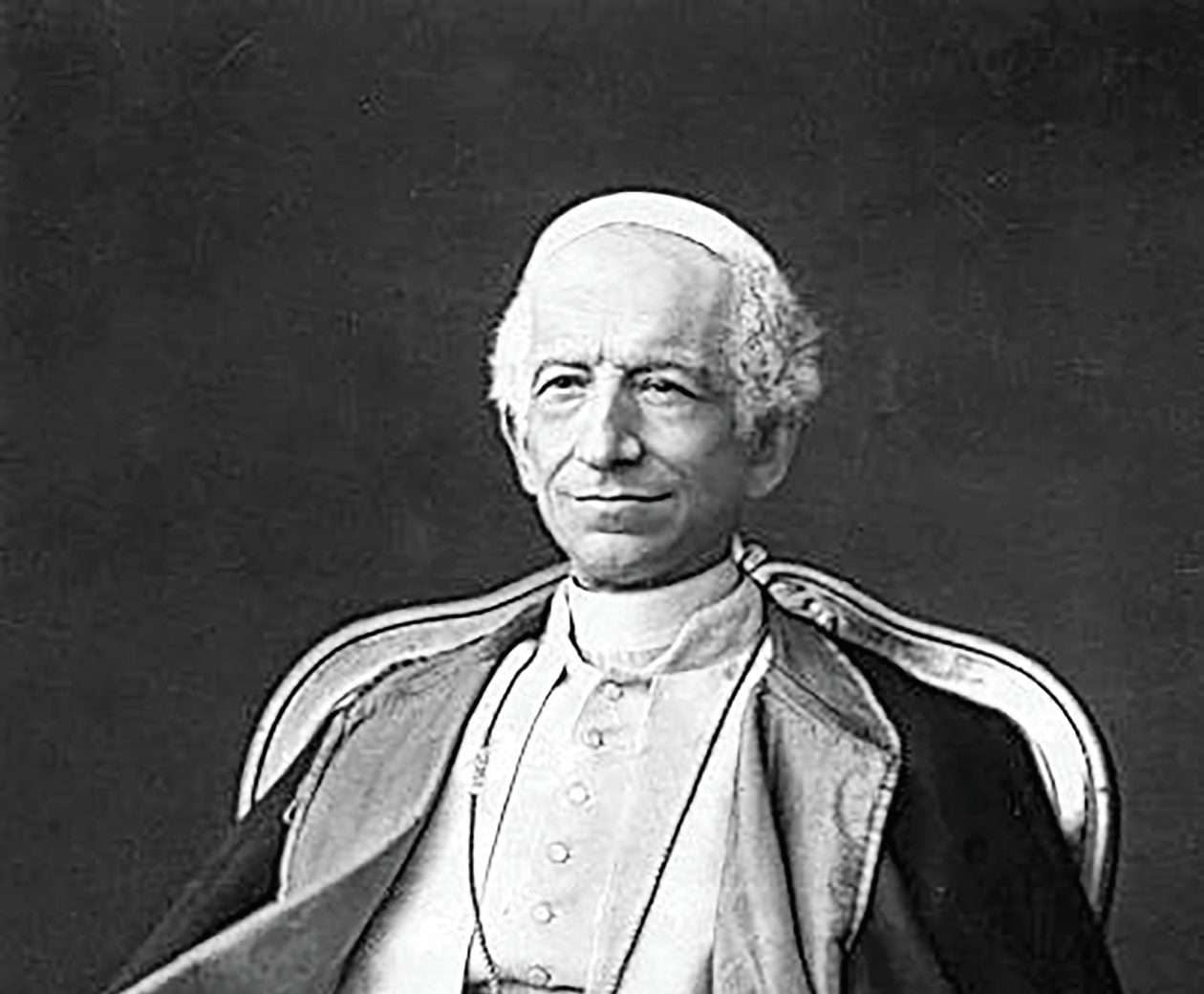
Leo XIII was elected in February 1878 as a stopgap pope. He lived for another 25 years.
Levan Ramishvili / flick
Gioacchino Vincenzo Pecci was hardly a conventional liberal. He might more accurately be described as an Ultramontane with a liberal face.
What should we read into the fact that after being elected pope, Cardinal Robert Francis Prevost chose the name Leo XIV? Commentators have eagerly fixed on Leo XIII’s celebrated 1891 encyclical decrying the evils of untrammelled capitalism, Rerum Novarum, as a signal that Leo XIV will share Pope Francis’ protectiveness towards the poor and distaste for neo-liberal economics. Speaking to the college of cardinals last Saturday, Leo said there were different reasons for his choice of name, but it was mainly because Leo XIII had addressed social questions in the context of the first great industrial revolution. “In our own day,” he told them, “the Church offers to everyone the treasury of her social teaching in response to another industrial revolution and to developments in the field of artificial intelligence that pose new challenges for the defence of human dignity, justice and labour.”
Get Instant Access
Continue Reading
Register for free to read this article in full
Subscribe for unlimited access
From just £37.50 quarterly
Print copy of The Tablet delivered directly to your door.
Complete access to all Tablet website content including all premium content.
Access to the weekly digital copy of The Tablet.
Full access to The Tablet’s archive – over 180 years of back issues.

Already a subscriber? Login

Help us keep The Tablet’s voice independent, clear and far-reaching.
Founded in 1840, The Tablet is the leading independent English-language Catholic weekly, celebrated for great writing, astute analysis, brilliant arts and books reviews and trustworthy reporting from correspondents in Britain, Ireland, Rome and across the world.
Independent, high-quality journalism is at the heart of what we do. The Tablet does not have deep pockets and we are not funded by rich donors. If you appreciate our work please consider supporting The Tablet’s Development Fund. It only takes a moment and you can cancel at any time.
- Support with £5 per month
- Support with £10 per month
- Support with other amount.

MOST READ ARTICLES
-
1
Pope returns to Vatican after hospital discharge
-
2
Diverse schools that are 100 per cent Catholic
-
3
Under endless skies
-
4
Battling confession fatigue
-
5
Nigerian bishop scorns suggestion of running in presidential election
-
6
Schismatic Spanish nuns strip contents of convent before eviction
FROM THE EDITOR'S DESK