Pope decries ‘moral imbalance’ prioritising war over humanitarian aid


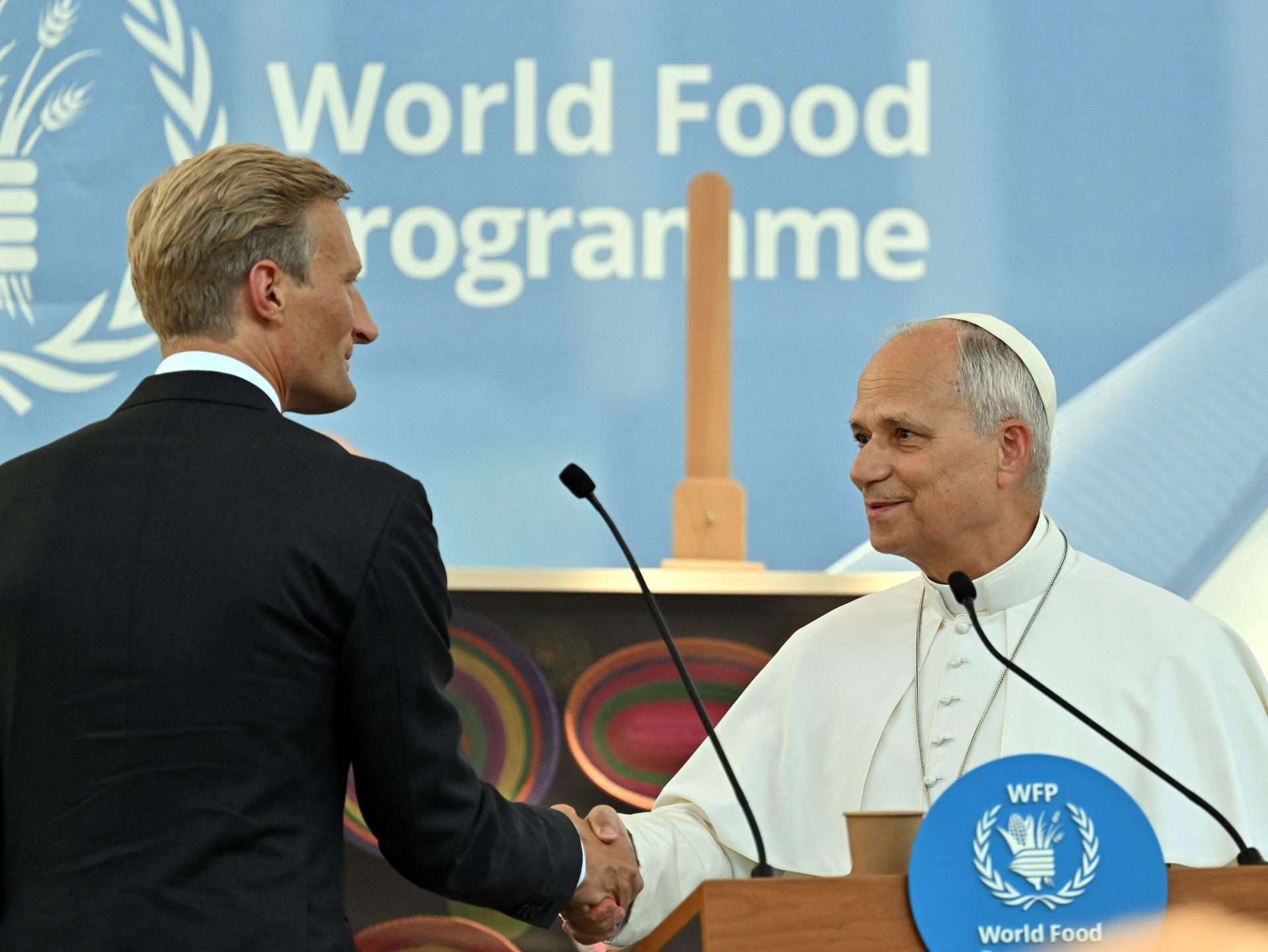
Pope Leo XIV and Carl Skau, Acting Executive Director of the World Food Programme, 22 June.
ALESSIA GIULIANI/Catholic Press/Alamy Live News
‘Unprecedented global productive capacity exists alongside expanding zones of extreme vulnerability. The same forces that drive economic growth often exacerbate exclusion and marginalisation.’
Food, water and healthcare cannot be “subordinated to market considerations or geopolitical interests”, said Pope Leo XIV during a visit to the headquarters of the United Nations World Food Programme in Rome yesterday.
The Pope praised the UN agency’s efforts to save lives in emergency situations and provide food assistance amid conflicts and natural disasters, which he said resonates with the Catholic Church’s mission to uphold human dignity and to foster fraternity.
“This raises a fundamental question: what configuration of the global order is capable of producing, reproducing and, at times, normalising such conditions?
“The issue is no longer limited to how to intervene; rather, it extends to understanding why the system constantly produces the very problems it is then forced to correct.”
“Consequently, states have increasingly allocated their resources towards national security, economic growth and domestic stability, disregarding the close link between these issues and multilateral cooperation.
Pope Leo warned against the “progressive bureaucratisation of solidarity” and the “quiet commodification of human life”, which mean that “the human person is no longer consistently placed at the centre of international action”.
He decried the prioritisation of weaponry and defence over humanitarian assistance: “Conflicts are ‘fed’ more readily than people are nourished. This reality reflects not only operational shortcomings but also a fundamental imbalance in political and moral priorities.
“It undermines the capacity of states and societies to build resilient institutions, provide effective education and foster sustainable economic development. In doing so, it perpetuates cycles of fragility that ultimately affect the broader international community.
He also encouraged the World Food Programme to continue working with the Catholic Church, which through parishes, dioceses, Caritas agencies, and other faith-based initiatives, often reaches vulnerable populations in areas inaccessible to international actors.
Caritas backs UN roadmap for ‘eradicating poverty beyond growth’
Pope Leo’s defence of human rights, social justice and multilateral dialogue welcomed
End global hunger, world’s biggest faith-based organisations urge
The high costs of cuts in overseas aid
Stay updated — add us as a preferred news source on Google:


Help us keep The Tablet’s voice independent, clear and far-reaching.
Founded in 1840, The Tablet is the leading independent English-language Catholic weekly, celebrated for great writing, astute analysis, brilliant arts and books reviews and trustworthy reporting from correspondents in Britain, Ireland, Rome and across the world.
Independent, high-quality journalism is at the heart of what we do. The Tablet does not have deep pockets and we are not funded by rich donors. If you appreciate our work please consider supporting The Tablet’s Development Fund. It only takes a moment and you can cancel at any time.
- Support with £5 per month
- Support with £10 per month
- Support with other amount.

MOST READ ARTICLES
-
1
Pope returns to Vatican after hospital discharge
-
2
Diverse schools that are 100 per cent Catholic
-
3
Under endless skies
-
4
Battling confession fatigue
-
5
Nigerian bishop scorns suggestion of running in presidential election
-
6
Schismatic Spanish nuns strip contents of convent before eviction
FROM THE EDITOR'S DESK