Caritas backs UN roadmap for ‘eradicating poverty beyond growth’


Eric D Ricochet/Alamy
‘We call on political leaders at all levels to listen to those most affected and to treat the end of poverty, the reduction of inequalities and the effective realisation of human rights as the measure by which economic policy should be judged.’
Representatives of Catholic charities Caritas Europa and Caritas Internationalis are among the signatories of a roadmap for how to eradicate poverty and reduce inequality without relying on GDP growth as the “primary condition for progress”.
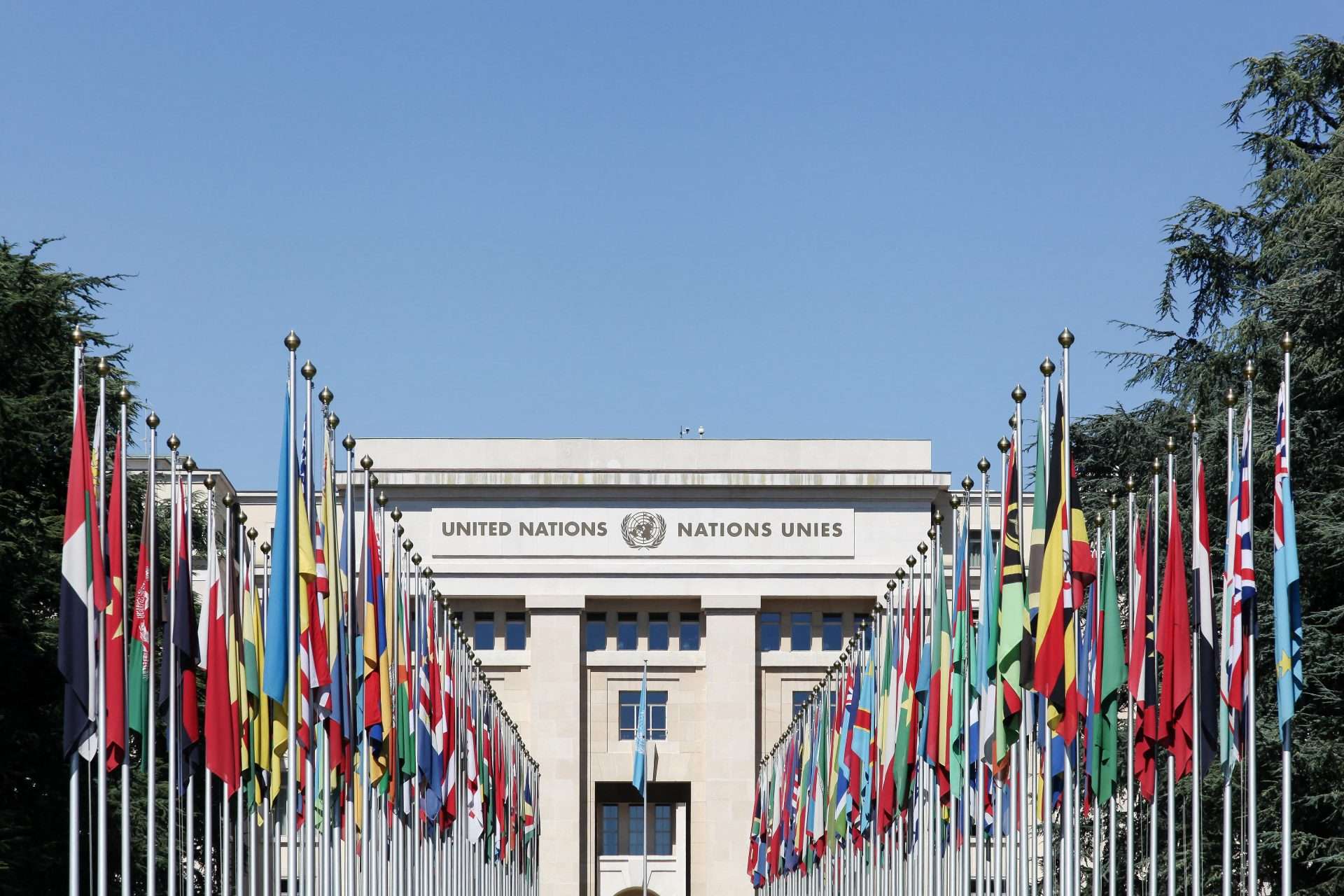
The roadmap, which was developed by UN agencies, academics, trade unions, policymakers, and civil society from across the world, will be presented to the 62nd session of the United Nations Human Rights Council on 25 June.
“We live in an age of manufactured scarcity,” said Olivier De Schutter, who started the New Economies for Eradicating Poverty initiative during his term as UN Special Rapporteur on extreme poverty and human rights, in an open letter published in The Guardian, Le Monde, and El Pais and signed by economists Joseph Stiglitz, Kate Raworth and Jason Hickel as well as hundreds of other experts.
“In a world richer than ever before, roughly one tenth of the world’s population still lives in extreme destitution,” De Schutter continued. “Millions of people cannot afford enough food, proper housing or basic healthcare, while a tiny minority accumulates unprecedented wealth and power.
“At the same time, droughts, megafires, floods and heatwaves remind us that our economies are pushing the planet beyond its limits. These are not separate crises. They are symptoms of an economic model that has reached the end of the road.
“Poverty and inequality are not accidents; they are predictable outcomes of policy choices: how we design tax systems, regulate labour markets, value care, structure public services and decide whose needs and whose voices matter.
“For decades, the recipe was simple: grow the economy, and poverty would gradually disappear. But the promise that economic growth would ‘lift all boats’ has not been kept. While national incomes expanded, wages stagnated, work became more precarious and public services were cut.
“The real question today is not whether growth continues, but what kind of economies we are building, who they serve and whether they allow everyone to live in dignity within planetary boundaries.”
The roadmap, which was adopted in April at the International Labour Organisation in Geneva, under the mandate of the UN Special Rapporteur and the ILO’s Global Coalition for Social Justice, proposes policy measures for building a global economy that puts human rights, ecological justice, and participatory governance at the centre.
It identifies key drivers of environmental damage: wealthy populations consuming more than their share, production systems that extract resources without regard for sustainability, land and resources controlled by the few rather than the many, and markets that push environmental costs onto poorer communities and future generations.
It calls for rebuilding the economic system by placing limits on resource use and emissions, curbing wasteful and luxury consumption, and shifting to circular and low-impact modes of production and consumption.
Poverty eradication and ecological sustainability are inseparable, it says: unless the climate is stable and ecosystems are protected, gains in health, food security, housing, and livelihoods cannot be sustained.
In addition, strategies that depend on economic growth have proven unreliable in preventing deprivation: even in growing economies, basic needs remain unaffordable or inaccessible to many people around the world.
The roadmap also notes that commodifying and privatising essential services has resulted in households suffering from insecurity and volatile prices, which has deepened inequality and undermined social cohesion.
Instead, essential services such as healthcare, housing, water and digital connectivity should be regarded as legal entitlements grounded in human rights.
The roadmap also suggests that governments support purpose-driven and mission-oriented enterprises, steering labour and investment toward sectors that are both socially useful and ecologically sustainable.
These include care, health, education, food systems, public services and ecological restoration, as well as supporting just transitions for workers and communities who need to pivot into another sector.
Governments should also encourage companies to give employees and communities a say in how they are run: this would involve strengthening freedom of association, collective bargaining, workplace democracy and labour rights in global supply chains.
The roadmap also calls for governments to enforce limits to wealth and income concentration, so that surplus resources are channelled into universal services, social protection, and ecological sustainability.
“Governments and multilateral institutions have a choice: double down on a failing growth-first model or commit to eradicating poverty by transforming the economic rules that produce it,” De Schutter concluded.
Stay updated — add us as a preferred news source on Google:


Help us keep The Tablet’s voice independent, clear and far-reaching.
Founded in 1840, The Tablet is the leading independent English-language Catholic weekly, celebrated for great writing, astute analysis, brilliant arts and books reviews and trustworthy reporting from correspondents in Britain, Ireland, Rome and across the world.
Independent, high-quality journalism is at the heart of what we do. The Tablet does not have deep pockets and we are not funded by rich donors. If you appreciate our work please consider supporting The Tablet’s Development Fund. It only takes a moment and you can cancel at any time.
- Support with £5 per month
- Support with £10 per month
- Support with other amount.

MOST READ ARTICLES
-
1
Polish bishop convicted for failing to report abuse in unprecedented trial
-
2
The Cardinal Hume Centre: ‘Each person matters’
-
3
Church charities welcome Budget but say more needs to be done
-
4
Novel of the week
-
5
Taking colour to new heights: Renaissance whirls of blues and pinks
-
6
Bishops engaged in ‘synodal charades’, reform groups warn Vatican
FROM THE EDITOR'S DESK