News Briefing: Church in the World


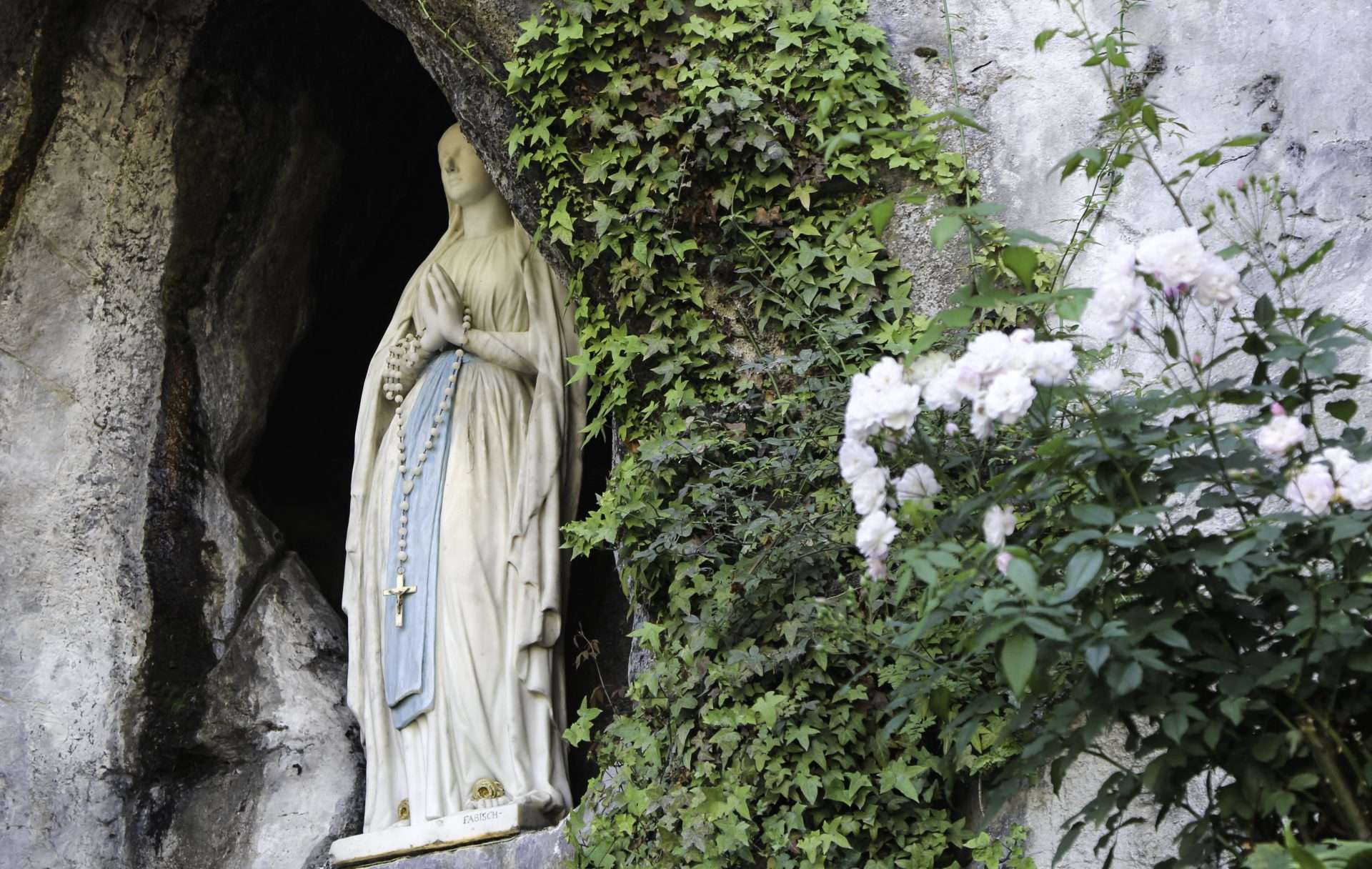
The image of the Immaculate Conception at the grotto in Lourdes, where the International Medical Committee has declared the shrine’s seventy-second miracle.
Fr Lawrence Lew OP / flickr | Creative Commons
Caritas Africa, the Association of Member Episcopal Conferences in Eastern Africa and Caritas Internationalis were among the signatories of a statement on 15 April marking two years of the conflict in Sudan, alongside the All Africa Conference of Churches, the World Council of Churches and the ACT Alliance humanitarian group.
They said the anniversary – which saw international actors meet to discuss the crisis at a ministerial conference in London – must be “a watershed moment for concerted action to protect civilians and first responders”.
Christian Modino Hok, the humanitarian director at Caritas Internationalis, told The Tablet that the attention of the conference was “very welcome” but said such meetings must not “become one talk show that happens every now and then”. He said humanitarian support was “completely underfunded”, while the displacement of the Sudanese population had become “a regional crisis”.
Alistair Dutton, the secretary general of Caritas Internationalis, said Sudan “demands urgent and unwavering attention from the international community”.
Bishop Dominic Kimengich of Eldoret said corruption had reached “saddening levels where Kenyans have to buy jobs and those in positions are using public offices to amass for themselves”, in his Palm Sunday homily.
“If we continue going that way, we are just destroying our country,” he said, asking: “Where will the poor go and who will stand for them?” He called for tax revenue to be used to provide public services and generate jobs in the public sector, and called for action to end insecurity which is still a major problem in Kerio Valley with the re-emergence of banditry.
“The government should not allow a few people to take us back with killing of innocent people,” he said. At least 10 people have been killed in the region in the past two months, and the insecurity had had devastating economic and social consequences.
Bishops call on government to pay debts to Kenya’s Church-run hospitals
Kenyan bishops clash with government over corruption charges
The Zimbabwe Council of Churches (ZCC) warned that what they called a “restrictive civic environment” threatens fundamental rights.
In a statement dated 13 April, issued to coincide with Holy Week and Independence Day commemorations on 18 April, they addressed the country’s increasing economic hardship and a deteriorating human rights situation. In recent months, journalists and members of the public have been imprisoned on charges of undermining the president and threatening the rule of law. Human rights and pro-democracy activists say these arrests reveal a disturbing trend of human rights abuses.
The ZCC said these developments go against the spirit of the country’s constitution and appealed to the country to renew its commitment to “peace, social justice and human rights for all citizens”.
Catholic bishops in southern Africa could develop a new approach the growing number of traditional healers, known as “Sangomas”, even considering admitting them to Holy Communion.
“Ubungoma is the system through which our people were healed, and received several other ways of assistance,” said Fr Thulani Joel Skhosana, a member of the Theological Advisory Committee of the Southern African Catholic Bishops’ Conference (SACBC), which began research on Ubungoma, or traditional healing. He said it was critical to find a way of addressing the issue, given the surge in the number of people practising traditional healing.
“Many people are becoming Esangoma, not only the elderly but even the youths. It is also across racial lines because we have also seen white people becoming Esangoma,” Fr Thulani said.
Research could lead to new Church approach to traditional healers
The SACBC expanded its campaign against trafficking to schools to raise awareness about the emerging regional threat from gangs. The southern African region has faced increasing cases of human trafficking as people affected by economic hardships fall prey to crime syndicates.
Last week, the SACBC’s Migrants, Refugees and Human Trafficking Office took its campaign on the road to meet with various stakeholders on the border with Lesotho. The delegation “observed the movement of immigrants, risking their lives in search of better opportunities”, it reported, and visited schools where to speak about the dangers of human trafficking.
“In one of the schools, particular attention was given to the challenge of students lacking proper documentation,” the office said.
South African bishops called for reforms in the country’s alcohol sector to help quell social ills fuelled by alcohol abuse. They said South Africa has a “harmful relationship with alcohol, characterised by high levels of binge drinking, poor regulation, and devastating social consequences”. \
They made the appeal as the country observed April as Alcohol Awareness Month, with campaigners blaming alcohol for high levels of fatal road accidents, gender-based violence, femicide and a host of wider problems.
“Research has clearly shown a strong link between alcohol abuse and gender-based violence and crime in general,” said Bishop Thulani Mbuyisa of Mariannhill to mark April as an opportunity to reflect on the country’s relationship with alcohol.
“Moreover, we need to change our behaviour. But there’s also a need to review and reform our current laws. We must question the ease of access to alcohol even for underage youth. This is a huge challenge in our country,” Bishop Mbuyisa said.
South African church leaders urge president to act against poverty
Human rights threatened in South Africa, warns bishop
Catholic Commission for Justice and Peace (CCJP) coordinators under the Inter-Regional Meeting of the Bishops of Southern Africa (IMBISA) called for an ecumenical and interfaith approach to address regional challenges. This call followed a workshop on 10 April where they expressed their commitment “to speak truth to power”.
A statement from the CCJP representatives from IMBISA said: “The Church is also being called to unite as one body in speaking truth to power, challenging the structures of sin in the building and consolidation of homegrown solutions in peace building and conflict resolution.”
The meeting addressed a number of subjects including civil conflicts, disputed elections and human rights abuses.
“Conflicts are complex in their genesis, make-up, drivers, and evolution, but all with dire consequences on the vulnerable members who form the majority of our community of IMBISA. Ecumenical and interfaith efforts with bodies like the Fellowship of Christian Councils in Southern Africa (FOCCISA) need to be pursued vigorously,” they said.
“Deliberate efforts should be made to realise collaborations with regional bodies. Peace needs to be pursued from the political, social, and economic fronts.”
Bishop Paul Lontsie-Keune of Bafoussam, in Cameroon’s West Region, warned voters not to make an error in their choice for president in the election later this year. Cameroonians are scheduled to vote in October, with the country’s 92-year-old President Paul Biya expected to seek an eighth mandate.
Addressing thousands of Christians at a recent pilgrimage at the Our Lady of Maria Sanctuary in Douelong, Bamougoum, the bishop called on them to register and vote as part of their Christian duty. He warned that choosing the wrong candidate could lead to a lifetime of regret, and urged voters to resist all forms of intimidation and attempts at vote-buying, and to vote their consciences.
Many bishops have urged President Biya to step aside, but with the likelihood the president will seek another mandate many have encouraged Christians to vote for a candidate with quite different characteristics. In a recent pastoral letter, the Cameroonian bishops talked about the need to elect someone who still has the energy to travel to all parts of the country – something Biya cannot do.
Cameroon archbishop urges 91-year-old president not to seek re-election
Bishops accuse Cameroon government of ‘plundering’ economy
Theologians at a seminar in the Ghanian capital Accra charted a new vision for the Church in Africa over the next 25 years. Organised by the Symposium of Episcopal Conferences of Africa and Madagascar (SECAM), the event reflected on the future of the Church on the continent under the theme: “Vision of the Church-Family of God in Africa and its Islands for the Next 25 Years: 2025-2050.”
Fr Alfred Bebodu, SECAM’s deputy secretary general responsible for its evangelisation commission, opened discussions by observing that Africa is “a continent brimming with youthful energy, cultural richness, spiritual depth, and a growing Christian population”, but a continent that also faces “enduring challenges: political instability, poverty, environmental degradation, and cultural shifts”.
Participants discussed a broad range of themes, each representing a major priority of the Church’s journey for the next 25 years. These included evangelisation, formation, justice, peace and integral human development, climate and environment, ecumenism and inter-religious dialogue, as well as technology and digital evangelisation.
Holy Week in Nicaragua, traditionally one of the high points of public celebration, was again subject to restrictions by the authorities, as it has been for the past three years.
The government of Daniel Ortega and Rosario Murillo banned processions in the streets, confining them to the interior of churches or their gardens or immediate precincts. In the capital Managua, the Palm Sunday procession took place in the gardens of the cathedral. In the northern diocese of Granada churches were closed early on Holy Thursday, preventing the adoration of the Blessed Sacrament in the altar of repose.
The former student leader now exiled in Miami, Yubrank Suazo, said: “This is a direct attack on the faith of thousands of Catholics who gather to adore and accompany Jesus in his agony. Just as Christ was persecuted, so is the church in the Diocese of Granada today, in a country that insist on living its faith in the midst of repression.”
The Managua authorities encouraged people to go to the beach rather than churches, organising events to attract visitors.
Nicaraguan regime attacks ‘depraved’ Vatican after Álvarez interview
Prayers for Nicaragua on patronal Feast of the Immaculate Conception
Religious and community leaders, indigenous leaders, and climate activists, gathered for meetings in Brasília in late March and brought solar panels and a giant banner to the Ministry of Foreign Affairs to lobby in advance of COP30, the 2025 United Nations Climate Conference. Ashes from the wildfires in the Amazon were used to create the thirty-foot banner with the words, “Brazil, lead the just energy transition at COP30”.
Organised by the Brazilian bishops’ conference, the Latin American Episcopal Conference (CELAM), Caritas Internationalis, Lutheran World Federation, World Council of Churches, ACT Alliance, Christian Aid, and Anglican Alliance, the event amplified the voices of vulnerable communities and promoted solutions encompassing environmental justice, equity, and human rights. COP30 will take place in Belém, within the Diocese of Amazonia in northern Brazil, in November.
The diocese has promoted indigenous rights and care for creation, bearing witness first-hand to the effects of climate change and destructive environmental practices that will be discussed at COP30. During a prayer service at the Anglican Cathedral of Brasília, faith leaders emphasised the urgency of confronting the climate crisis and the role of faith in inspiring action.
On the last day of the meeting, the delegation welcomed Marina Silva, Brazil’s Minister for the Environment and Climate Change, who was presented with the “Call to Action”. The message emphasised the need for commitments at COP30 to transition to renewable energy, phase out fossil fuel subsidies, and support sustainable development.
A federal judge in North Dakota ruled that 9,000 Catholic employers are exempt from a United States government rule requiring them to make accommodations for employees seeking abortions or fertility treatments that violate Church teaching, and to refrain from any speech related to gender identity that is viewed as harmful by an employee.
The federal Equal Employment Opportunity Commission had declined to grant religious organisations an exemption when it promulgated the rules enforcing the 2022 Pregnant Workers Support Act. The lawsuit seeking the exemption was brought by the Catholic Benefits Association, which provides insurance to Catholic employers, and the Diocese of Bismark, North Dakota.
After the ruling, Bishop David Kagan of Bismark said: “The court has upheld our religious freedom rights and that is all we ever wanted.” Inimai Chattier, a spokesperson for a group which opposed the exemptions, called the ruling “part of a broad trend of attacks on women’s rights and reproductive freedom”.
The Washington state legislature approved a bill that would make members of the clergy “mandatory reporters” of child abuse or neglect, meaning they must report suspected or known abuse or neglect to police.
The bill, as passed, makes no exemption for the seal of the confessional, potentially placing Catholic clergy in the position of having to choose between canon and civil law. The Washington Catholic Conference, which represents the three dioceses in the state, opposed the legislation.
“The majority of states that include clergy as mandatory reporters include an exemption for confidential communications, demonstrating that the states’ interests in child protection can be achieved without violating the right to free exercise of religion,” the bishops said.
State Senator Noel Frame, a survivor of child sexual abuse and one of the bill’s sponsors, defended the bill, saying: “Members of the clergy play such an important role in the lives of children, like teachers and doctors do, and just like those other trusted adults, clergy should be mandatory reporters.”
Other legislators warned the bill was “an attack on the Catholic and other faiths”. The bill now goes to the Democrat Governor Bob Ferguson who has not indicated whether he will sign it into law.
The Rise and Fall of Catholic Confession in America
When should the seal be broken?
Bishop Timothy Senior of Harrisburg, Pennsylvania condemned an arson attack on the governor’s residence as an “heinous act”. Governor Josh Shapiro, who is Jewish, had celebrated a Passover seder with his family and guests earlier that night.
“Our prayers are with the Shapiro family and their guests, whose faithful observance of the sacred tradition of their faith was grievously violated by this act,” Senior said. “We Christians must stand in solidarity with our Jewish brothers and sisters in all circumstances, but especially this year as the observance of the days of Passover coincides with the most sacred days of the Christian Liturgical calendar, Holy Week, the week leading us to our Easter celebration.”
Bishop David Zubik of Pittsburgh also condemned the attack, saying: “We must be deeply grateful that Governor Shapiro and his family are safe, and we must also pray for an end to violence, which goes against everything good about us as human beings.”
The QS Top Universities report ranked the University of Notre Dame, Indiana as the top theology department in the world. The school, which has won the award four of the past six years, beat the universities of Oxford, Harvard, Cambridge and Duke for the top honour.
In addition to being recognised by scholars for its research, more than 800 students at Notre Dame select theology as either a major or minor field of study. The only two other Catholic universities to make the top 15 in the ratings were the Jesuit-run Boston College and KU Leuven in Belgium.
Catholic universities in strong position to advocate for academic freedom
The importance of tolerance and acceptance at universities
Korean bishops appealed for unity ahead of South Korea’s presidential elections on 3 June following the removal of impeached President Yoon Suk Yeol. The impeachment has polarised politics over the past four months.
The president of the bishops’ conference Bishop Matthias Ri long-hoon of Suwon, said citizens “must choose a leader who deeply understands that presidential power is power delegated by the people, power in service to the people, and who has the attitude and will to sacrifice at all times to protect the lives and property of the citizens”.
Yoon denied on 14 April that he had committed insurrection, as he appeared in court for the opening of a criminal trial over his December martial law declaration. Pax Christi Korea welcomed the Constitutional Court’s decision to uphold the impeachment, affirming “the decisive and courageous action of the National Assembly as a decisive victory for democracy, justice and the rule of law in South Korea”.
Catholics in the Diocese of Mandalay celebrated Palm Sunday Mass amid the rubble left by the earthquake that struck Myanmar earlier this month.
Fr John Kyaw Thu Ya, parish priest of Our Lady of Lourdes Church, a historic church in the diocese that was completely destroyed in the earthquake, gathered the community in front of its ruins. “The church has been destroyed, but the faith of the baptised is firm,” he said, “it is like the house founded on the rock”.
The rites of Holy Week were celebrated outside many churches in the diocese. In his Easter Vigil homily, Cardinal Charles Maung Bo of Yangon said: “Beneath the ashes of war, displacement, devastating natural disasters and grief, we declare a bold truth that echoes from the empty tomb – the stone has been rolled away. The Lord is risen. And hope is alive!”
Bishop John Mung Ngawn La Sam of Myitkyina, celebrated Palm Sunday Mass in St Columban’s Cathedral, Kachin, encouraging the faithful “not to despair”. He said that “the Lord Jesus is always with us” and particularly “with the internally displaced persons suffering today”.
The death toll from the devastating 7.7 magnitude earthquake that struck Myanmar on 28 March has reached 3,726, with over 5,105 injured and 129 still missing, according to official figures.
Cardinal Bo describes ‘crushing anxiety’ in Myanmar after earthquake
Church bombed as Myanmar junta continues attacks after earthquake
A Catholic organisation urged the Sri Lankan government to launch a fresh investigation into the 2019 Easter Sunday bombings, saying the real perpetrators are yet to be identified. Six years on, and despite three governments promising thorough inquiries, the victims and families still await justice, said the Oblate Centre for Society and Religion in Colombo.
Fr Rohan Silva, the centre’s chair, said on 16 April that a 13-page document detailing overlooked evidence has been sent to the Public Security Secretary, with copies to the Acting Inspector General of Police and the Director of Crime Bureau. “All those responsible for the attacks must be identified, and justice must be delivered to the victims without further delay,” Silva said.
The coordinated attacks on 21 April 2019 targeted churches and luxury hotels, killing 276 people and injuring 500 others. Over the past six years, Cardinal Malcom Ranjhirth has regularly accused authorities of a coverup. He claimed that the former president, intelligence units and the police concealed details of the impending attacks despite having prior knowledge and thereby failed to ensure public safety.
Syria’s 300,000 Christians celebrated Easter amid tight security as they marked their first major feast under the new Islamist-led government.
“This year, we were able to celebrate the Holy Week like we used to,” said Fr Firas Lutfi, head of the Latin community in Damascus. “There’s been security cooperation with the new leadership, and a real effort to keep Christians safe during the holidays.” He described coordination with authorities as “high-level”, and noted that families attended services in good numbers.
A similar festival mood prevailed in ceremonies in other Syrian cities like Aleppo and Homs. Yet, the atmosphere was fragile and family festivities were reduced because of economic hardship and the legacy of war.
Save the Children warned last week that more than 400,000 Syrian children are at risk of “severe malnutrition” after the US suspended aid, forcing the charity to slash operations in the country. The suspension has “forced the closure of one third of Save the Children’s life-saving nutrition activities” across Syria, the charity said.
After 14 years of brutal conflict, an estimated five million children in Syria are living in high-risk areas where landmines and unexploded ordnance threaten every step they take outside their homes, the charity said.
Rebuilding Damascus – the liberation of Syria
The former private secretary to Pope Benedict XVI, Archbishop Georg Gänswein, expressed his frustration at being sent away from the Vatican. He told the German daily BILD-Zeitung: “I was practically driven out of the papal court.”
Pope Francis’ decision in 2023 to send him back to his native Freiburg was a shock, he said, and he hadn’t understood it. “In the past it was always the case that a pope’s secretary was given another role, ideally even made a cardinal. I was told, ‘You’re going back to Freiburg’ … I accepted my expulsion in the context of the promise a bishop makes to serve the Pope in reverence and obedience.”
Archbishop Gänswein is apostolic nuncio to the Baltic states, based in Vilnius.
Humorous TikTok videos of life inside a Benedictine convent proved surprisingly popular in a diocese in Lower Saxony, with none of the negative responses the initiators expected. Instead, said the Diocese of Osnabrück’s social media manager Urs von Wulfen, they are quickly getting a million clicks when nuns answer viewer’s questions about life behind the off-putting walls.
“People find this life fascinating, because it’s a provocation,” said Wulfen, a deacon who sometimes dances in videos in priestly garb, speaking to the Archdiocese of Cologne’s domradio.de.
“Can you have a cell phone? Are you allowed out of the convent? Can you sometimes put on different clothes? Do you have vacation?” were typical questions, he said. The nuns answer even clueless questions about the cloistered life with humour, he added. “People don’t think that nuns can be like that,” he said. “They ask all sorts of questions about life in a monastery.”
Wulfen said the Church should better understand the culture that young people live in if it want to attract them. “If people make funny videos there, we have to go along with it to a certain extent,” he said. “We get very little hate in the comments – at least when it comes to the nuns,” Wulfen noted. “The situation is different for the Catholic Church when it comes to other topics.”
The smartphone apostolate of the influencer priests
French Church ponders response to record Easter baptisms
A hapless thief trying to rob the offertory box in a Bavarian church was thwarted when an alarm went off and two women outside barred the doors with a shovel to lock him in. The women quickly called the police to come promptly to the Church of Saints Peter and Paul near Immenstadt, close to the Austrian border.
“During his arrest, the suspect was wearing the priest’s stole, attempting to deceive the patrol,” a police statement said. But his behaviour told the officers they were probably not looking at a cleric. According to the report, he then tore a golden cross from the altar and attempted to set fire to a prayer book. Arresting him, the report continued, police found other stolen goods on his person.
The Marian Shrine at Lourdes in southern France recognised its seventy-second miracle, an Italian woman apparently healed of her primary lateral sclerosis after bathing at the pilgrimage site in 2009.
Antonietta Raco, now 67, had been treated at Turin’s university hospital for several years prior to her Lourdes visit for her motor neurone disease, which slowly destroys muscles and had already led to some paralysis in her left side. She was brought to the shrine in a wheelchair, suffering also from painful headaches, cramps and great fatigue.
After bathing in Lourdes water, she said she felt an “unusual feeling of well-being” and thought she could walk again. Within a few months of returning home, all her symptoms had unexpectedly disappeared. She returned to Lourdes the next year and reported her case to the International Medical Committee there, which began the long process of studying it to rule out any known medical healing.
The international team of doctors described her healing as “unexplained” in 2017, and in November 202, they voted overwhelmingly to recognise her healing as “unexpected, complete, lasting, and unexplained”, the four essential criteria required for a certified miracle cure.
Jack Traynor and the Lourdes effect – beyond the forces of nature
Polishing the rock of Massabielle
Stay updated — add us as a preferred news source on Google:


Help us keep The Tablet’s voice independent, clear and far-reaching.
Founded in 1840, The Tablet is the leading independent English-language Catholic weekly, celebrated for great writing, astute analysis, brilliant arts and books reviews and trustworthy reporting from correspondents in Britain, Ireland, Rome and across the world.
Independent, high-quality journalism is at the heart of what we do. The Tablet does not have deep pockets and we are not funded by rich donors. If you appreciate our work please consider supporting The Tablet’s Development Fund. It only takes a moment and you can cancel at any time.
- Support with £5 per month
- Support with £10 per month
- Support with other amount.

MOST READ ARTICLES
-
1
Pope returns to Vatican after hospital discharge
-
2
Diverse schools that are 100 per cent Catholic
-
3
Under endless skies
-
4
Battling confession fatigue
-
5
Nigerian bishop scorns suggestion of running in presidential election
-
6
Schismatic Spanish nuns strip contents of convent before eviction
FROM THE EDITOR'S DESK