Kukah: ‘theatre of lies’ sustains Nigerian security crisis


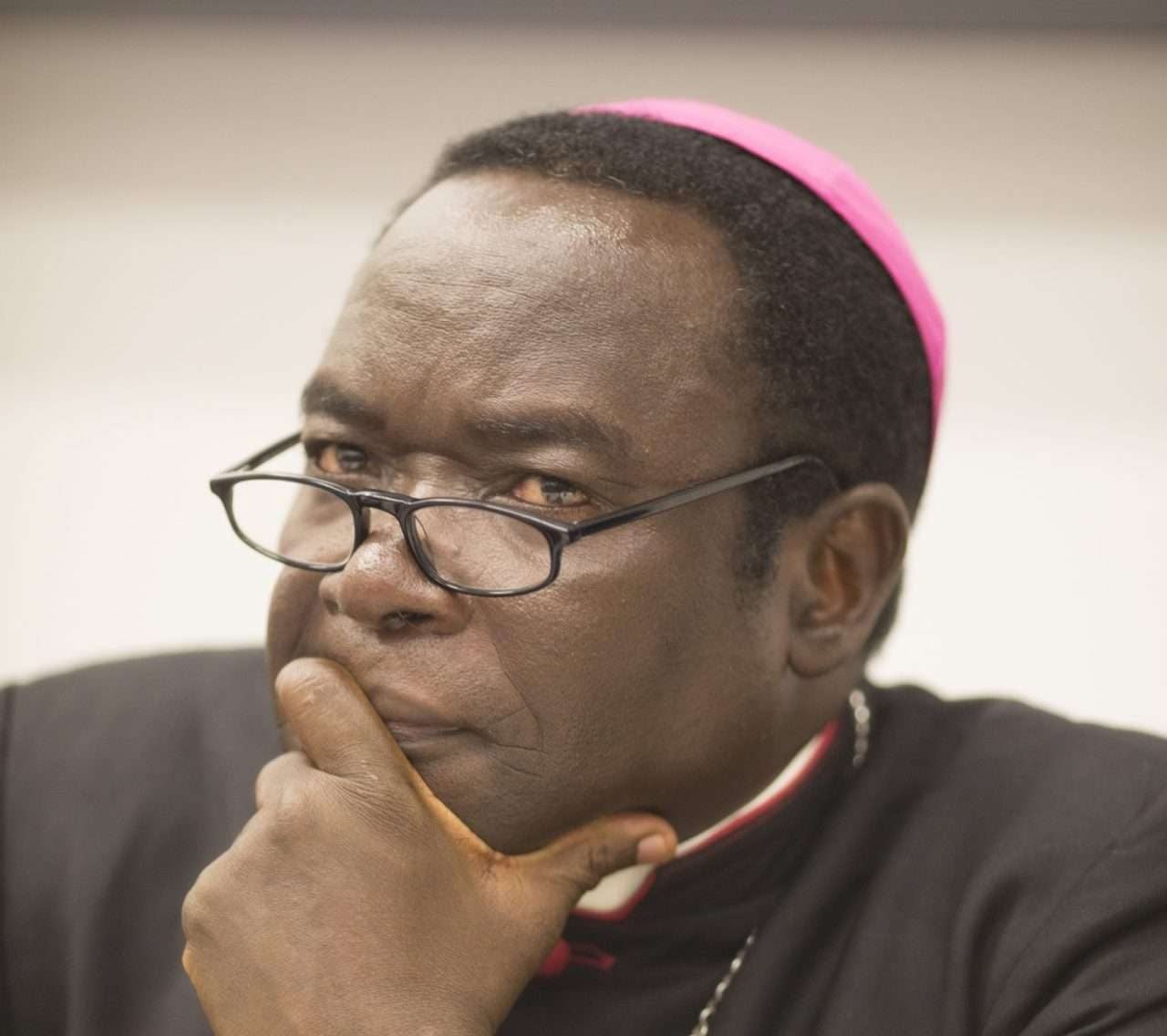
‘The problem is not religion interfering in politics, but politicians disobeying what they hear in churches and mosques,’ said Bishop Kukah.
ACN
Bishop Kukah said last month’s abduction of over 170 worshippers in Kaduna State exposes Nigeria’s broken crisis management system and a deep credibility deficit.
The Bishop of Sokoto Matthew Hassan Kukah described Nigeria’s worsening insecurity, governance failures and identity politics as a “theatre of lies” sustained by denial, lack of trust and systemic hypocrisy.
Speaking on Eagle 102.5 FM radio station in Lagos last week, Bishop Kukah argued that Nigeria’s security crisis is not fundamentally about religion but about moral disobedience, state failure and the erosion of trust between government and citizens. He warned that the country is normalising collective humiliation.
The bishop recalled that his doctoral research, published in 1993 as Religion, Politics and Power in Northern Nigeria, anticipated the dangerous intersection of faith and governance.
“Religion comes before politics. The pulpit comes before the political podium. The problem is not religion interfering in politics, but politicians disobeying what they hear in churches and mosques,” he said.
According to Kukah, places of worship are meant to function as “filling stations” for moral values, equipping citizens with the ethics required to build a just society. Where conflict exists, he said, it is the result of citizens abandoning those values once they leave the pulpit: “Wherever you see conflict, it is a conflict between obedience and disobedience.”
Kukah said last month’s abduction of over 170 worshippers in Kaduna State – which authorities initially dismissed as a false report – exposes Nigeria’s broken crisis management system and a deep credibility deficit.
“Something happened. People were abducted in a church. Government preferred denial. The church insisted it happened. That triangle of lies and truth explains why Nigeria is where it is,” he said. “You cannot be embarrassed about the injury or death of Nigerian citizens. Covering wounds does not heal them. It only shows in the way you walk”.
He warned that security agencies’ instinct to suppress bad news in order to “look good” has worsened public distrust. Dismissing official statements about “kinetic and non-kinetic strategies” as empty jargon, he said no one has clearly explained what those terms mean, while kidnappings continue unchecked.
“I’m sure I’ll be surprised if somebody doesn’t name their child kinetic because everywhere you talk, the security agencies say, oh, we are employing kinetic and non-kinetic methods of … Nobody has explained to us what kinetic and non-kinetic are.”
“How do you move 170 adults in Nigeria today and say you are looking for them? In the Arizona desert, a rat cannot move without being detected,” he continued.
“But I think, finally, it is to make the point that just yesterday we were talking about Papi, where all these children were kidnapped, and were kept somewhere. And then they came out looking as if they had just come back from a camp. They had returned to us. We are all celebrating. That seems to have gone now.
“The question to ask ourselves is, how is it possible to move a hundred and seventy-something adults in a country like Nigeria, for goodness sake? How do you explain that? And now we are hypocritically saying we are trying to locate these people.”
Kukah demanded: “Name one African country where you say that they kidnapped ten people today, twenty people tomorrow, ten people. What really is going on? And then tomorrow these guys are going to come back, and we’ll all break into dance and celebration, rejoicing that only to wait for the next situation.
“This theatre would have been amusing if it weren’t about life and death. So, it’s shameful, it’s disgraceful, it’s embarrassing. No Nigerian, whether in office or out of office, can find an excuse for this collective humiliation. The international community is looking at us. People are reading all these stories on a daily basis.”
The same week, Governor Alhaji Ododo Ahmed Usman of Kogi State in North Central Nigeria ordered the indefinite closure of churches in rural communities across five local government areas threatened by renewed terrorist activity.
In an instruction addressed to traditional rulers of over two hundred communities, the governor “directed that all worship centres outside the local government headquarters should be closed down indefinitely” and warned “that any worship centre that fails to heed this directive shall face appropriate sanctions. Such sanctions shall include dethroning the traditional rulers of the offending communities and the immediate demolition of the affected worship centre”.
The message was copied to the leaders of the Christian Association of Nigeria (CAN) in the five local government areas, the Department of State Services and other security agencies.
“The government wishes to clearly state that this directive is a precautionary and preventive security measure, taken solely in the interest of public safety and communal peace. It is not intended to infringe on the constitutional right to freedom of worship, but rather to protect worshippers and residents while security agencies intensify intelligence operations, patrols, and monitoring of the affected areas,” said one local council chairman in a statement.
“All church leaders, fellowship coordinators, and community heads are hereby directed to ensure full compliance with this order. Residents are also advised to remain vigilant, avoid unnecessary large gatherings in remote locations, and promptly report any suspicious movement or activity to security agencies or community leaders.”
The state government has intensified operations against terrorists over the past fortnight. Some kidnap victims are still held by terrorist groups, while security forces warned that worship centres may suffer retaliatory attacks, prompting the closures.
“This decision follows credible and verified intelligence reports indicating suspected security threats against Christian fellowship gatherings in some remote communities within these local government areas,” a state official told The Tablet.
“In consultation with relevant security agencies, the governor considered it necessary to take proactive steps to prevent any possible breach of peace and to safeguard lives and property.”
Advisers moot bishop as running mate for Nigerian president
Nigeria divided: when poverty and ignorance kill
Stay updated — add us as a preferred news source on Google:


Help us keep The Tablet’s voice independent, clear and far-reaching.
Founded in 1840, The Tablet is the leading independent English-language Catholic weekly, celebrated for great writing, astute analysis, brilliant arts and books reviews and trustworthy reporting from correspondents in Britain, Ireland, Rome and across the world.
Independent, high-quality journalism is at the heart of what we do. The Tablet does not have deep pockets and we are not funded by rich donors. If you appreciate our work please consider supporting The Tablet’s Development Fund. It only takes a moment and you can cancel at any time.
- Support with £5 per month
- Support with £10 per month
- Support with other amount.

MOST READ ARTICLES
-
1
Pope returns to Vatican after hospital discharge
-
2
Diverse schools that are 100 per cent Catholic
-
3
Nigerian bishop scorns suggestion of running in presidential election
-
4
Under endless skies
-
5
Battling confession fatigue
-
6
‘Peace does not mean ignoring injustice’ says bishop in war-torn Ethiopia
FROM THE EDITOR'S DESK


