Church pleas for nuclear negotiations as US-Russia treaty expires


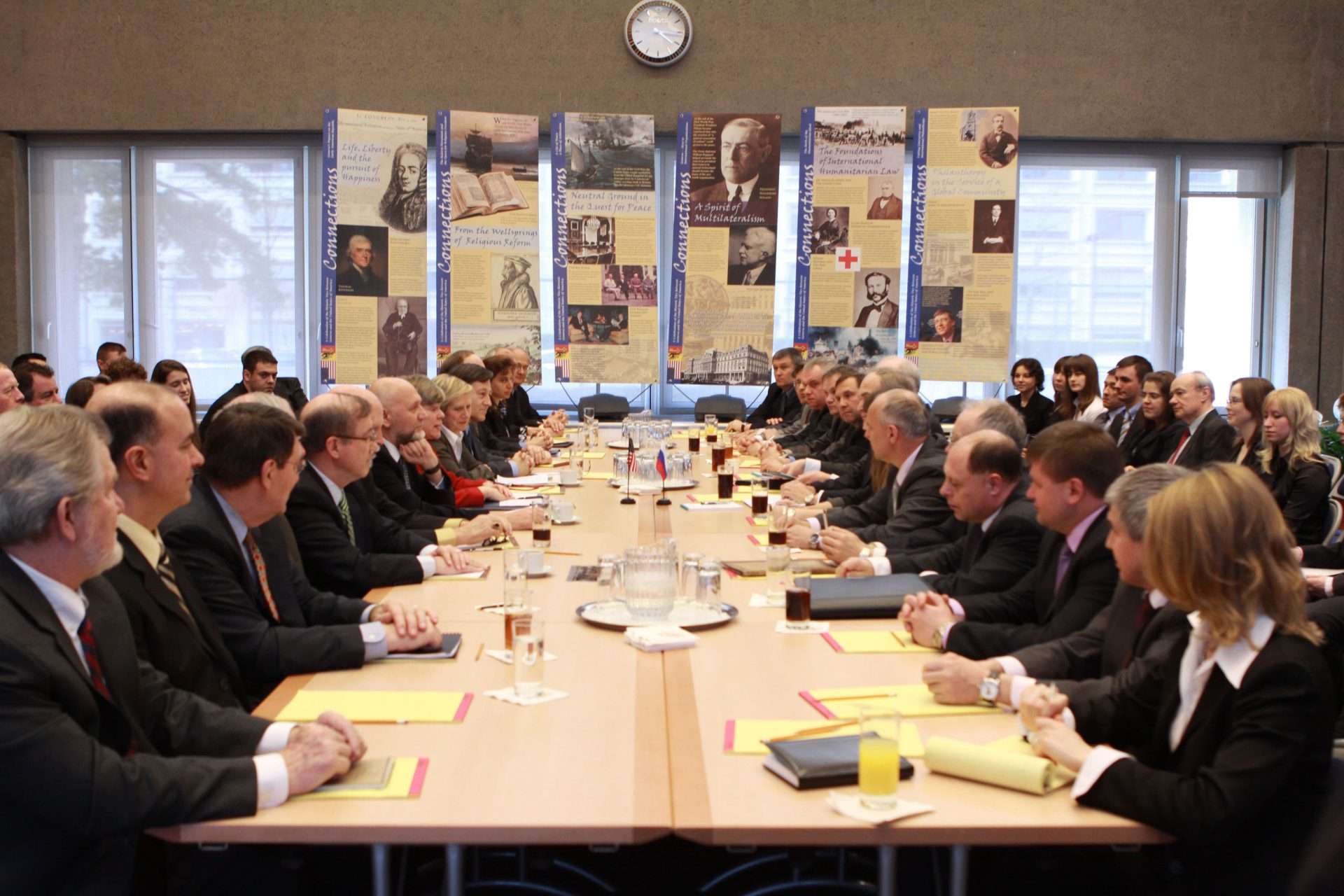
The closing plenary of the New START negotiations in 2010 – Donald Trump said it was a ‘badly negotiated deal’
US Mission Geneva
Pope Leo said New START ‘represented a significant step in containing the proliferation of nuclear weapons’ and urged both states ‘to avert a new arms race’.
The president of the US Conference of Catholic Bishops called upon policymakers to pursue diplomatic negotiations rather than allow a major nuclear weapons treaty to expire.
In a statement on 3 February, ahead of the expiration of the Strategic Arms Reduction Treaty (START) on 5 February, Archbishop Paul Coakley of Oklahoma City said: “The dangers posed by current conflicts around the world, including the devastating war in Ukraine, make the forthcoming expiration of New START simply unacceptable.”
New START was the last major nuclear arms control pact signed by the United States and Russia. It took effect on 5 February 2011 and called on both sides to reduce by half the number of strategic nuclear missile launchers.
Speaking at his general audience on 4 February, Pope Leo said the treaty “represented a significant step in containing the proliferation of nuclear weapons”.
“In renewing my encouragement for every constructive effort in favour of disarmament and mutual trust, I urgently call for this instrument not to be abandoned without seeking to ensure its concrete and effective follow-up,” he said. “The current situation requires that everything possible be done to avert a new arms race that would further threaten peace among nations.”
US President Donald Trump announced on social media on 5 February that he would let the treaty lapse and direct his administration to work toward a new pact. Trump described New START as a “badly negotiated deal” that he said was being “grossly violated”.
He added that the United States “should have our nuclear experts work on a new, improved and modernised treaty that can last long into the future”.
In his statement, Coakley noted that Pope Leo XIV, during his address to the Vatican diplomatic corps in January, specified the “need to follow-up on the New START Treaty” and warned that there was “a danger of returning to the race of producing ever more sophisticated new weapons, also by means of artificial intelligence”.
In his message for the World Day of Peace, Leo cited the call for “integral disarmament” in John XXIII’s 1963 encyclical Pacem in Terris, which emphasises that “true and lasting peace among nations cannot consist in the possession of an equal supply of armaments but only in mutual trust”.
Coakley said policymakers should “courageously pursue diplomatic negotiations to maintain New START’s limits, opening pathways toward disarmament”.
“International policy disagreements, as serious as they are, cannot be used as excuses for diplomatic stalemates,” Coakley said. “On the contrary, they should spur us on more vehemently to pursue effective engagement and dialogue.”
Pope calls for courage to disarm on Hiroshima anniversary
Playing politics with nuclear weapons
Stay updated — add us as a preferred news source on Google:


Help us keep The Tablet’s voice independent, clear and far-reaching.
Founded in 1840, The Tablet is the leading independent English-language Catholic weekly, celebrated for great writing, astute analysis, brilliant arts and books reviews and trustworthy reporting from correspondents in Britain, Ireland, Rome and across the world.
Independent, high-quality journalism is at the heart of what we do. The Tablet does not have deep pockets and we are not funded by rich donors. If you appreciate our work please consider supporting The Tablet’s Development Fund. It only takes a moment and you can cancel at any time.
- Support with £5 per month
- Support with £10 per month
- Support with other amount.

MOST READ ARTICLES
-
1
Pope returns to Vatican after hospital discharge
-
2
Diverse schools that are 100 per cent Catholic
-
3
Under endless skies
-
4
Battling confession fatigue
-
5
Nigerian bishop scorns suggestion of running in presidential election
-
6
Schismatic Spanish nuns strip contents of convent before eviction
FROM THE EDITOR'S DESK