US sanctions will not help Nigerian Christians, says bishop


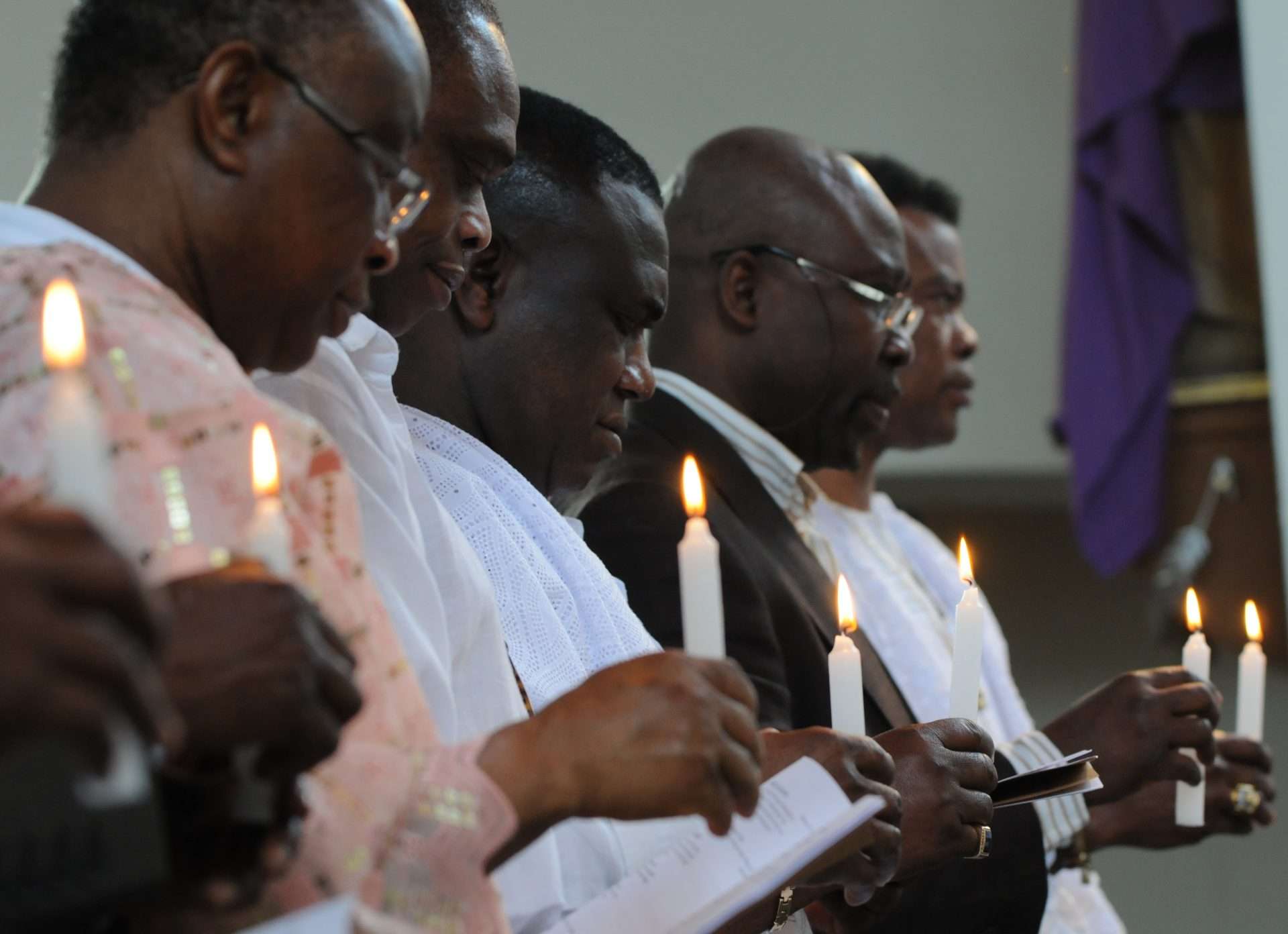
‘What Nigeria needs now is more vigilance by the organisations such as the ACN and civil society groups to continue to press for change and to deliberately work to end impunity.’
Catholic Church in England and Wales / Mazur
Bishop Matthew Kukah said existing initiatives to address the persecution of Christians would be undermined if the US designated Nigeria a Country of Particular Concern.
The Bishop of Sokoto Matthew Hassan Kukah urged the US government not to designate Nigeria as a Country of Particular Concern (CPC) under freedom of religion legislation.
Such a designation would hamper interfaith dialogue and the Church’s dealings with the federal government, said Bishop Kukah, a leading campaigner for Nigerian Christians facing persistent violence. He was speaking at the launch of the 2025 report from Aid to the Church in Need (ACN) on religious freedom around the world, held at the Augustinian Patristic Pontifical Institute in Rome.
The CPC is a designation used by the US government under the 1998 International Religious Freedom Act for any country that engages in “systematic, ongoing, egregious violations of religious freedom”.
Members of Congress including Senator Ted Cruz recently called on President Donald Trump to impose sanctions on Nigeria due to to claims of genocide against Christians. The previous Trump administration designated it a CPC in 2020 but this was revoked under President Joe Biden the following year.
The Nigerian government has repeatedly denied allegations of persecution, insisting that jihadist violence by Boko Haram and other militant groups affected Nigerians of all faiths.
Bishop Kukah said existing initiatives to address the challenges and the persecution of Christians would be undermined if Nigeria is redesignated as a CPC. Nigerians “feel vulnerable and unprotected irrespective of their faiths, ethnicity or social classes”, he told the ACN launch.
“In Sokoto, we do not have a problem with persecution, but we do observe restrictions on our freedom,” Kukah later explained to the Fides news agency, arguing that the main cause of violence was the collapse of the state.
He said the inability of the federal government to protect its citizens created conditions for anarchy where “Nigerians are dying for a living”. The violence of jihadists and bandits is a symptom of a “weak state with clear lack of capacity to arrest the descent into chaos”, he said. Interfaith cooperation is essential in his predominantly Muslim region so that “together we can defeat jihadist violence”.
The Vatican’s Secretary of State Cardinal Pietro Parolin, speaking at the same ACN event, also argued that the violence in Nigeria was “not a religious conflict, but rather more a social one, for example, between herders and farmers”.
“We should also recognise that many Muslims in Nigeria are themselves victims of this same intolerance,” Parolin said. “These are extremist groups that make no distinctions in pursuing their goals. They use violence against anyone they see as an opponent.”
The cardinal faced criticism for his comments from some international observers, while in Nigeria religious freedom activists rejected Kukah’s argument. Emeka Umeagbalasi, director of the Catholic-inspired NGO International Society for Civil Liberties and the Rule of Law (or Intersociety) told The Tablet that bishop was conflating “evident genocide” against Christians with general insecurity.
Citing Intersociety’s statistics, Umeagbalasi said jihadists had burned 19,100 churches and displaced 1,100 Christian communities, claiming they did so with the support or protection of the government. He said this violence was the cause of the wider humanitarian crisis, which has forced an estimated 15 million people, mainly Christians, from their homes.
In his address at the ACN launch, Kukah alleged that the administration of the late former President Muhammadu Buhari “marked the worst phase in the history of interfaith relations in Nigeria, especially relating to violence against Christians and their exclusion from power”. However, the efforts of the current administration of President Bola Ahmed Tinubu have inspired confidence “even though the situation is far from being perfect”.
“I do believe that today, acts of impunity still persist, but it is my view that redesignating Nigeria a ‘Country of [Particular] Concern’ will hurt the initiatives we are working on with the current government collectively to resolve the nagging problems of, first, the persecution of Christians and, of course, the larger issues of ending the mindless killings of our citizens,” Kukah said.
A CPC designation “will only make our work in the area of dialogue among religious leaders in our country and elsewhere with the Nigerian state even harder”, he said, warning it would “increase tensions, sow doubt, open windows of suspicion and fear and simply allow the criminals and perpetrators of violence to exploit”.
“What Nigeria needs now is more vigilance by the organisations such as the ACN and civil society groups to continue to press for change and to deliberately work to end impunity,” he said, calling also for international military support for the fight against jihadism.
“I believe that the Obama and Biden administrations were complicit in the way they handled the fight against Boko Haram under the presidency of Goodluck Jonathan. The country was already making progress. The decision to block Nigeria’s access to the required weapons to end this violence by the Obama administration and their drive to impose President Buhari on Nigeria pushed back this fight.
“I therefore appeal to President Donald Trump, who is already working hard to show that a peaceful world is possible with his historic achievement in the Middle East, to lift the ban and allow Nigeria access to the military tools it requires to free our country from the stranglehold of these evil men.
“I believe this will set us on a course to end the violence that extremist groups and merchants of death have inflicted on us.”
Christianity under siege in Nigeria
Catholic campaigner accuses Nigerian bishops of failing Christians
Stay updated — add us as a preferred news source on Google:


Help us keep The Tablet’s voice independent, clear and far-reaching.
Founded in 1840, The Tablet is the leading independent English-language Catholic weekly, celebrated for great writing, astute analysis, brilliant arts and books reviews and trustworthy reporting from correspondents in Britain, Ireland, Rome and across the world.
Independent, high-quality journalism is at the heart of what we do. The Tablet does not have deep pockets and we are not funded by rich donors. If you appreciate our work please consider supporting The Tablet’s Development Fund. It only takes a moment and you can cancel at any time.
- Support with £5 per month
- Support with £10 per month
- Support with other amount.

MOST READ ARTICLES
-
1
Nicaraguan bishops visit Rome as Ortega regime tightens grip
-
2
Would the Church miss us?
-
3
Vatican confirms Pope’s Latin America travel plans despite operation
-
4
Restless statelessness
-
5
Word from the Cloisters
-
6
Church from the 1950s receives £1 million government grant for new roof
FROM THE EDITOR'S DESK


