Nigeria is becoming ‘a land of funerals’, bishops warn


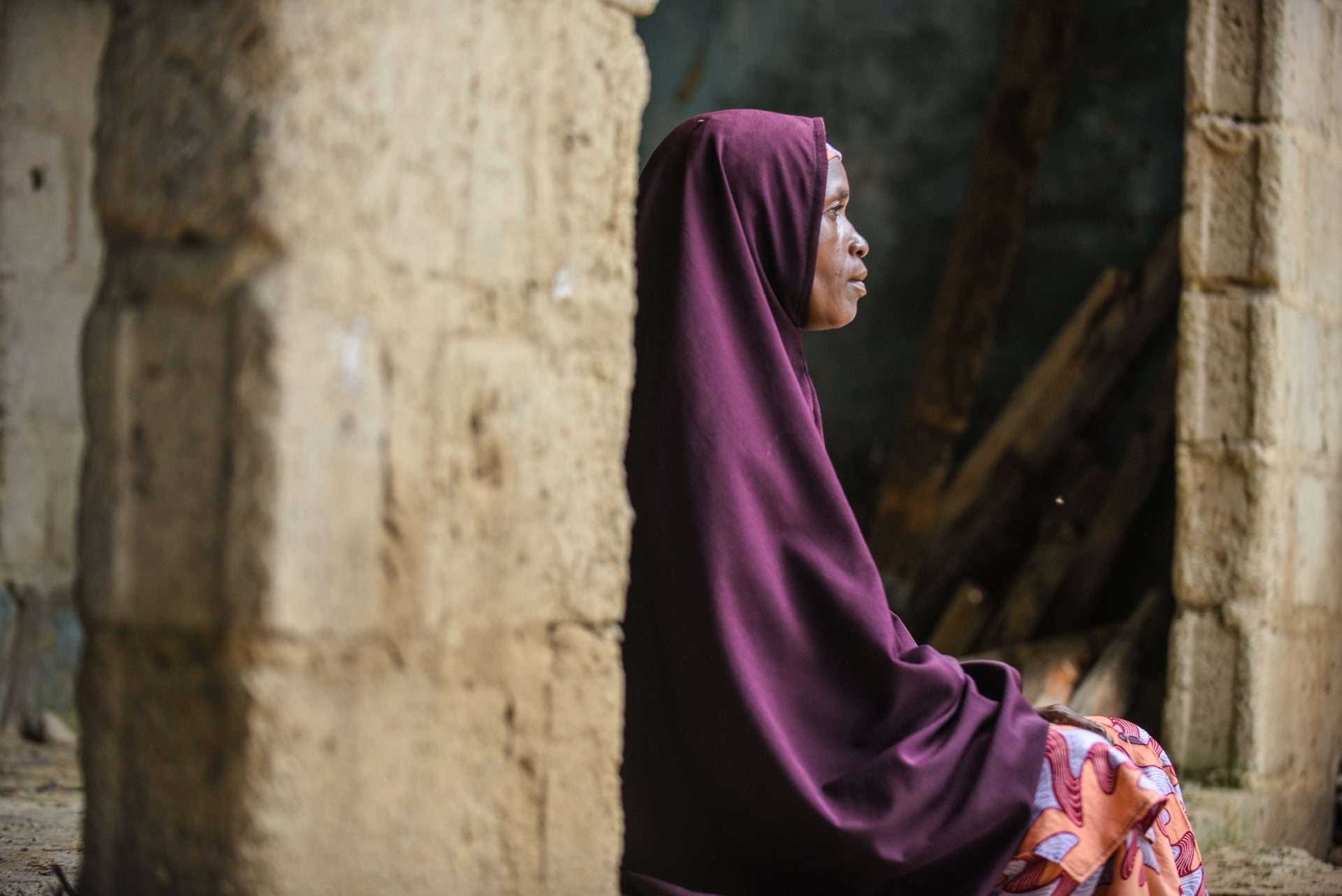
A Nigerian woman in a displacement camp in 2017, during Islamist violence that forced 1.7 million people from their homes. Church leaders have warned that insecurity means the crisis continues almost a decade later.
EU Civil Protection and Humanitarian Aid
‘Our fellow citizens are being daily kidnapped, extorted, dehumanised, killed or forced to flee their ancestral homes, abandoning their sources of livelihood to seek refuge.’
Nigeria is “sinking in many fronts, a land of funerals now”, according to a senior Catholic bishop.
Archbishop Lucius Iwejuru Ugorji of Owerri, president of the Catholic Bishops’ Conference of Nigeria (CBCN), warned that besides widespread economic hardship, many communities were in constant mourning due to persistent insecurity.
While acknowledging “notable progress here and there”, he said that “insecurity continues to haunt us”, with reports regularly describing Nigeria as the site of the worst persecution of Christians globally.
“Many towns and villages across the nation have become communities of fear, flight, and funerals,” he said during an address at the CBCN plenary last week.
“Our fellow citizens are being daily kidnapped, extorted, dehumanised, killed or forced to flee their ancestral homes, abandoning their sources of livelihood to seek refuge in makeshift camps, exposed to extreme weather conditions, often without food and water.”
Days earlier, armed men kidnapped a Catholic priest of the Diocese of Idah in Kogi State, in North Central Nigeria.
According to reports, Fr Wilfred Ezemba was seized on 13 September while travelling along the Imane-Ogugu road, a notorious site of bandit activity, possibly alongside other commuters.
The kidnappers did not initially make contact with the church or the priest’s family, raising fears and uncertainty within the local Catholic community.
“We are confused because since his abduction three days ago, his abductors have not made any contact to demand a ransom. But we are, however, confident that Almighty God will deliver him safely from the grip of the kidnappers,” said a local priest.
Security agencies including the Nigeria Police, the military and members of the Kogi East Neighbourhood Watch, launched a coordinated search, combing nearby bushes and forests for any sign of the kidnappers.
The CBCN plenary, held at the Ikot Ekpene Diocesan Retreat and Youth Centre in Akwa Ibom State, featured a meeting between the bishops and prominent lay people in the ecclesiastical province of Calabar, where Archbishop Ugorjie made his warning about insecurity.
The Catholic Secretariat of Nigeria said the session with the laity was “to share the bishops concerns and to acquaint them with our own concerns as shepherds of God’s flock in Nigeria”.
Ugorji told the meeting: “We are deeply troubled that our fellow Nigerians have continued to groan under economic hardship and seem doomed to a life of destitution and frustration.”
He also voiced concern about “the high rate of youth unemployment, which is driving some of our young men and women to crimes and others to migrate in search of greener pastures abroad, leading to brain drain and continuous loss of some of our best and brightest minds”.
Earlier in the plenary, which began on 11 September, the archbishop alleged that harsh economic conditions in Nigeria have forced young women to donate their eggs to fertility clinics in exchange for small sums of money.
He decried the conditions which he said were driving women, particularly university students, to donate their eggs to support other couples’ in vitro fertilisation (IVF) treatment, warning this was taking place without information about the short- and long-term risks of the procedure.
This “no doubt gives hope to couples facing fertility challenges [but] it is immoral and sinful”, he said, and called on the government to regulate the growing number of IVF clinics in Nigeria.
Catholics needed to be aware of the Church’s opposition to IVF treatment, he said, drawing attention to its teaching “that each human embryo has an inherent dignity and a right to life and [that it] opposes any procedure that commodifies it, or leads to its disposal, or uses it for experimentation”.
In his statement to the lay meeting, Archbishop Ugorji said other institutions were in peril, with the death of the former president Muhammadu Buhari while receiving treatment in London earlier this year betraying the parlous state of Nigeria’s health services. Meanwhile, he said, the education system was undermined by inadequate funding, “decaying infrastructure” and falling number of qualified teachers.
The archbishop said corruption magnified these problems, warning that it was “spreading unchecked like a deadly cancer to all sectors of our national life, silently eating up the soul of the nation”. Politicians, meanwhile, were preoccupied with the 2027 elections rather than such existential threats.
“If this state of affairs continues, the nation will totally collapse,” Ugorji warned, calling for “a drastic change” to promote the common good in Nigeria.
“Who is to effect the transformation of our nation?” he asked. “We strongly believe that the lay faithful have a major and decisive role to play in this matter.”
Acknowledging that change is not easy to come about in Nigeria’s political system, Archbishop Ugorji called for widespread political education to encourage lay Catholics to join parties and develop leadership.
“If we expect much from the laity in the area of national transformation, much has to be given to them in terms of political education,” he said.
Nigerian bishops clash with president over state of the nation
Kidnaps and murders show lack of security for Nigeria’s Christians
Stay updated — add us as a preferred news source on Google:


Help us keep The Tablet’s voice independent, clear and far-reaching.
Founded in 1840, The Tablet is the leading independent English-language Catholic weekly, celebrated for great writing, astute analysis, brilliant arts and books reviews and trustworthy reporting from correspondents in Britain, Ireland, Rome and across the world.
Independent, high-quality journalism is at the heart of what we do. The Tablet does not have deep pockets and we are not funded by rich donors. If you appreciate our work please consider supporting The Tablet’s Development Fund. It only takes a moment and you can cancel at any time.
- Support with £5 per month
- Support with £10 per month
- Support with other amount.

MOST READ ARTICLES
-
1
Pope returns to Vatican after hospital discharge
-
2
Diverse schools that are 100 per cent Catholic
-
3
Under endless skies
-
4
Battling confession fatigue
-
5
Nigerian bishop scorns suggestion of running in presidential election
-
6
Schismatic Spanish nuns strip contents of convent before eviction
FROM THE EDITOR'S DESK