World cannot be ‘blind’ to Sudan as war enters third year


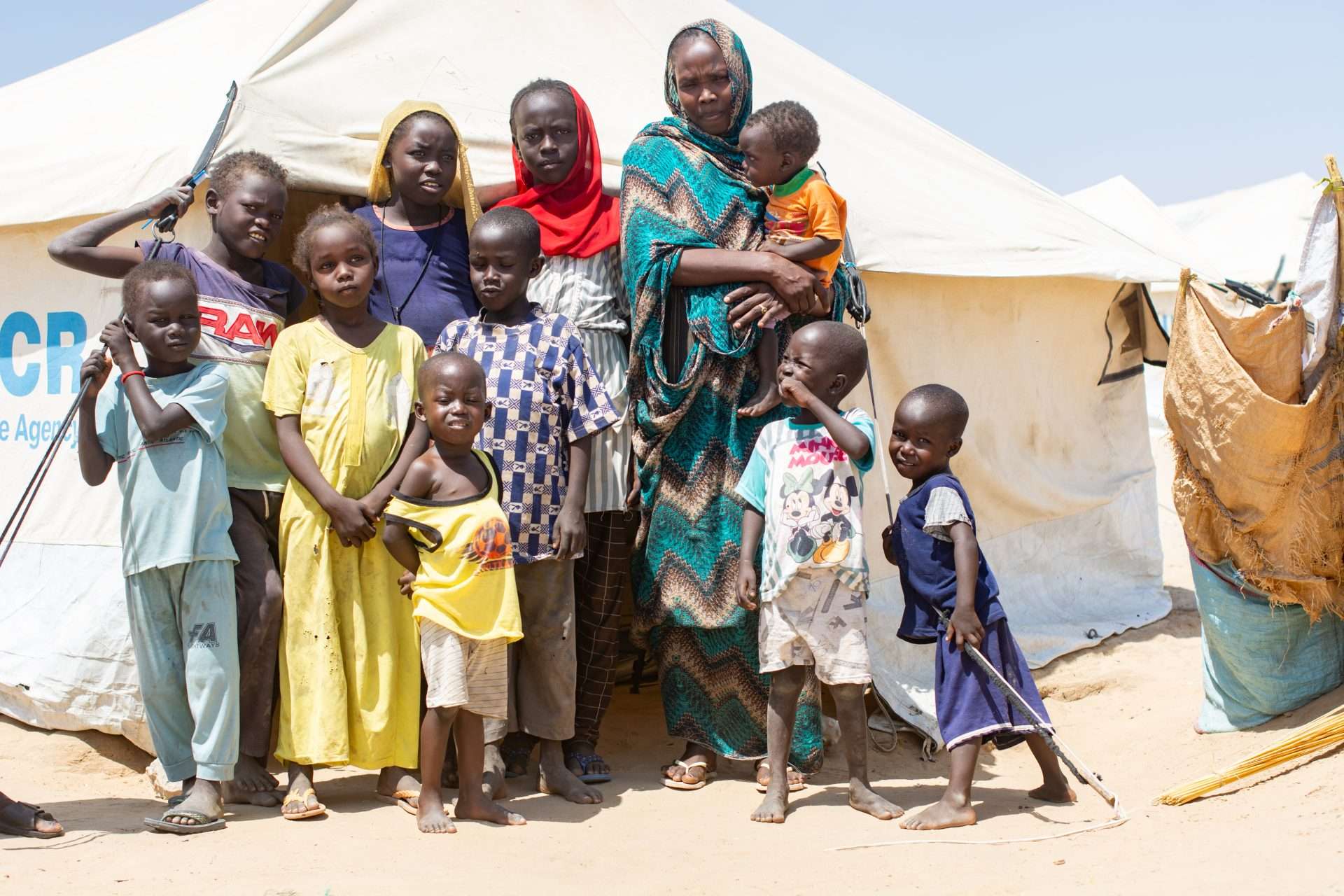
There are more than 10 million internally displaced people in Sudan, many sheltering in camps housing tens of thousands of people.
Cafod
‘This is a moral imperative, a test of global solidarity, and an opportunity to bring hope and stability to a nation that has endured unspeakable hardships.’
Christian organisations and aid agencies called for a ceasefire in Sudan, to allow an unhindered humanitarian response to one of the world’s worst humanitarian crises.
Caritas Africa, the Association of Member Episcopal Conferences in Eastern Africa and Caritas Internationalis were among the signatories of a statement on 15 April marking two years of the conflict in Sudan, alongside the All Africa Conference of Churches, the World Council of Churches and the ACT Alliance humanitarian group.
They said the anniversary must be “a watershed moment for concerted action to protect civilians and first responders”.
As the war entered its third year with no sign of a ceasefire, the government’s Sudanese Armed Forces (SAF) claimed the upper hand, after taking the capital Khartoum from the paramilitary Rapid Support Forces (RSF) weeks earlier.
The war has killed thousands, but the Darfur region in the West, where the RSF and its allies control large areas of territory, has suffered the heaviest death toll. The UN reported on 15 April that more than 400 people died in the region in recent weeks, including at least 20 children and nine aid workers killed in a two-day attack on displacement camps by the RSF.
The Zamzam and Abu Shouk camps house more than 700,000 people forced to flee their homes. Both face the threat of famine and the spread of disease.
“The situation in Sudan is dire, and without a [united] strong push for peace talks, the conflict will only worsen,” said the church and aid groups’ joint statement. “The international community cannot continue to turn a blind eye to Sudan. We must act decisively to bring the parties to the negotiating table.”
The same day, a ministerial conference on Sudan convened in London, gathering major donors alongside governments and states from the region with influence on the warring parties.
In a list of appeals to the international community, particularly conference participants, the statement called for increased diplomatic efforts to promote a ceasefire, regionally and internationally, and the end of interference and funding of the conflict by external powers.
They also appealed for increased and diversified funding channels and sources to ensure support reaches local actors, including community-based groups on the frontline of life-saving efforts.
The international community must also ensure inclusive dialogue and a wider political process that can effectively address the root cause of the violence in Sudan, they said.
Christian Modino Hok, the humanitarian director at Caritas Internationalis, told The Tablet that the attention of the conference was “very welcome” but said such meetings must not “become one talk show that happens every now and then”.
He said humanitarian support was “completely underfunded”, particularly after the US government’s cuts to its aid programmes, while the displacement of the Sudanese population had become “a regional crisis”.
More than three million people have fled Sudan to neighbouring countries which themselves face “very dark conditions”, Hok said, warning that the large number of refugees “erodes the social fabric in those contexts”.
Sudanese Christians caught in civil war persecution
Organisers of the London conference said its participants pledged more than $1 billion to support Sudan and its neighbours, though this was still far short of the more than $4 billion charities said was required to support the 30 million people in need of humanitarian assistance.
The conference ended without making a final declaration, after its proceedings were hampered by the absence of representation from the SAF commander General Abdel Fattah al-Burhan and the RSF’s Mohamed Hamdan “Hemeti” Dagalo.
The declaration was reportedly blocked by differences between the governments of Saudi Arabia, Egypt and the United Arab Emirates (UAE), the last of which has been accused of supporting the RSF.
Hearings began last week at the International Court of Justice in The Hague on a case brought by Sudan accusing the UAE of being “complicit in the genocide” during the civil war, by arming the RSF with the aim of destroying the non-Arab Masalit population of West Darfur. The UAE has dismissed “a campaign of lies and slander”.
Hok said he could not comment on the allegation, but confirmed to The Tablet that “mass atrocities” including widespread sexual violence had taken place in Sudan, and had driven the displacement which undermined health systems and food supplies.
“Farmers cannot work because they are constantly displaced,” he said, warning that “most famines in modern history are due to conflict” rather than environmental factors. He emphasised: “Famine is completely preventable.”
Alistair Dutton, the secretary general of Caritas Internationalis, said in a statement on Tuesday that Sudan “demands urgent and unwavering attention from the international community”.
“The path to peace is not simply an aspiration but an essential foundation for the survival and future of millions. Funding for relief efforts is not a gesture of goodwill but an indispensable lifeline to those caught in the crossfire of violence and displacement, who will die in millions otherwise,” he said.
“This is a moral imperative, a test of global solidarity, and an opportunity to bring hope and stability to a nation that has endured unspeakable hardships.”
Cafod marked Sudan’s “two years of brutal but forgotten conflict” on Monday, calling on the UK government “to strengthen diplomatic efforts to end the violence; open up access for humanitarian organisations to deliver lifesaving assistance; and ensure that increased funds reach local organisations and community networks delivering aid at the frontlines”.
Sudan’s famine crisis is the global north’s moral failure
We cannot ignore Sudan’s humanitarian crisis
Stay updated — add us as a preferred news source on Google:


Help us keep The Tablet’s voice independent, clear and far-reaching.
Founded in 1840, The Tablet is the leading independent English-language Catholic weekly, celebrated for great writing, astute analysis, brilliant arts and books reviews and trustworthy reporting from correspondents in Britain, Ireland, Rome and across the world.
Independent, high-quality journalism is at the heart of what we do. The Tablet does not have deep pockets and we are not funded by rich donors. If you appreciate our work please consider supporting The Tablet’s Development Fund. It only takes a moment and you can cancel at any time.
- Support with £5 per month
- Support with £10 per month
- Support with other amount.

MOST READ ARTICLES
-
1
Pope returns to Vatican after hospital discharge
-
2
Diverse schools that are 100 per cent Catholic
-
3
Under endless skies
-
4
Battling confession fatigue
-
5
Nigerian bishop scorns suggestion of running in presidential election
-
6
Schismatic Spanish nuns strip contents of convent before eviction
FROM THE EDITOR'S DESK