Vatican advisory document develops eco-spirituality rejecting ‘despotic dominion’ over creation


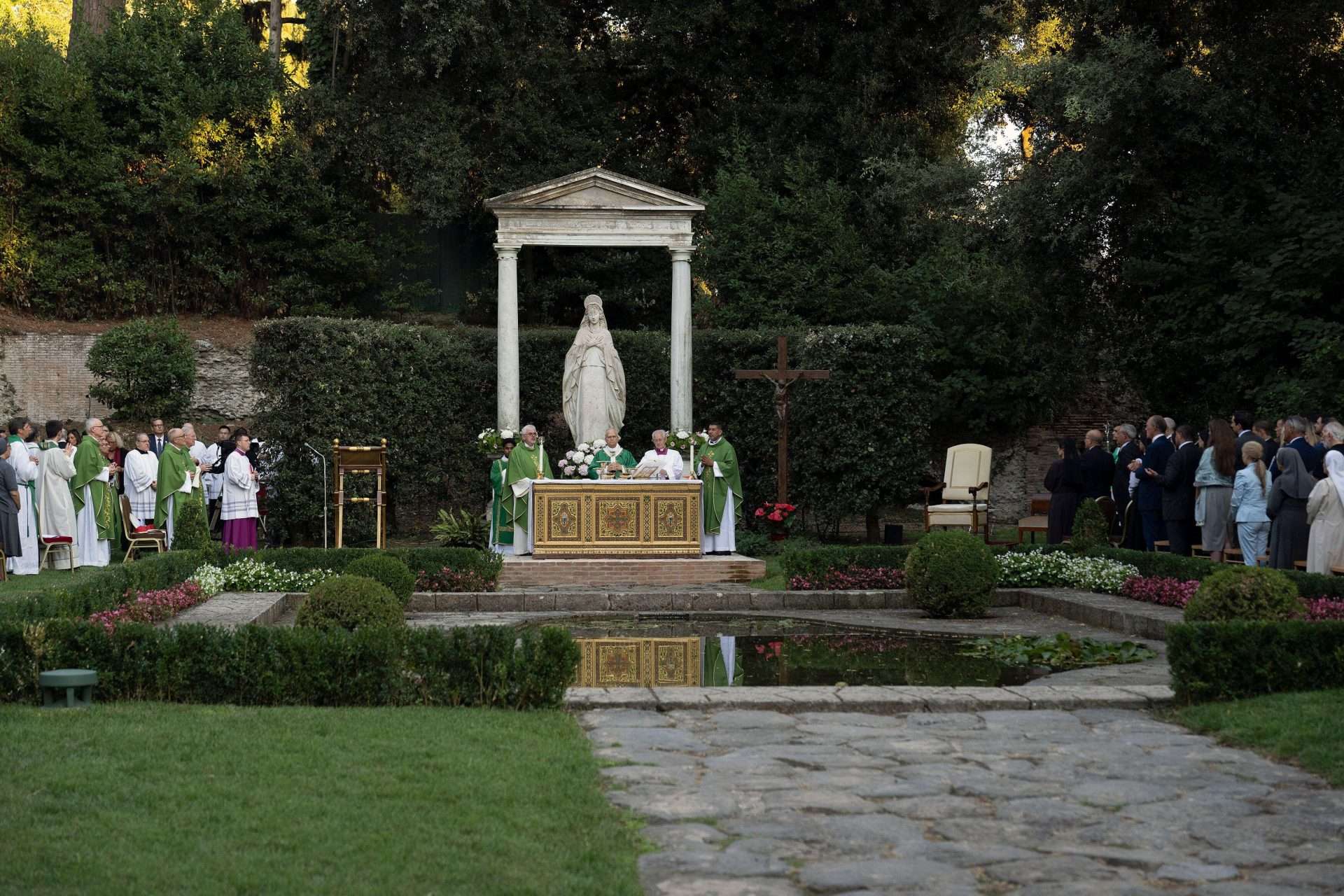
'From contemplating creation and encountering its Creator, there arises an awareness of our particular place within God’s wondrous plan, and of the responsibility that we bear both personally and collectively for preserving the original harmony.'
Alamy
The International Theological Commission, a body of the Roman Curia made up of theologians who advise the magisterium, has published a new theological document on ‘Taking care of our common home’.
Published on 2 September at the start of the Season of Creation, which runs until the Feast of St Francis of Assisi on 4 October, the document develops the theology for an ecological spirituality. It draws on four Doctors of the Church, as well as Laudato si’ and subsequent church teachings.
The text suggests a definition of the term “ecological sin” which was introduced at the 2019 Synod of Bishops on the Amazon and which Pope Francis was considering adding to the Catechism, as “an action or omission against God, against one’s neighbour, the community, and the environment”.
“We propose understanding this sin against our Common Home as a ‘sin against creation and against the Creator’, insofar as it violates the meaning of creation intended by God the Creator,” the document said.
It also said this term could provide a theological counterpart to secular concepts such as “ecocide”, simultaneously highlighting the damage inflicted on nature and the “misrecognition or even the rejection of the Creator’s plan”.
The document also provides a commentary on Genesis, noting that Adam and Eve “grow in freedom through the exercise of three constitutive relationships”: the relationship with God as Creator, the relationship with plants and with animals, and their human relationship with each other.
This can be seen in the Fall: “The transgression of the plan originating from God has the effect of breaking the three essential relationships in which the human being unfolds his existence – with God, with other human beings and with creation – inevitably leading to deterioration on a personal, social and cosmic level.”
The text explains that although people in ancient times had to subdue the violent elements of nature in order to survive, “an exaggerated and distorted interpretation of this mandate has led to believe that a despotic unlimited dominion over all creations was granted to human beings”.
It said the effect of this distortion in encouraging the “exploitation and mistreatment” of creation is a cause for “shame and repentance”.
“Is this not the bait with which the serpent tempted the human being from the beginning: ‘You will be as gods’ (Gen 3:5)? It is because we succumb to this distorted logic, instead of following the inscribed guidelines in creational anthropology, that we cause disorder even in the cosmos.”
Solutions to the “unprecedented ecological crisis we are suffering today” include scientific and technical solutions, improvements to governance, more effective institutions, a consensus operating worldwide, substantial changes in production, consumption, transport and use systems, respect for legislation and much more, the document said.
“However, more radically, a change in cultural values is needed, without which all these measures will not be effective. No social group and no part of the planet can be considered immune to the devastating effects of the deterioration that is underway.
“In the face of a threat of a collective nature and truly planetary scope, the solution also has to be of a collective and planetary nature.”
The document said that although there is an undeniable personal responsibility in the ecological crisis, it is also necessary to recognise that the damage inflicted on the environment transcends levels of individual, family and social responsibility.
“Economic choices and actors with broader influence are endangering human quality of life and survival itself, together with that of the other species.
“The historical moment in which we are living requires everyone, starting with those who are responsible for public life, to commit to urgent action in favour of sustainability of the planet and of the habitability of our common home.
“The social dimension of this need has to do with the structures of an economic system inspired by the technocratic paradigm, which does not take into account the common good.
“Technology can and it must be used with respect for the environment and at the service of the common good. The current economic regime is the result of a series of human decisions.
“It is in our power to equip ourselves with an alternative system, which is at the service of life, governed by the criterion of sustainability and respecting the biorhythms of our common home.”
Meanwhile, Pope Leo XIV urged everyone to “hear the melodious voice of creation”, in his homily of the Mass for Care of Creation celebrated at Borgo Laudato Si’ to open the Season of Creation on 1 September.
“Let us set aside a few moments to pause from the frenzy of our daily lives, in order to savour the profound harmony of which we ourselves are a part,” the Pope continued.
“From contemplating creation and encountering its Creator, there arises an awareness of our particular place within God’s wondrous plan, and of the responsibility that we bear both personally and collectively for preserving the original harmony.
“Thus, as we become conscious of our shortcomings and failures, we can renew our commitment to restoring the relationships among all creatures according to the will of their Creator.”
The Church of England also marked a new liturgical festival on 6 September, the “Feast of Creation in Christ”, which the General Synod added to their calendar this year.
Pope Francis made September 1 the World Day of Prayer for the Care of Creation for Catholics in 2015, and the chairman of the World Council of Churches has said that the Anglican Communion joining the celebration this year is “theologically profound, liturgically sound, pastorally urgent, and ecumenically unprecedented”.
In the Orthodox tradition, September 1 has been a liturgical feast symbolising the day of God’s creation of the world and opening their liturgical year since the 8th century.
The Ecumenical Patriarchate of the Orthodox Church invited “the entire Christian world” in 1989 to celebrate the day together as a response to the ecological crisis.
Stay updated — add us as a preferred news source on Google:


Help us keep The Tablet’s voice independent, clear and far-reaching.
Founded in 1840, The Tablet is the leading independent English-language Catholic weekly, celebrated for great writing, astute analysis, brilliant arts and books reviews and trustworthy reporting from correspondents in Britain, Ireland, Rome and across the world.
Independent, high-quality journalism is at the heart of what we do. The Tablet does not have deep pockets and we are not funded by rich donors. If you appreciate our work please consider supporting The Tablet’s Development Fund. It only takes a moment and you can cancel at any time.
- Support with £5 per month
- Support with £10 per month
- Support with other amount.

MOST READ ARTICLES
-
1
Pope returns to Vatican after hospital discharge
-
2
Diverse schools that are 100 per cent Catholic
-
3
Under endless skies
-
4
Battling confession fatigue
-
5
Nigerian bishop scorns suggestion of running in presidential election
-
6
Schismatic Spanish nuns strip contents of convent before eviction
FROM THE EDITOR'S DESK


