Reports show decline in Belarusian parishes under religious law


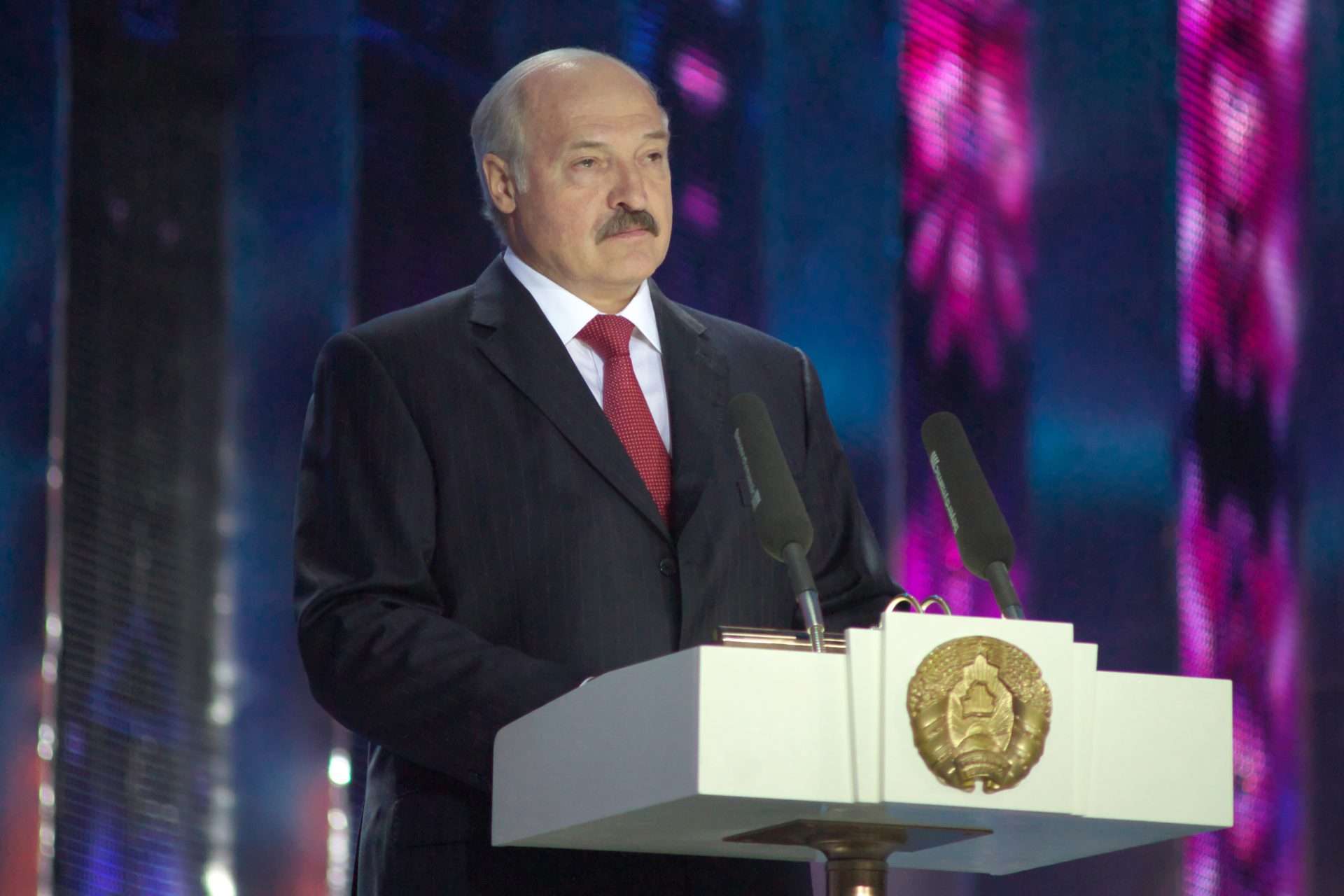
President Aleksandr Lukashenko at his fifth inauguration in 2015.
Serge Serebro, Vitebsk Popular News / Wikimedia Commons
The 2023 Freedom of Conscience law prohibited religious activities deemed to infringe Belarus’s “sovereignty, constitutional system and civil harmony”.
The Catholic Church in Belarus has seen its parishes reduced under a restrictive new religious law, ahead of presidential elections on 26 January.
“The re-registration of religious organisations began during 2024 – this has created problems for small parishes,” reported the Katolik-Life news agency, which is banned by Aleksandr Lukashenko’s regime.
“With all required to submit re-registration documents no later than this July, communities realising they will not be able to meet the new requirements have filed applications for liquidation, and this process is still ongoing.”
The agency said “preliminary data” from the four Catholic dioceses suggested the number of parishes had fallen from the 500 registered in January 2024 by Belarus’s Commission for Religious and National Affairs, with 85 now listed in the northern Diocese of Vitebsk, compared to 94 a year ago, while one fewer parish was register in the Archdiocese of Minsk-Mohilev
It added that Belarus’s larger Orthodox Church has also seen its parishes cut from the 1,737 officially registered at the time of the December 2023 Freedom of Conscience law, which barred anyone “involved in extremist activity” from heading a religious community and prohibited religious activities deemed to infringe Belarus’s “sovereignty, constitutional system and civil harmony”.
Catholics account for a tenth of the 9.4 million inhabitants of Belarus, a former Soviet republic, where the disputed August 2020 re-election of Lukashenko as president was followed by harsh repression and international sanctions. This week’s elections were expected to confirm Lukashenko’s seventh term, extending his 31 years in power.
Belarus court sentences Catholic priest to 11 years in prison for ‘treason’
Orthodox priest becomes ‘He-Who-Must-Not-Be-Named’ after Belarus brands social media ‘extremist’
At least three dozen Catholic clergy have since faced arrest – meaning Belarus has the second-highest number of detained priests in the world, after Nicaragua – while up to half a million citizens have fled abroad, mostly to neighbouring Poland and Lithuania, where opposition activity is centred.
A parish priest from Valozyn, Fr Henrykh Akalatovich, was expected to appeal his 11-year penal colony sentence for high treason imposed at the end of December. Another Catholic priest, Fr Andrzej Yukhnevich, chairman of the Major Superiors, Delegates and Representatives of Institutes and Societies of Apostolic Life in Belarus, was also awaiting sentence on similar charges.
Belarus’s Catholic bishops and apostolic nunciature have made no public reference to the clergy, both of whom have been recognised by human rights groups among the country’s 1,265 political prisoners.
In a commentary last week, the ecumenical Christian Vision organisation responded to the decision of Cuba’s President Miguel Diaz-Canel, to release over 500 political prisoners in response to a Jubilee Year appeal by Pope Francis, saying that it hoped for a “similar gesture of goodwill” from Lukashenka.
In an address on 9 January to Church and government officials, Bishop Alexander Yashevski, an auxiliary in Minsk-Mogilev, insisted the Church was “making its unique contribution to building a peaceful and just society” in Belarus, as the country “courageously addressed” contemporary challenges: “the search for harmony between different ethnic and religious communities, overcoming social inequality, and strengthening the values of peace and solidarity”.
Stay updated — add us as a preferred news source on Google:


Help us keep The Tablet’s voice independent, clear and far-reaching.
Founded in 1840, The Tablet is the leading independent English-language Catholic weekly, celebrated for great writing, astute analysis, brilliant arts and books reviews and trustworthy reporting from correspondents in Britain, Ireland, Rome and across the world.
Independent, high-quality journalism is at the heart of what we do. The Tablet does not have deep pockets and we are not funded by rich donors. If you appreciate our work please consider supporting The Tablet’s Development Fund. It only takes a moment and you can cancel at any time.
- Support with £5 per month
- Support with £10 per month
- Support with other amount.

MOST READ ARTICLES
-
1
Pope returns to Vatican after hospital discharge
-
2
Diverse schools that are 100 per cent Catholic
-
3
Under endless skies
-
4
Battling confession fatigue
-
5
Nigerian bishop scorns suggestion of running in presidential election
-
6
Schismatic Spanish nuns strip contents of convent before eviction
FROM THE EDITOR'S DESK