Pope receives Magyar as Hungarian Church gauges new government


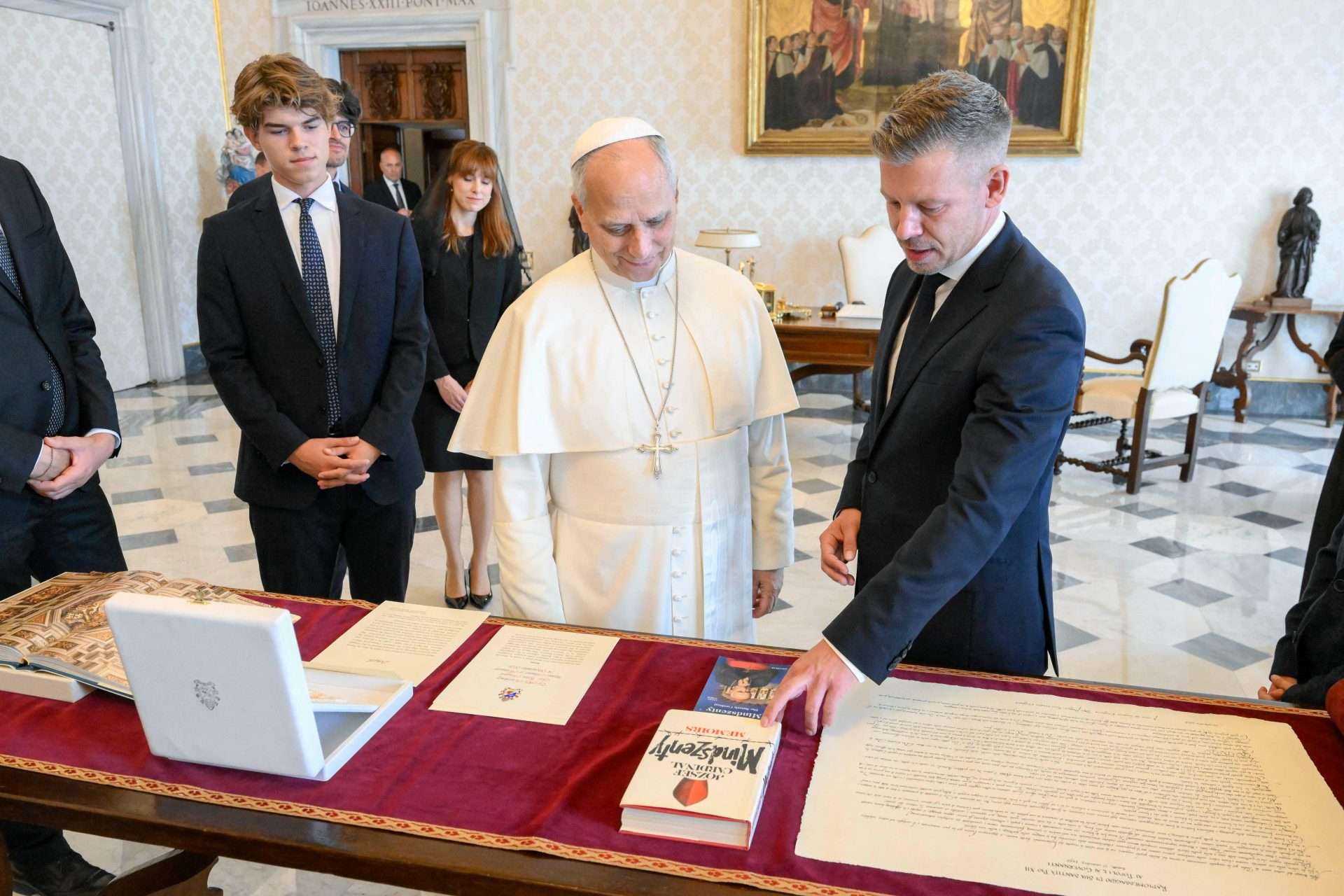
Péter Magyar presented Pope Leo with a calligraphy transcript of Pope Pius XII’s radio address of 10 November 1956 – responding to the Soviet invasion of Hungary days earlier – and a first US edition of the memoirs of Cardinal József Mindszenty.
Independent Photo Agency / Alamy
Hungary’s Catholic hierarchy was widely perceived as close to the previous administration led by Viktor Orbán, with critics alleging that generous state subsidies made bishops reluctant to question deteriorating rule of law standards.
Pope Leo XIV received Hungary’s Prime Minister Péter Magyar in a private audience at the Vatican, their first meeting since his election victory in April.
The audience on Thursday took place against a background of changing relations between Church and state in Hungary following the landslide defeat of Viktor Orbán’s right-wing populist Fidesz-KDNP alliance, which had held power since 2010, by Magyar’s centre-right Tisza party.
Magyar presented Pope Leo with two gifts: a calligraphy transcript of Pope Pius XII’s radio address of 10 November 1956 – responding to the Soviet invasion of Hungary days earlier – and a first US edition of the memoirs of Cardinal József Mindszenty (1892 -1975) whose suffering in prison at the hands of Communist authorities is often described as a “dry martyrdom”.
Pope Leo gave Magyar a replica of a relief carving from St Peter’s and a book on Rome’s apostolic palaces.
A statement from the Holy See described the encounter as “cordial” and indicated that the conversation included reference to education and “the protection of the world’s most vulnerable Christian communities”.
The wording suggests the Holy See is keenly attentive both to Magyar’s intention to reform the funding of Hungary’s church schools and the operation of the country’s official “Hungary Helps” aid agency.
Hungary’s Catholic hierarchy was widely perceived as close to Viktor Orbán’s administration. Critics allege that generous state subsidies made bishops reluctant publicly to question deteriorating human rights and rule of law standards. Ahead of the election many clergy, and some bishops, openly campaigned for Fidesz-KDNP.
Recently 24.hu reported that, ahead of the election, selected Catholic dioceses as well as Fidesz-linked civil society groups and businesses received discretionary public grants via secret government decrees made under emergency powers. The overall total of funds dispersed was €1.4 billion.
Since the election, the Church has struggled to adapt: bishops effectively boycotted the opening of parliament in May, and some clergy have continued to play prominent roles at pro-Fidesz rallies.
However, Magyar, a Catholic and graduate of Budapest’s prestigious Piarist Grammar School, seems more inclined to conciliate than to confront the Church.
On 16 June, the prime minister had a private meeting with the Archbishop of Esztergom-Budapest Cardinal Péter Erdő, Hungary’s primate, at the cardinal’s Budapest residence. Commentators see signs of a more pragmatic approach from the hierarchy beginning to emerge following the encounter.
Zoltán Laky of Válasz Online observed that “the hierarchy now seems to recognise that it cannot become the unofficial opposition – if for no other reason than its heavy reliance on public funding”.
Warnings of ‘Christian-nationalist’ legacy in Hungary despite opposition landslide
Can the Catholic Church in Hungary rebuild its credibility under a new government?
Stay updated — add us as a preferred news source on Google:


Help us keep The Tablet’s voice independent, clear and far-reaching.
Founded in 1840, The Tablet is the leading independent English-language Catholic weekly, celebrated for great writing, astute analysis, brilliant arts and books reviews and trustworthy reporting from correspondents in Britain, Ireland, Rome and across the world.
Independent, high-quality journalism is at the heart of what we do. The Tablet does not have deep pockets and we are not funded by rich donors. If you appreciate our work please consider supporting The Tablet’s Development Fund. It only takes a moment and you can cancel at any time.
- Support with £5 per month
- Support with £10 per month
- Support with other amount.

MOST READ ARTICLES
-
1
Pope returns to Vatican after hospital discharge
-
2
Diverse schools that are 100 per cent Catholic
-
3
Under endless skies
-
4
Battling confession fatigue
-
5
Nigerian bishop scorns suggestion of running in presidential election
-
6
Schismatic Spanish nuns strip contents of convent before eviction
FROM THE EDITOR'S DESK


