Budapest parish plans Mass for Orbán’s birthday despite election defeat


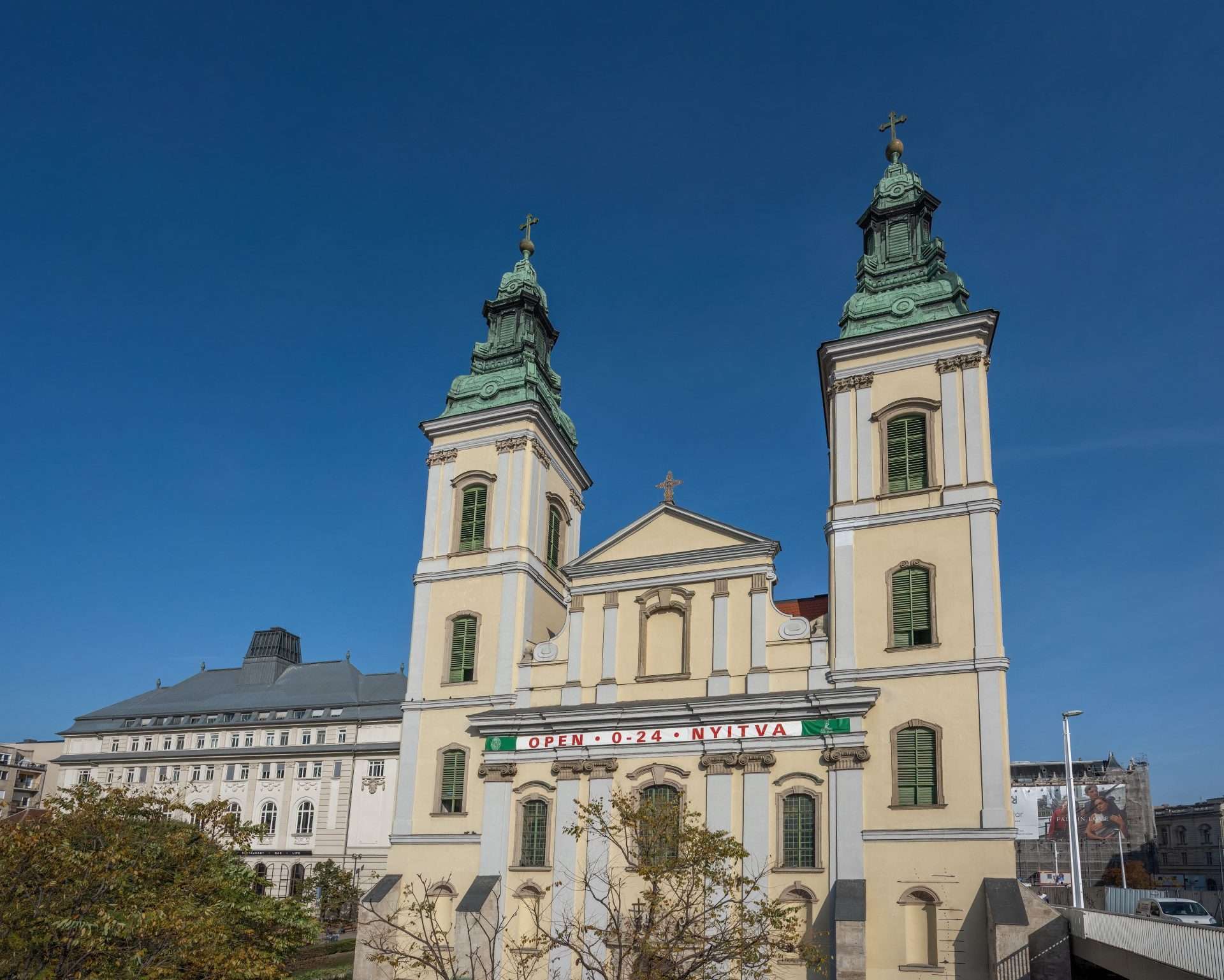
The Inner City Parish Church in Budapest
Diego Grandi, Alamy
The birthday Mass, regularly held in previous years when Viktor Orbán was in power, reflects continuing tensions in the Hungarian Church following his landslide defeat in April.
A parish in Budapest plans to hold a Mass to mark the birthday of Hungary’s former prime minister Viktor Orbán.
The Mass at St Mary’s parish church (known as the “Inner City Parish Church”) in central Budapest on 30 May, the day before Orbán’s birthday, was not advertised on the parish website or other channels but announced on social media by its organiser, Ilona Szabó Szentmihályi.
“Viktor Orbán is 63 years old on 31 May!” reads the Facebook announcement, continuing: “As per tradition we will be holding again this year our Mass for our country, for our people, for our leaders.”
It names the parish priest Fr Zoltán Osztie as celebrant with the prominent opera singer Gabriella Számadó listed to accompany the Mass. Orbán is not a Catholic but a member of the Hungarian Reformed Church. He lost power in the general election on 12 April.
The organiser of the Mass is the widow of the poet and journalist Péter Szabó Szentmihályi (1945-2014), whom Orbán nominated as Hungary’s Ambassador to the Holy See in 2014.
Mr Szabo Szentmihályi withdrew from his nomination following revelations of antisemitism in his writings and his untruthfulness about his past ties to the Communist party. He died a few months later.
Fr Osztie denied that the parish was “holding a Mass in honour” of Orbán. He told The Tablet it was “offering prayers for him in connection with his birthday” in accordance with Church custom “to pray for ecclesiastical and secular leaders”.
“We have already celebrated Holy Mass for the new prime minister, Péter Magyar, though in accordance with the petitioner’s wishes we did not publicise it widely,” he said. “There is no question of political action here, but rather a request to the Lord God: to assist the responsible leader in governing through his inspiration.”
The priest is no stranger to controversy. In 2018, following protests by the Jewish community, the Archbishop of Esztergom-Budapest Cardinal Péter Erdő forced Osztie to abandon plans to hold a Mass and cultural programme honouring Hungary’s Nazi-allied wartime leader Admiral Miklós Horthy on 27 January, Holocaust Memorial Day.
He is closely identified with the work of the Civil Összefogás Fórum (Civil Co-operation Forum), the publicly funded proxy of Orbán’s far-right Fidesz party.
The birthday Mass, regularly held in previous years when Orbán was in power, reflects continuing tensions in the Church following the party’s landslide defeat by Magyar’s centre-right Tisza party.
During Fidesz’s 16 years in office the Church became closely identified with the governing party, given an apparent exchange of generous state subsidies for symbolic endorsement by Church leaders and their silence on controversial matters.
On 24 April Bishop János Székely of Szombathely, president of the Hungarian Catholic Bishops’ Conference, wrote on the web portal 777 that “The critical voices heard in recent years … call us to self-examination” and to ask “where and in what ways have we failed?”
However, Catholic bishops largely snubbed the opening of the new parliament on 9 May, in marked contrast to their high levels of attendance following earlier victories by Fidesz.
The Archbishop of Belgrade Cardinal László Német, an ethnic-Hungarian from northern Serbia, has questioned the Hungarian hierarchy’s openness to honest self-critique. Német himself earlier served as secretary of the Hungarian bishops’ conference in 2006-08.
Writing on independent religious affairs portal Szemlélek on 12 May, he said of recent post-election statements by bishops in Hungary: “I find it particularly strange to hear the claim that over the past 16 years there have been virtually no serious anomalies and no occurrences that would have required a clear and unambiguous stance.”
The Tablet approached the Archdiocese of Esztergom-Budapest for comment.
Can the Catholic Church in Hungary rebuild its credibility under a new government?
The Pope in Hungary – Europe’s special case
Stay updated — add us as a preferred news source on Google:


Help us keep The Tablet’s voice independent, clear and far-reaching.
Founded in 1840, The Tablet is the leading independent English-language Catholic weekly, celebrated for great writing, astute analysis, brilliant arts and books reviews and trustworthy reporting from correspondents in Britain, Ireland, Rome and across the world.
Independent, high-quality journalism is at the heart of what we do. The Tablet does not have deep pockets and we are not funded by rich donors. If you appreciate our work please consider supporting The Tablet’s Development Fund. It only takes a moment and you can cancel at any time.
- Support with £5 per month
- Support with £10 per month
- Support with other amount.

MOST READ ARTICLES
-
1
Battling confession fatigue
-
2
Radio: Getting along with getting on
-
3
Church warns Zambian government against division after archbishop’s arrest
-
4
Catholic Social Teaching and universities
-
5
Bishops demand security investment to promote ‘common good’ in Nigeria
-
6
UK ‘must press for ceasefire’ as humanitarian crises unfold across Middle East
FROM THE EDITOR'S DESK