Pope joins calls for ‘solidarity’ with Venezuela after earthquakes


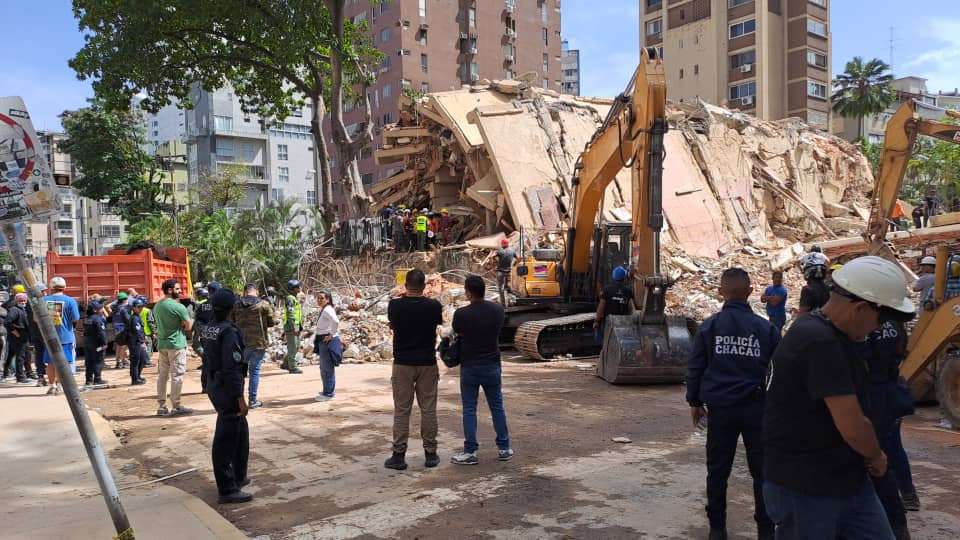
Many of the 55,000 Venezuelans reported missing are believed to lie beneath the rubble of collapsed buildings.
© ACN
The Pope provided an initial donation of €100,000, alongside 24 nations that sent emergency aid and rescue workers. The apostolic nuncio to Venezuela said Leo is ‘keeping a close eye’ on developments after the earthquake.
Pope Leo expressed his “closeness” to his “Venezuelan sisters and brothers” affected by earthquakes as the official death toll rose to more than 1,700.
Many of the 1,719 victims of the “doublet earthquake” on the evening of 24 June were celebrating a national holiday when the first quake of 7.2 magnitude struck, followed by a second, registering 7.5 in magnitude 40 seconds later.
Some of the victims – including 5,000 wounded – had been at home watching the World Cup when the quake hit the northern coastal city of La Guaira. According to the Venezuelan government, 855 buildings were damaged, including in the capital, Caracas, while 189 buildings have collapsed altogether. The earthquake’s impact was felt as far away as the Amazon in Brazil, and Bogotá, the capital of Colombia.
Speaking after the Angelus on Sunday, Pope Leo called for prayer for the victims and their families.
He expressed gratitude for the “generosity” of rescue crews including 3,000 foreigners who, amid temperatures of 30 degrees, are digging up ruined buildings, hunting for survivors. An 18-day-old baby was among those found alive under a building. Many of the 55,000 Venezuelans reported missing are believed to lie beneath the rubble.
“As we pray to the Lord for the eternal repose of the deceased, I renew my spiritual closeness to their families, the injured and those struck by this tragedy,” the Pope said.
At the close of the extraordinary consistory of the College of Cardinals on Saturday, the Pope said they were praying “for the victims, their families, and all those suffering the consequences of this tragedy”.
“We ask that the solidarity of the international community may not be lacking toward that dear nation,” he said in his concluding address.
The Pope provided an initial donation of €100,000, alongside 24 nations that sent emergency aid and rescue workers to the country. The apostolic nuncio to Venezuela said Leo was “keeping a close eye” on developments after the earthquake.
“Now is the time to raise our eyes to heaven – as the Pope is constantly inviting us to do – so we may find strength and divine consolation,” said Archbishop Alberto Ortega, in a video message broadcast via Vale TV (Values Education television, a non-profit Venezuelan channel).
Ortega also appealed for “charity” and “solidarity” for the victims “to make the Lord’s closeness to them real through concrete acts … This is the time to rebuild together so we may move on from this sad situation.”
He offered “very special prayers” for the victims and their families and the wounded, calling upon the protection of God and that of Venezuela’s national Marian figure, Our Lady of Coromoto.
Her name derives from seventeenth-century apparitions of Mary and the child Jesus to the chief of the tribe of Coromoto Indians, whom she reportedly urged to go to missionaries and ask to “receive water on your head so you can go to heaven”.
Early on Monday, an aftershock registering 4.6 magnitude struck north of the capital, Caracas. No damage was immediately reported, according to the US Geological Survey.
The Xavier Network, which coordinates emergency responses where the Society of Jesus is present on the ground, said its teams in Venezuela were now “conducting rapid assessments in the affected areas to identify the most urgent humanitarian needs and ensure assistance reaches those most at risk”.
“Our partners are providing emergency support, including temporary shelter, essential relief items, protection services and psychosocial support for individuals and families affected by the earthquake … The emotional and psychological impact of the disaster is profound,” said a statement from the network.
The Jesuits in Britain have launched an emergency appeal for families affected by the disaster in Venezuela through their international development organisation, Jesuit Missions, which is the UK member of the Xavier Network.
Meanwhile, the leader of the Jesuits in Venezuela circulated Ignatian guidelines to help Jesuits and others involved in rescue work discern priorities and remain calm given the scale of the crisis.
“Improvisation aggravates the damage in the crisis,” warned Fr Alfredo Infante SJ. “Deploying a clear method does not shut down the Holy Spirit but channels it,” he said. “Solid planning provides us with the peace [required] to adapt to changes along the way.”
The questions he suggests for community discernment include the following: Is hurry or actual discernment the starting point for our pastoral actions right now? Are we perceiving the face of every suffering individual or “the people as a mass” when we help in the current crisis?
Archbishop Raúl Biord of Caracas reported that the seminary of Saints Peter and Paul in La Guaira was damaged in the earthquake, though nobody in the building was killed and they were able to evacuate with only minor injuries.
“We can say that it was a miracle,” he told Aid to the Church in Need (ACN). “However, the building is inaccessible, it cannot be used and it was heavily damaged. They lost everything, even their clothes and shoes … Nothing was left.”
“For those who survived, it was a miracle, but we lost many people,” he continued. “One of the most important things now is to listen. We know of many families that had to remove their dead from the rubble themselves.”
On Sunday evening, Delcy Rodríguez, the acting president of Venezuela since January, announced that 75 per cent of the electricity output and 68 per cent of normal water supply had been restored to La Guaira, the state worst affected by the earthquakes.
The UN Refugee Agency has warned that the humanitarian plight in the regions affected by the earthquake “has rapidly deteriorated,” and there is a ”severe lack of food, while basic services have collapsed,” while the safety risks for people displaced by the disaster is increasing.
António Guterres, the UN Secretary General described the devastating footage from Venezuela as “genuinely heart breaking.”
Catholic Church in Venezuela responds to earthquakes
Stay updated — add us as a preferred news source on Google:


Help us keep The Tablet’s voice independent, clear and far-reaching.
Founded in 1840, The Tablet is the leading independent English-language Catholic weekly, celebrated for great writing, astute analysis, brilliant arts and books reviews and trustworthy reporting from correspondents in Britain, Ireland, Rome and across the world.
Independent, high-quality journalism is at the heart of what we do. The Tablet does not have deep pockets and we are not funded by rich donors. If you appreciate our work please consider supporting The Tablet’s Development Fund. It only takes a moment and you can cancel at any time.
- Support with £5 per month
- Support with £10 per month
- Support with other amount.

MOST READ ARTICLES
-
1
Pope returns to Vatican after hospital discharge
-
2
Diverse schools that are 100 per cent Catholic
-
3
Under endless skies
-
4
Battling confession fatigue
-
5
Nigerian bishop scorns suggestion of running in presidential election
-
6
Schismatic Spanish nuns strip contents of convent before eviction
FROM THE EDITOR'S DESK