News Briefings: Church in the World


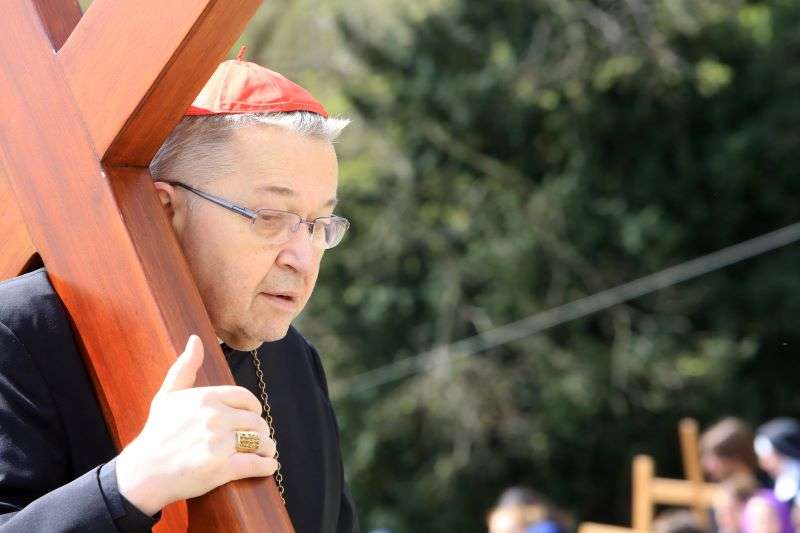
Cardinal Vingt-Trois, the Archbishop of Paris
Catherine LeBlanc/Alamy
The Advisory Council of Victims of Abuse at the German bishops’ conference sought to open canonical proceedings against Cardinal Rainer Maria Woelki of Cologne. In a letter addressed to the Pope submitted on Friday 17 July 2025 to Bishop Stephan Ackermann of Trier, the next-most senior bishop of the Cologne province, they ask that a preliminary investigation against the cardinal be initiated. Woelki, they said, “irresponsibly and unlawfully failed to fulfil his official duties” and committed perjury in connection with the public prosecutor’s investigations against him. Two investigations by the public prosecutor’s office were discontinued due to insufficient suspicion of a crime. The Advisory Council of Victims said it could no longer be confident that acts of abuse can be investigated without regard for the perpetrators. For victims of abuse, “the cardinal’s apparent lack of insight into his own misconduct and serious failings is painful and retraumatising”. In its initial response the Archdiocese of Cologne dismissed “the application of the canon law norms mentioned in the letter”. It said the public prosecutor’s proceedings against Woelki had not been conducted to investigate acts of abuse but to clarify the handling of reports of possible offences, and they raised “further serious allegations … without providing any evidence”. It continued: “Cardinal Woelki would have liked the authors to have sought a critical exchange with him.”
German bishops intervened in the debate over the views of a candidate nominated for Germany’s constitutional court, the country’s highest court. Frauke Brosius-Gersdorf, a respected legal scholar, had previously written that there were grounds for saying that the right to protection of life should begin at birth and not at conception. The election of three judges, including Dr Brosius-Gersdorf, by the Bundestag was halted on 11 July after conservative deputies from the governing coalition refused their support. Dr Brosius-Gersdorf was subsequently vilified on social media, though she denied in a TV interview that she wanted to relax the current 12-week limit on abortion. Bishop Georg Bätzing of Limburg, the president of the German bishops’ conference, defended her, describing the current law as “a clever balance” and that attempts to change it would cause “splits in society”. The Archbishop of Bamberg Herwig Gössl, who had suggested that Brosius Gersdorf should refuse the nomination, later called her to apologise. The Church interventions were welcomed by the conservative chancellor Friedrich Merz. The vote cannot now take place until after the parliamentary summer recess.
Around 4,500 singers from 169 choirs from 18 countries attended the forty-fifth international Pueri Cantores festival in Munich on 16-20 July. Under the motto “Cantate Domino – Polyphony for peace”, they performed in concerts, church services in different languages, at prayers for peace, in public spaces and in social institutions. Pueri Cantores is an international network of 1,000 choirs in 43 countries comprising of 40,000 young singers. At the final gathering on the Marienplatz on Sunday the Archbishop of Munich and Freising Cardinal Reinhard Marx, one of the festival’s co-patrons, called the international Catholic community a “sign of peace and hope”, adding: “You can’t be a Catholic and a nationalist at the same time, a Catholic and hate others, or a Catholic and divide societies. That’s not possible.” Pueri Cantores showed that people from different countries can celebrate together at the heart of society, he said. “Everyone meets on equal terms … and doesn’t talk over each other.’
The former Archbishop of Paris Cardinal André Vingt-Trois (pictured above) died on 18 July aged 82. During his 12 years as archbishop from 2005 he was noted for regular interventions in France’s normally secular public life, including leading opposition to the legalisation of same-sex marriage in 2013. The current Archbishop of Paris Laurent Ulrich was to preside at his funeral Mass in the Cathedral of Notre-Dame de Paris on Wednesday.
A canon lawyer asked Cameroon’s bishops to call on the 92-year-old President Paul Biya to withdraw his candidacy for presidential elections in October. Nchumbonga George Lekelefac made a series of criticisms of Biya’s 43 years in power in a letter addressed to the bishops’ conference, contrasting Cameroon’s enormous natural resources with the poverty of its people. “Cameroon is in distress,” said Lekelefac, an advocate with the International League for the Defence of Priests’ Rights and Religious (LIDDPRRECR). “Despite Cameroon’s wealth in oil, gas, timber, and fertile land, over 55 per cent of Cameroonians live in poverty, with 37.7 per cent in severe deprivation. Infrastructure, including roads and railways, lies in disrepair,” he said. He accused the Biya government of involvement in gross human rights violations, particularly in the separatist conflict affecting Cameroon’s two English-speaking regions since 2016, in which at least 6.500 people have died and millions have been displaced. Lekelefac said that Biya, with his health failing, was no longer suitable for the demands of leadership.
The Archbishop of Abidjan Cardinal Ignace Bessi Dogbo urged Christians in Côte d’Ivoire to ensure elections in October are conducted peacefully and without unrest. Preaching at a Mass marking the end of the 2024-2025 pastoral year, the cardinal said: “Let us demystify, de-dramatise, and make elections simple and natural.” He also called on Ivoirians to “evangelise the elections in our country”, adding that they should be “good and joyful news, bringing life, not death or sadness”. He said the elections must be transformed into “a peaceful and fraternal exercise, where interests are harmonised and hearts are pacified, thus banishing all forms of injustice, manipulation or misuse of the law”. He urged Christians to bring to the polls “the joy of the Gospel, made up of peace, justice and brotherhood”. Tensions have escalated since key opposition figures – Tidjane Thiam, the leader of the main opposition Democratic Party of Ivory Coast, the former President Laurent Gbagbo and his close ally Charles Ble Goude, as well as former prime minister and rebel leader Guillaume Soro – were barred from taking part.
The Kukah Centre, a research institute founded by Bishop Matthew Hassan Kukah of Sokoto, began training 200 “community guards” for northwest Nigeria. The initiative aims to bridge the gap between formal and informal security arrangements and build a more cohesive strategy to protect citizens, improving the guards’ collaboration with conventional security agencies. In the past two years, three priests in Kukah’s diocese and two of his personal relations have been kidnapped and ransomed for large sums. Speaking at the launching of the programme, the director of the centre Fr Atta Barkindo affirmed its commitment to fostering positive change in Nigeria. He emphasised its focus “on good governance, interfaith dialogue, knowledge sharing, and the documentation of national experiences to guide future generations”. He identified “poverty, unemployment, lack of justice, and widespread desperation as the root causes of insecurity in the northwest and other northern regions”, reporting that “over 2.2 million Nigerians have been displaced by insecurity, including banditry, kidnapping, farmer-herder clashes, and insurgency in Nigeria, in the past few years”. Fr Barkindo disclosed that “estimated 632,000 people were killed across Nigeria in a single year” and expressed concern over “diminishing public confidence in conventional security institutions, as many communities now rely more on vigilante groups and informal security structures”. The project manager Tarseer Bamber said the centre was committed to “raising public awareness about peace building and social cohesion as the initiative would empower local security systems while fostering unity and mutual support among citizens”.
The Symposium of Episcopal Conferences of Africa and Madagascar (SECAM) has appealed for political leaders to address regional insecurity and conflicts that have claimed thousands of lives. The appeal on 15 July appeal came ahead of SECAM’s plenary assembly in Kigali later this month. The bishops noted the importance of ecumenism in those efforts towards addressing issues that include “justice and peace, reconciliation, healing and integral human development”. There is an urgent need, they said, to discuss the “current political and social dynamics across Africa”. More than 250 prelates, clergy, Religious and laity are expected to attend the plenary at the Kigali Convention Centre.
The Chaldean Patriarch of Babylon Cardinal Louis Raphaël I Sako appealed to the Iraqi government to stop “attempts to give historic Christian cemeteries to investors” for commercial development. In a statement last week, the patriarch asked Prime Minister Mohammed Shia’ al-Sudani to respond to reports that “private investment projects” in the southern Najaf province would raze two ancient burial sites, citing their importance in Iraq’s history spanning “the Akkadians, Sumerians, Chaldeans, Babylonians, Assyrians, Arabs, Persians, Christians, and finally Muslims”.
At least 63 people died in Pakistan’s Punjab province last week after exceptionally heavy monsoon rains triggered flash floods across villages, towns and cities, including the capital Islamabad and adjacent Rawalpindi. Christian settlements in the twin cities were badly hit due to the flooding “which caused widespread damage to homes, roads, and bridges across provinces”, according to the National Disaster Management Authority. Christian sanitary workers and low-income families make up a large portion of residents in informal settlements located along drainage channels. Residents complained that their settlements lack formal recognition, legal tenure, or access to municipal services, making them especially vulnerable during monsoon rains. “There was water everywhere,” said one youth volunteer in Shams Colony in Islamabad. “Even though the homes didn’t collapse, children were walking in knee-deep water next to open drains.”
The Islamabad High Court gave the federal government 30 days from 15 July to set up a commission to investigate the misuse of Pakistan’s blasphemy laws. It followed a landmark hearing into the “blasphemy business”, involving entrapment and extortion, which addressed the vulnerability of religious minorities, including on social media. The government-run Human Rights Commission of Pakistan said groups have made a “calculated use of the blasphemy laws for profit”, ensnaring over 450 people through fabricated accusations, sometimes with the complicity of law enforcement officers with ties to radical religious networks. Allegations of blasphemy in Pakistan can lead to extended imprisonment and mob violence. Atta-ur-Rehman Saman, of the Catholic Commission for Justice and Peace in Pakistan, said the country “must seize this moment to build a stronger and more humane legal system”.
A military court in Myanmar’s rebel-held area sentenced eight members of a local resistance group to 20 years imprisonment for murdering a Catholic priest in February. The court in Shwebo Township in the central Sagaing Region, which is under the control of the government-in-exile known as the National Unity Government (NUG), convicted the eight men of murder and condemned them to hard labour. Fr Donald Martin Ye Naing Win was 44 years old when he was reportedly killed after being accused of being an informer of the military junta. A priest of the Archdiocese of Mandalay, he was hacked to death on 14 February by members of a rebel group while he was serving at Our Lady of Lourdes Church in Kangyitaw Village, Shwebo Township. The killing sparked widespread condemnation and calls for justice, including from the Catholic Bishops’ Conference of Myanmar. The NUG’s Ministry of Home Affairs and Immigration also issued a statement condemning attacks targeting civilians, including religious leaders. Since the military coup in February 2021 and consequent conflict, at least 6,700 people, mostly civilians, have been killed in Myanmar. More than three million people, mostly women and children, have been displaced.
Participants in the tenth multi-faith peace pilgrimage to the demilitarized zone (DMZ) between North and South Korea appealed for peace and solidarity between the two nations. The Archdiocese of Seoul reported that around 40 participants took part in the “2025 Wind of Peace: DMZ World Youth Peace Pilgrimage”, held on 10-13 July. “There can be no world peace without peace on the Korean Peninsula,” it said. The event was organised by the archdiocese’s Korea Reconciliation Committee and sponsored by the Ministry of Culture, Sports and Tourism. It consisted of visits to various locations along the demilitarised zone and a silent walk along a 10-kilometre coastal fence path, while praying the rosary. The Korean War (1950-53) ended with an armistice, not a peace treaty, which means that North and South Korea are technically still at war.
The United States Small Business Association opened a “Centre for Faith”. Under the Biden administration, Economic Injury Disaster Loans were not available to faith-based organisations, but in a statement on social media SBA Administrator Kelly Loeffler said the Trump administration was “rooting out religious discrimination – and embracing religious freedom” in its work. “[The SBA] is committed to ending the era of weaponised government that has systematically discriminated against Americans of faith – even denying them access to vital disaster relief in times of tragedy.” The Department of Health and Human Services, the Department of Education, the Department of Homeland Security, and the Department of Justice have also launched centres for faith.
A federal judge granted the Catholic dioceses of Washington state an injunction against a new law that made clergy “mandatory reporters” of child sex abuse without any exemption for information gathered in the confessional. The law was set to take effect on 27 July. United States District Court Judge David Estudillo held that the new state law would likely be found unconstitutional because of its “failure to demonstrate why it has an interest of the highest order in denying an exemption to clergy while making such exemptions available to other professionals who work with under-served children”. The new law did carve out an exemption for lawyers, citing attorney-client privilege. The Archdiocese of Seattle welcomed the ruling in a statement: “The Catholic Church in Washington has spent years strengthening its approach to protecting minors and vulnerable adults through its Safe Environment programmes, background checks, and reporting policies. Across the Archdiocese of Seattle and the Dioceses of Spokane and Yakima, priests – and all Church personnel – are already required to report suspected abuse to law enforcement or child protection agencies. These policies cover diocesan parishes, schools, and other ministries. The Church supports mandatory reporting except in the narrow instance of the sacrament of confession.”
Pope Leo declared the recovery of a premature baby in a Rhode Island hospital in 2007 a miracle, the first recognised in his pontificate. Tyquan Hall did not breath for more than an hour after his induced birth and had a very weak pulse. The doctor attending to him, Juan Sanchez-Esteban, prayed to the Venerable Salvador Valera Parra, a nineteenth-century priest from his native Diocese of Almería, in southeast Spain. The baby’s sudden recovery “without external intervention” and without lasting developmental damaged was attributed to Valera’s intercession.
The Archbishop of Santiago Cardinal Fernando Chomali Garib appealed last week for peace during Chile’s general election in November. “I call on the presidential candidates to respect the dignity of their opponents, never to use violence in any form as a political method, to be an example of civic culture, generosity, and mutual respect for young people; and to promote ideas, not hatred,” he said. The 2025 elections are expected to be among the most polarised in recent history, with a sharp clash between a radical left and an ultra-conservative right. Voters will elect the President of Chile, renew all seats in the Chamber of Deputies, and fill half of the seats in the Senate. Recent opinion polls show the current left-wing government losing popularity amid sluggish economic growth and rising fears over organised crime and immigration.
The Argentine bishops’ conference sent a delegation to Peru in a project titled “Argentine Church, the Amazon is your mission”. The group will carry out mission work in the vicariate of Puerto Maldonado in the Peruvian Amazon, promoted by the Argentine Pontifical Mission Societies with the support of the bishops. The mission focuses on “a missionary Church with an Amazonian face”, referring to the vision of the Church presented by Pope Francis in Querida Amazonia, one deeply rooted in and shaped by the local culture, environment, and the needs of indigenous and vulnerable populations. The Apostolic Vicar of Puerto Maldonado, Bishop David Martínez de Aguirre Guinea, supports the initiative. More than 150 settlements of various types are in the area, from those concentrated in urban centres to indigenous communities of the Asháninka and Machiguenga ethnic groups.
The Vatican’s mission to the United Nations called on developed nations to assist developing countries with debt relief to aid their growth, especially in this Jubilee Year. Archbishop Gabriele Caccia, the Holy See’s Permanent Observer to the United Nations in New York, addressed two panels on the implementation of the UN’s Sustainable Development Goals on 16 July. The archbishop affirmed that the international community bears the “moral and political responsibility” to help countries achieve sustainable development. Many developing countries struggle with the burden of repaying unbearable sovereign debts, he said, noting that 3.4 billion people live in nations that spend more on interest payments than on healthcare and education combined. “Providing debt relief is not an act of generosity,” he said, “but a necessary step towards creating the fiscal space countries need in order to invest in integral development.”
Pope Leo XIV will celebrate the Jubilee of Youth from 28 July to 3 August in Rome, opening with a Mass in St Peter’s Square. To close the week, he will celebrate Mass and hold a vigil at Tor Vergata University, which John Paul II visited for the Great Jubilee in 2000. “To you young people I say: I look forward to seeing you … at the Jubilee of Youth! May the Virgin Mary, Queen of Peace, intercede for us,” the Pope said. Young people aged 16 to 35 will spend the week engaging in prayer vigils, cultural activities, pilgrimages, volunteer work, and a Penitential Day at the Circus Maximus. The event coincides with the first Jubilee of Digital Missionaries and Catholic influencers on 28 and 29 July. More than one thousand people are set to attend the event. The event will celebrate “the mission of fostering hope in the digital world through different voices, cultures and languages”. Organised by the Dicastery for Communications, the Jubilee initiative aims to promote “a church without borders” and “formally recognises the digital environment as a true field of mission”. Before his death in April, Pope Francis urged Catholics to be “Good Samaritans” in the digital world.
Stay updated — add us as a preferred news source on Google:


Help us keep The Tablet’s voice independent, clear and far-reaching.
Founded in 1840, The Tablet is the leading independent English-language Catholic weekly, celebrated for great writing, astute analysis, brilliant arts and books reviews and trustworthy reporting from correspondents in Britain, Ireland, Rome and across the world.
Independent, high-quality journalism is at the heart of what we do. The Tablet does not have deep pockets and we are not funded by rich donors. If you appreciate our work please consider supporting The Tablet’s Development Fund. It only takes a moment and you can cancel at any time.
- Support with £5 per month
- Support with £10 per month
- Support with other amount.

MOST READ ARTICLES
-
1
Pope returns to Vatican after hospital discharge
-
2
Diverse schools that are 100 per cent Catholic
-
3
Under endless skies
-
4
Battling confession fatigue
-
5
Nigerian bishop scorns suggestion of running in presidential election
-
6
Schismatic Spanish nuns strip contents of convent before eviction
FROM THE EDITOR'S DESK


