News Briefing: Church in the World


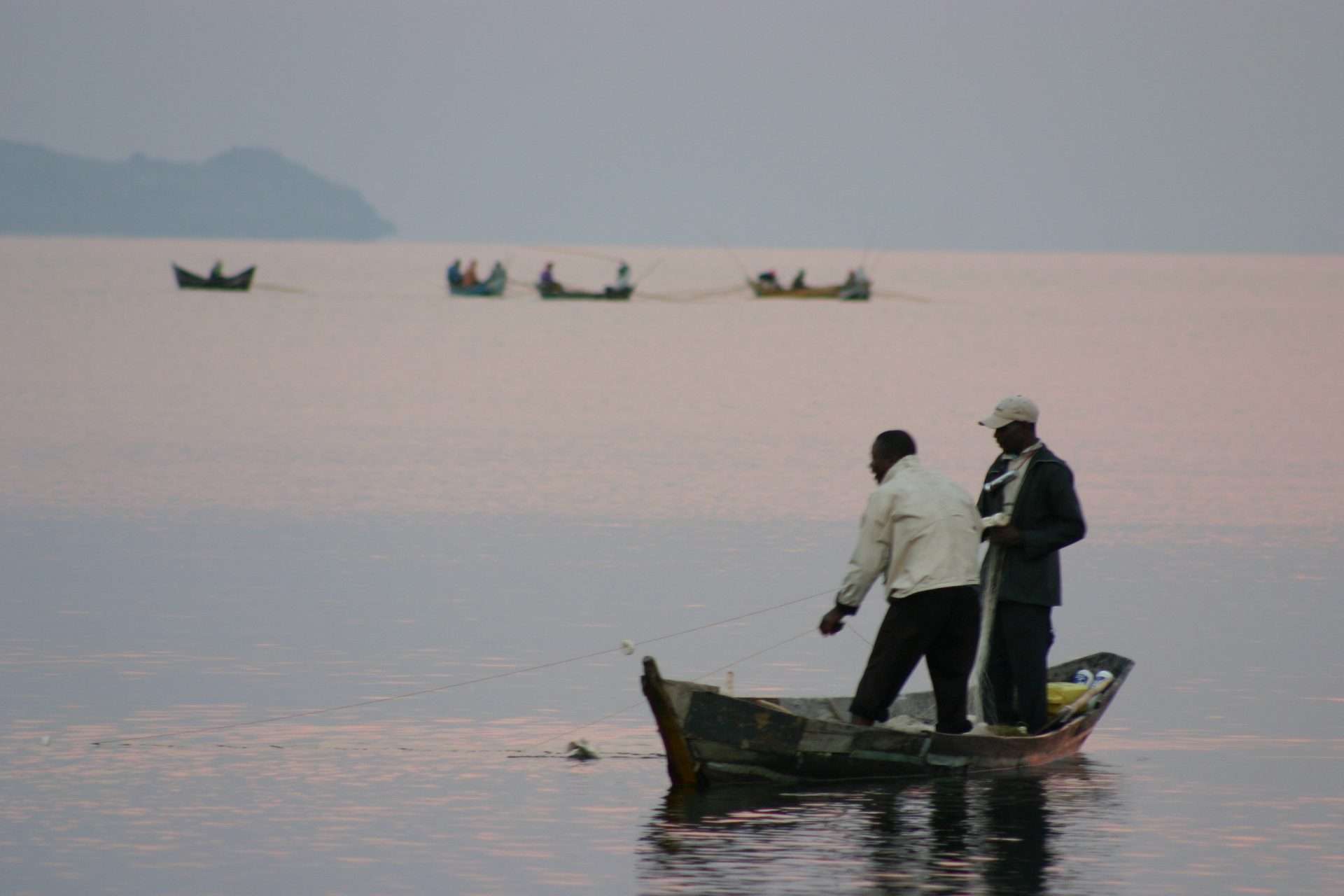
A Catholic environmental activist in Kenya warned that an oil pipeline could threaten those who depend on Lake Victoria for their livelihood.
Beckie Stokes / flickr | Creative Commons
The Pope prayed “that all forms of violence may always be avoided” after reports of deaths during protests in Madagascar.
Youth-led demonstrations against the government began on 25 September following repeated water and electricity cuts. Protesters also condemned the failing infrastructure and political corruption they said were responsible for grim economic conditions.
Pope Leo responded to the protests at his general audience on 1 October, after the United Nations reported that 22 people died and around 100 were injured in clashes between protesters and security services – figures rejected by the Malagasy government. Leo prayed that the “pursuit of social harmony may be encouraged through the promotion of justice and the common good”.
President Andry Rajoelina dissolved the government last week and on Monday appointed a new prime minister, but protests continued demanding the president’s resignation.
A Catholic environmentalist in Kenya has warned that Lake Victoria faces an unprecedented threat from the East Africa Crude Oil Pipeline (EACOP). A third of the pipeline’s length will pass through or near the lake.
Flavian Wanzala, speaking at an event last week to mark the Season of Creation, called the pipeline a disaster waiting to happen, saying it could disrupt the lives of 40 million people who depend on Lake Victoria for their livelihoods. A single oil leak could devastate the lake’s ecosystem, destroy livelihoods, and cripple Kenya and the entire continent, she said, making the project’s economic benefits an unacceptable gamble with their primary water source.
The project is led by a French company that will take 62 per cent of the profits, while Uganda and Tanzania each get 15 per cent, and a Chinese insurance company takes eight per cent. “Clearly, Africa is not the one benefiting,” said Wanzala.
Catholic bishops expressed their solidarity with the Ethiopian Orthodox Tewahedo Church after the collapse of wooden scaffolding in a church left at least 36 people dead and 200 injured.
The Archbishop of Addis Ababa Cardinal Berhaneyesus Demerew Souraphiel, the president of the Catholic bishops’ conference, told Orthodox leaders that “we share in your sorrow and unite with you in prayer during this time of grief”.
Orthodox Christians had gathered early morning on 1 October at the Arerti St Mary’s Church in Minjar Shenkora Woreda for a Marian festival. The church, about 43 miles from Addis Ababa, was undergoing renovation and hundreds of worshippers had climbed on makeshift scaffolding to view a mural painted on the church’s ceiling.
The Bishop of Tombura-Yambio Edward Hiiboro Kussala issued a letter of solidarity to the people of South Sudan’s Nagero County, condemning violence that has displaced at least 7,000 people and calling for an immediate ceasefire to protect civilians.
Bishop Hiiboro expressed sorrow over reports of families hiding in bushes without food, medicine, or shelter after recent clashes in the area. “You are not forgotten,” he said, “our land cries out for peace, reconciliation, and the respect of every human person created in the image of God.”
The bishop urged armed groups to show restraint and respect for human dignity, saying: “Cease hostilities! Respect human life! Protect civilians!”
Parts of Western Equatoria State have seen clashes between militia linked to the South Sudan People’s Liberation Movement-in-Opposition and the government’s South Sudan People’s Defence Forces. Gunmen looted homes, schools and health facilities, leaving survivors forced to endure heavy rains in the open.
Bishop Hiiboro said humanitarian agencies had delivered emergency aid in collaboration with Caritas South Sudan, the Diocese of Wau and others.
Catholic groups were among more than 100 religious organisations that appealed for an end to the siege of the Sudanese city of El Fasher. They said the Rapid Support Forces (RSF) militia was weaponising starvation against the 260,000 civilians trapped there, half of them children.
In a statement on 2 October, groups including the Denis Hurley Peace Institute of the Southern Africa Catholic Bishops’ Conference and Pax Christi USA said the 500-day siege had transformed El Fasher into an open-air prison, surrounded by more than 38km of berms, or earthen walls, to block all humanitarian aid.
The appeal called for “safe humanitarian access, including voluntary evacuation routes for the civilians trapped in El Fasher” to allow them “safe, voluntary, and dignified passage”.
An Iranian court turned down an appeal against the prison sentences of five Christian converts, in a case which religious rights groups say criminalises ordinary expressions of faith. The advocacy group Middle East Concern asked for prayer and urged the Iranian authorities to stop treating Christian activity as a crime.
According to the organisation, the five men were originally arrested in June 2024 in the towns of Varamin and Pishva, south of Tehran, at their homes and workplaces. They were held in Tehran’s Evin Prison before release on bail.
In July, the Revolutionary Court of Varamin sentenced them to seven years and six months in prison for “educational and promotional activities deviating from and disrupting Islamic law, with connections to foreign countries”, and an additional seven months for “propaganda against the system”.
The charges were based on their participation in Christian training in Turkey and their attendance at house churches and online meetings.
Pope Leo XIV prayed for the victims of the magnitude 6.9 earthquake in Cebu province, in central Philippines, which killed at least 79 people and injured over 500 others.
“I express my closeness to the dear Filipino people. In particular, I pray for those most severely affected by the consequences of the earthquake,” the Pope said before the Sunday Angelus at St Peter’s Square on 4 October.
The earthquake took place in the evening of 30 September, the same day as the installation of the new Archbishop of Cebu Alberto Uy. The former Bishop of Tagbilaran visited earthquake victims in his new diocese – the largest in the Philippines – the next day.
Archbishop Uy also ordered a structural assessment of churches after a 139-year-old church, the Archdiocesan Shrine of Santa Rosa de Lima, partially collapsed. He said earthquake victims need hope more than anything.
“When we give help, we do not just share food, clothing, or money – we share Christ Himself, for He is our true hope,” Archbishop Uy said. “Every gift we extend becomes a sign of His presence, reminding the needy that they are not forgotten and that God walks with them.”
The president of the National Association of Black Catholic Administrators (NABCA) criticised the “loss of civility and respect” in the United States’ public discourse after the assassination of Turning Point USA founder Charlie Kirk.
Fr Reginald Norman of the Diocese of Bridgeport, recently re-elected NABCA’s president, called the assassination a “tragedy” but said there were uneven responses and a climate of threatened freedom of speech, including threats of violence against Black Catholic bishops.
“In the wake of Kirk’s death, we are witnessing alarming levels of anger, threats, and division across our country,” Norman said.
After the recent annual meeting of NABCA, which comprises Black Catholic ministry directors and professionals from around the country, he said, “the Black community in particular is on high alert … political and lay leaders speak negatively about Black people without consequence, yet when Black Americans defend their contributions or share a different opinion, their voices are too often ignored, disparaged, or threatened.”
A parochial school in New Jersey placed a teacher on paid administrative leave after she told colleagues she was pregnant and she was acting as a surrogate for another woman.
Jadira Bonilla, who teaches kindergarten, explained that she had previously served as a surrogate for the couple while teaching at a different Catholic institution, and there had not been a problem. This time, “they said I was possibly in violation of my contract and that I would be suspended or placed on administrative leave”.
The Diocese of Camden said it was engaged in pastoral conversation with Bonilla about the matter. The school’s principal Steve Hogan said “it has been our hope to meet with her to help her fully understand the Catholic Church’s teaching on surrogacy”.
In 2024, Pope Francis reaffirmed the Church’s opposition to surrogacy, calling it “deplorable” and saying it “represents a grave violation of the dignity of the woman and the child”.
Pope Leo received a report on the persecution of the Nicaraguan Church. “Nicaragua: A Persecuted Church”, compiled by the exiled lawyer and researcher Martha Patricia Molina, lists 1,010 reports ranging from assaults on clergy to attacks on sacred spaces and the suppression of traditional Catholic processions.
Since 2019, authorities have banned more than 16,500 religious processions while more than 300 priests, nuns, and religious workers have abandoned pastoral work. Many have been obliged to flee Nicaragua. Only 32 cases of Church persecution have been reported this year, but Molina said this did not reflect an improvement, only the growing intimidation of priests and religious communities.
More than 28,000 people have signed a petition appealing for a Spanish court to drop a conviction of hate crime for Islamophobia against a priest of the Archdiocese of Barcelona.
The Association of Spanish Muslims Against Islamophobia accused Fr Custodio Ballester and two others, including another priest Fr Jesus Calvo, of Islamophobia during a podcast in 2017. He told the Catholic News Agency: “My words were never discriminatory of hateful. I’m being made an example of so others will shut up.”
In 2016, Ballester wrote an article in response to a pastoral letter from the then-Archbishop of Barcelona Cardinal Juan José Omella appealing dialogue with Islam, saying that such dialogue was “impossible.” He wrote: “Islam does not allow for dialogue. You either believe or you are an infidel who must be subdued one way or another.”
Ballester was found guilty last week and awaits his sentence, which could extend to a three-year prison sentence, from Málaga provincial court.
More than 1,000 people marched to the Place de La Nation in Paris in protest against the persecution of Christians, after the murder of a disabled Iraqi Christian refugee in eastern France. Ashur Sarnaya, a wheelchair user, was stabbed to death outside his home in Lyon on 10 September during a live social media broadcast as he spoke of his Assyrian Christian faith.
The youth-led march on Sunday 28 September was the first of its kind in Paris, and organised by Catholic, Orthodox and Protestant social media influencers. Some carried the Cross, and others’ posters emblazoned with the face of Sarnaya, or the flags of France, Lebanon and Iraq.
“We are here to denounce the persecution targeting 380 million Christians in 72 countries,” said one of the organisers. “This persecution also happens in Europe, but no one talks about it.”
Bishop Johan Bonny of Antwerp joined a 30-hour Gaza protest fast in a church and began the public reading of the names of 12,000 Palestinian and Israeli children killed in the war.
The protest movement has spread across Belgium with fasts arranged by groups in churches in Brussels, Ghent, Bruges, Ypres, Leuven and smaller towns, as the government announced diplomatic recognition of Palestine.
“Praying for an end to the war and remembering the names of the victims is the least we can do,” said Bishop Bonny, who launched the seven hours of reading the names of dead children. Reading the names of 67,000 reported dead would have taken a week. “When this war is over, the innocent dead will be forgotten. It’s important that their names resonate,” he said.
The protest on 3-4 October was organised by the Diocese of Antwerp diocese, the Belgian offices of Pax Christi and Sant’Egidio and local associations. Bonny, who slept that Friday night among fellow protesters in a large Antwerp church, said the fast followed Pope Leo’s appeal in August for fasting and prayers for peace in the world.
“The worst human suffering is yet to come,” Bonny said. “Now that almost all buildings have been destroyed and are uninhabitable, the remaining inhabitants will have to disappear … This coming winter will be one of the most horrific and dehumanising in the history of the Middle East.”
The apostolic nuncio to Germany Archbishop Nikola Eterovic and the Governing Mayor of Berlin Kai Wegener signed the first concordat between the federal state of Berlin and the Vatican.
It establishes their cooperation in the newly-founded Central Institute for Catholic Theology in Berlin’s Humboldt University, including Church involvement in the syllabus, the institute’s place in the organisational structures of the university, its right to confer higher degrees and its policies for recruiting teachers. It leaves Hesse as the only state without an agreement with the Vatican.
Originally due to come into effect in 2022, the delayed concordat replaces the so-called Final Protocol which regulated relations between the state and the Catholic Church for West Berlin since 1970 and since 1991 for the entire reunified city.
Church leaders criticised the use of Christian ideas and language by the leader of the populist Austrian Freedom Party (FPÖ) Herbert Kickl. In a party conference speech Kickl promised to restore “faith, hope and love” to the people, while biblical references appeared in other party publications, such as a poster saying “Your will be done”.
The Archbishop of Salzburg Franz Lackner said faith expressions and phrases had been used as political messages, “something we as the Church cannot accept from any party”. He told Vienna’s Kronen Zeitung: “I am not commenting on political speeches or party politics but on the usurpation of the faith – it is that we are rising up against.”
Catholic Action said that “the chancellor of the people [as Kickl refers to himself] and the apostle of the peoples [St Paul] cannot be reconciled”. It continued: “Fearmongering is not part of the good news of the Gospel, nor is the exaltation of one’s own position and ideology above that of others.”
Pastoral theologian Paul Zulehner told the Salzburger Nachrichten that the West needed to be saved from Kickl’s “dubious political Catholicism”.
Hans-Joachim Sander, professor emeritus of dogmatics at the University of Salzburg, called Pope Leo an “ordinary seaman” (Leichtmatrose) on the bridge of the wavering barque of St Peter, which he said was doomed to capsize before long.
Sander told the Austrian-based feinschwarz.net platform that the “steering” was dragged to “the lower decks” during the conclave, and that many of those trying to take control are people “to whom one would prefer not to entrust a single soul”.
Responding to the Pope’s recent comments on abuse cases, Sander said the challenge would not disappear with the resignation of perpetrators from the Church because “more new ones than one can bear join their ranks”. He claimed Pope Leo “intends to sit out the most profound crisis of his Church since the Reformation”, and could not address the abuse scandal. “Regardless of how long his pontificate lasts in the end, he won’t succeed in doing that.”
Women in particular would leave the Church in their droves, Sand said, comparing discussion of reform to Waiting for Godot. “They are just going to get up and leave,” he said. “They really have better things to do and will find better things.”
Pope Leo issued the first motu proprio of his pontificate, reforming the Vatican’s financial governance. The document Coniuncta curia affirms the principle of “co-responsibility in communion” in Pope Francis’ apostolic constitution Praedicate Evangelium, but says successive provisions should be “consolidated” and the roles of different institutions “better defined” to foster “a dynamic of mutual collaboration”.
It repeals the 2022 document that required the Administration of the Patrimony of the Apostolic See (APSA), which manages Vatican assets, and other financial bodies associated with the Holy See to transfer all investment funds into the Institute of the Works of Religion (IOR – the Vatican Bank).
Coniuncta curia directs that while APSA should generally use the IOR, it may use other financial intermediaries in ither countries where the Vatican’s investment committee deems it “more efficient or convenient”. It confirms that all investments must follow the provisions and policy of the committee, founded in 2022 and chaired by Cardinal Kevin Farrell.
Stay updated — add us as a preferred news source on Google:


Help us keep The Tablet’s voice independent, clear and far-reaching.
Founded in 1840, The Tablet is the leading independent English-language Catholic weekly, celebrated for great writing, astute analysis, brilliant arts and books reviews and trustworthy reporting from correspondents in Britain, Ireland, Rome and across the world.
Independent, high-quality journalism is at the heart of what we do. The Tablet does not have deep pockets and we are not funded by rich donors. If you appreciate our work please consider supporting The Tablet’s Development Fund. It only takes a moment and you can cancel at any time.
- Support with £5 per month
- Support with £10 per month
- Support with other amount.

MOST READ ARTICLES
-
1
Pope returns to Vatican after hospital discharge
-
2
Diverse schools that are 100 per cent Catholic
-
3
Under endless skies
-
4
Battling confession fatigue
-
5
Nigerian bishop scorns suggestion of running in presidential election
-
6
Schismatic Spanish nuns strip contents of convent before eviction
FROM THE EDITOR'S DESK