News Briefing: Church in the World


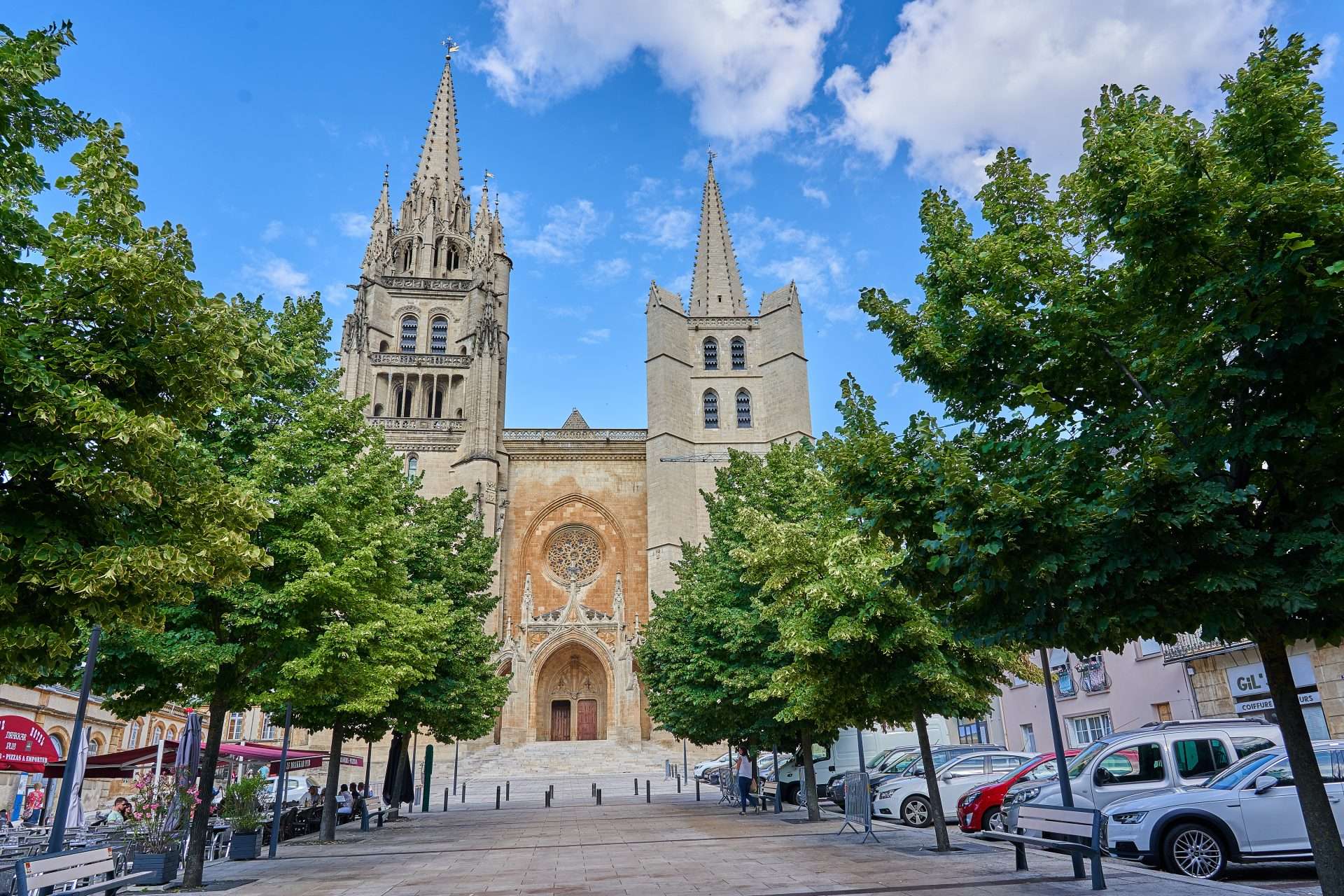
The medieval cathedral in Mende in southern France will open to visitors just three mornings each week due to security problems.
Graham Churchard / flickr | Creative Commons
Cafod joined the condemnation of Israel’s ban on the United Nations Relief Works Agency (UNRWA), which operates humanitarian projects in Gaza and the occupied Palestinian territories.
“The humanitarian needs in Gaza are staggering, UNRWA must be allowed to deliver aid,” the Cafod said in a statement on 29 January, the day before the ban was due to come into effect.
Elizabeth Funnell, the aid agency’s Country Programme Representative for the Middle East, said: “The scale of the damage and destruction over the last 15 months in Gaza is immense, and the task of rebuilding will take many years. UNRWA is the backbone of the humanitarian response in Gaza, providing essential logistics and coordination support, and is the only agency capable of delivering aid at the necessary scale, and must be allowed to continue operations.”
Caritas Internationalis said it “stands behind UNRWA and emphasises its indispensable role in Gaza and in the whole region”. It said, “there is no other UN agency capable of carrying out this critical work in the whole region, including the West Bank, Gaza, Syria, Lebanon and Jordan.”
Alistair Dutton, secretary general of Caritas Internationalis, said: “Banning UNRWA jeopardises the rights and lives of Palestinian refugees and denies their right to receive humanitarian assistance, enshrined in International Humanitarian Law, particularly the Geneva Conventions. We all share a moral obligation to strenuously oppose this ban to protect the wellbeing of vulnerable people and save lives.”
Pope Francis pleaded for an end to hostilities in Sudan at the Angelus on 26 January, decrying the immense suffering in the country, including the displacement of 11 million people, and the civil war’s damaging consequences in neighbouring South Sudan.
Speaking at the first International Summit on Children’s Rights at the Vatican on 3 February, he urged world leaders to listen to children suffering from war, poverty, and migration. “What we have tragically seen almost every day in recent times, namely children dying beneath bombs, sacrificed to the idols of power, ideology, and nationalistic interests, is unacceptable,” he said.
At least 54 people were killed last weekend when paramilitary fighters attacked an open market in the city of Omdurman, close to Khartoum. A week earlier, around 70 people were killed in an attack on the only functional hospital in the besieged city of Al Fashir in the western region of Darfur.
World is ignoring ‘tragedy’ in Sudan, warns Church
We cannot ignore Sudan’s humanitarian crisis
Bishops in Ivory Coast urged the electoral commission to guarantee “free, fair, transparent, credible and inclusive elections” in the national polls in October. Their intervention on 26 January came at the end of their one-week ordinary plenary assembly in Boudoukou. They emphasised the need for restored public confidence in the electoral process, arguing that it would be a prerequisite for peace.
“There is no doubt that the Ivorian nation is at a crossroads in this Jubilee year, which is also an election year. The way its sons and daughters conduct themselves during this period will be crucial for its survival,” the Bishops’ Conference of Cote d’Ivoire said. They urged the Independent Electoral Commission (CEI) to “do everything possible to guarantee free, fair, transparent, credible, and inclusive elections in order to strengthen citizens’ trust in the electoral process.”
Ivory Coast faced its worst post-election protests in 2010-2011, when President Lauren Gbagbo refused to cede power after reportedly losing to Allassane Ouattara. The resulting fighting led to the deaths of at least 3,000 people. Ouattara, who has remained in power since 2011, had planned to leave power in 2020 after serving his constitutional five-year term limit. The bishops have expressed concern that a similar scenario could evolve after the October elections.
A bishop in Angola said a new generation of priests and faithful must emerge “ready to confront the enemy, suffer, die, and triumph alongside Christ”.
Addressing clergy and theologians in Angola, Bishop Emílio Sumbelelo of Vianna warned of the dangers of a secularised world and its impact on Christians. “We live under the influence of a secularised world, marked by theories of relativism,” he said. “Secularism, along with its doctrines, continues to infiltrate all social classes, including among us here.”
He noted that all the forces of anti-Christianity formed a single front, while a significant number of Christians were becoming increasingly secularised, unaware of this shift. “The final battle of the spirits is about to begin,” he warned, but was quick to point out that Christ can never divide the Christians.
He therefore urged the clergy and laity to rise to the occasion: “The great moment has come. May this hour find a generation – priests and faithful – ready to confront the enemy, suffer, die, and triumph alongside Christ.”
Drug and alcohol abuse among young people are a major threat to Uganda, local bishops warned, amid a worsening economic situation and widespread social ills. At the close of a diocesan prayer week in the north of the country at the end of January, the bishops condemned the harmful effects of the drugs trade on young people.
“Drug abuse is also leading to mental health issues and have become a challenge for society,” they said in a statement. Some Ugandan dioceses have established drug and alcohol counselling and rehabilitation ministries, while bishops have also raised concerns about crimes related to drug and alcohol abuse such as violence and sexual abuse.
Cardinal Fridolin Ambongo Besungu of Kinshasa joined Malawi’s bishops at a meeting with government officials to address the country’s mounting economic and social problems, with the discussions also covering spiritual challenges. Cardinal Ambongo, the president of the Symposium of Episcopal Conferences of Africa and Madagascar (SECAM), said the Malawian bishops were working to find new ways to engage political leaders.
“We have to talk to them,” the cardinal said in a SECAM briefing. “In many countries I go, if possible, I meet the president to talk with them and the politicians because they are the first responsible for the people.” He said the growth of the Church in Africa will require more engagement with leaders.
Catholic Church in Malawi calls for judicial reforms
African and European bishops meet to discuss Church future
A group of Christian and Muslim lawyers claimed that Pakistan’s blasphemy law had become a trap, exploited by some for financial gain.
They documented recent accusations against at least 450 people, which they said were organised as blackmail, with young people of different religions tricked and accused of blasphemy. The lawyers said that “these cases are clearly baseless and if this practice is not stopped, it will leave an indelible stain on the judiciary.”
Catholic lawyer and MP Khalil Tahir Sandhu held a public conference to expose the fraud and demanded action. “This alarming abuse of religious laws has become a terrible tool of extortion and raises serious concerns about the security and rights of all citizens,” said lawyer Sardar Mushtaq Gill.
Pakistan’s National Commission for Human Rights has also expressed concerns about the law. On 27 January a court in Rawalpindi sentenced four Muslim men to death for posting blasphemous content online. Their families claimed they had been lured into social media groups where controversial content was shared.
The Conference of Catholic Bishops’ in India (CCBI) offered prayers for the victims of a stampede that took place during a religious gathering in the northern state of Uttar Pradesh.
Nearly 30 people were killed and more than 60 injured in a crush in the early hours of 29 January, when thousands of devotees gathered at Prayagraj for the Maha Kumbh Mela (Festival of the Sacred Pitcher) tried to proceed for ritual bathing at the confluence of the Ganges and Yamuna rivers.
Cardinal Filipe Neri Ferrão, president of the CCBI, said: “It is heart-breaking to witness such a calamity during a sacred event that draws millions in devotion.” The cardinal, along with more than 200 prelates attending the conference’s thirty-sixth plenary assembly at Bhubaneswar, capital city of eastern Odisha state, offered special prayers and a Mass for the victims and their families.
The Kumbh Mela is one of the largest human gatherings in the world, with tens of millions attending its various pilgrimage sites.
The Supreme Court of India stayed a directive from the Kerala High Court ordering a transfer of property between rival Orthodox Churches, pending a review of the ruling.
On 30 January, the apex court halted the transfer of six church buildings in Kerala’s Ernakulam and Palakkad districts from the Jacobite Syrian Christian Church to the Malankara Orthodox Syrian Church. It ordered a review to examine the “true import” of judgments on the Churches’ dispute from the Supreme Court in 2017 and 2020.
The Kerala ruling had directed the transfer under the terms of the 1934 constitution which united the two Churches until 1975. Justices Surya Kant and N. Kotiswar Singh asked whether “in a dispute relating to religious affairs, can the civil administration be directed to take over a religious place and, if so, to what extent is such an intervention desirable in the public interest?” Justice Kant observed that “one of the issues bothering us is the police going into these religious places”.
The order continued: “What is the legal impact of The Kerala Right to Burial of Corpse in Christian (Malankara-Orthodox- Jacobite) Cemeteries Act, 2020 on the pending contempt petitions? Since we find that all the said questions require fresh consideration by the High Court, we remit the matter to the division bench to decide the fate of the contempt petitions afresh after hearing all the parties concerned.”
Indian Supreme Court demands Orthodox factions obey ruling
India orders government officials to take possession of six churches
The Archbishop of Yangon Cardinal Charles Maung Bo urged all combatants in Myanmar to cease fighting after four years of civil war. He was joined on 1 February in a Global Day of Prayer for Myanmar, led by Aid to the Church in Need.
Since the military seized power on 1 February 2021 and arrested most of the country’s democratically-elected leaders – including the Nobel Peace Prize Laureate Aung San Suu Kyi – Myanmar has moved from a fledgling semi-democracy into dictatorship. UN Secretary-General Antonio Guterres also called on the military to relinquish power and restore civilian rule.
Since the coup, over 6,000 civilians have been killed by security forces, while over 28,000 have been detained and at least 3.5 million displaced, particularly in ethnic regions. Nearly 15 million people are expected to need humanitarian aid this year.
Church leaders in the Philippines paid tribute to Fr Pedro Montallana, a Franciscan known for his work for environmental protection and the rights of indigenous people, who died at the end of January aged 75.
Fr Montallana, known as “Fr Pete”, was a major opponent of the controversial Kaliwa Dam, a key project under former president Rodrigo Duterte, which he warned would submerge 300 hectares of forest ecosystems in the Sierra Madre, affect the livelihoods of more than 100,000 people, and devastate the culture of the Dumagat-Remontados indigenous peoples.
Bishop Bernardino Cortez of the Prelature of Infanta in northern Quezon province said Fr Montallana “lived his life dedicated to the Charism of St Francis, serving the indigenous people of the prelature since 1993”. The bishops’ Episcopal Commission on Indigenous Peoples called him a “bearer of hope” for the indigenous Dumagat communities of the Sierra Madre.
Police in Western Australia arrested Christopher Saunders, the former Bishop of Broome, on six new charges including the alleged rape of a boy under 13. The arrest on 26 January brought the total number of charges against Saunders to 39, with 32 of them involving abuse allegations, filed since his initial arrest in February 2024.
In September 2023, following a scandal surrounding Saunders’ resignation in 2021, the Australian bishops said a Church investigation had found that his allege abuse did not involve any potential victims under the age of 18 at the time.
The Australian government’s National Redress Scheme granted compensation to two men who alleged they were abused as children by the late Cardinal George Pell. The scheme’s decision-maker accepted that Pell raped one claimant, then aged nine, and groped the other, aged eight, when he was a priest in the Diocese of Ballarat in the 1970s. They received AU$95,000 and AU$45,000 respectively. The decision reported that the diocese disputed the ruling, which critics said had a low standard of proof and little accountability.
Australian court reveals abuse charges against bishop
Unconquered – Cardinal George Pell
Violent clashes in north-eastern Colombia between the National Liberation Army and dissident groups of the former Revolutionary Armed Forces of Colombia left more than 100 dead and thousands displaced, Colombian bishops reported in their appeals for peace.
Bishop Israel Bravo Cortés of Tibú called on combatants in the Catatumbo region to “come to their senses and understand that killing each other and shedding even more blood in a territory that has always been stained with the blood of innocent men and women is not the right way”. He explained that the violence originated in “differences between the two revolutionary forces in the region and the banned gangs that are at war with the Colombian state”.
The Diocese of Tibú offered rooms in a seminary and other Church property to displaced people, with support from neighbouring dioceses. “Respect life and stop the massacre,” echoed the country’s bishops in a statement.
“What is happening here is a clear violation of international humanitarian law. The guerrillas are directly attacking the civilian population; peasants, indigenous people and people of African descent are the main victims of the conflict, not only in Catatumbo, but in various parts of Colombia.” At the end of the Angelus on 26 January, Pope Francis also expressed concern about the violence in Columbia.
Board members and the chief executive of the Second Harvest Food Bank of South Louisiana alleged the Archdiocese of New Orleans had dismissed them because they refused to allocate funds towards the archdiocese’s bankruptcy case and sexual abuse settlements.
A statement last week from some of the dismissed members said they were ousted after the chief executive Natalie Jayroe had refused to provide as much as $16 million from the Church-affiliated food bank to pay settlements for clerical sexual abuse. They reported that, despite months of pressure from the archdiocese, Jayroe and the board repeatedly rejected the request, arguing that funds were specific donations for addressing food insecurity across 23 parishes.
Archbishop Gregory Michael Aymond of New Orleans criticised their “misrepresentations” of the reasons for the terminations in a letter to supporters of Second Harvest. He said his priority was “to ensure day-to-day operations will remain on schedule and services will continue uninterrupted, which is made possible by your ongoing support”.
Aymond named three new members to the organisation’s board and insisted that donations “intended to support Second Harvest’s mission have not been used for the bankruptcy”.
The medieval cathedral in Mende in southern France will be open to visitors only three mornings per week as officials tighten security against increasingly frequent thefts and profanations of religious buildings.
Daily and Sunday Mass times will not be affected, nor concerts or official guided tours in the cathedral, the local prefecture said on 28 January. However, the fourteenth-century cathedral – begun in 1369 – will be locked at all other times. Vandals have increasingly targeted isolated French churches, stealing religious art, spray-painting obscenities and strewing consecrated hosts on the floor, because many cannot afford costly security systems.
State and local officials, who own most church buildings under to the 1905 French law separating Church and State, also struggle to invest in such protection. The Diocese of Mende, in the Lozère area northwest of Avignon, decided to lock the cathedral outside the announced times. Valuables include a twelfth-century Black Virgin statue, Aubusson tapestries and the clapper of what was the largest bell in Christendom when it was cast in 1516.
Pope praises ‘healthy laïcité’ on Corsican visit
Notre-Dame ‘both secular and religious’ site for the nation
St Thomas Aquinas may have died from a traumatic head injury, according to researchers. A study published in the journal World Neurosurgery said the saint’s reported symptoms before his death in Italy in 1274 align with the gradual progression of a chronic subdural hematoma. The condition, where blood collects slowly between the brain and its outer layer, is common after minor head injury.
A contemporary chronicler recorded that Aquinas was leaving the city of Teano while travelling to a Church council in France when he “hit his head on a certain tree which had fallen sideways, such that he became stunned and in a certain way was near falling”. He appeared to recover, travelling to the home of his niece in Maenza but, feeling weak and nauseous, moved to the nearby Abbey of Fossanova where he died on 7 March.
Researchers are calling for further study of the two relic skulls attributed to Aquinas, located in Italy and France.
Archbishop Charles Scicluna of Malta presided at a Mass to open a Catholic hospice in Santa Venera. St Michael’s Hospice, run by Hospice Malta, opened in a 15,000-square-metre property valued at €25 million, which previously housed the Adelaide Cini Institute. It will provide palliative care for more than 1,500 patients.
At the Mass in the Church of the Sacred Heart in the hospice courtyard – a restored neo-romanesque building where daily Mass will be offered – Archbishop Scicluna said: “It is with great satisfaction that we witness the transformation of the Cini Institute building, entrusted by the Church to Hospice, into a warm and welcoming space dedicated to providing essential palliative care services.”
He added that hospice care was “a profound expression of compassion”, as it upheld and safeguarded “the dignity of the human person during one of life’s most sensitive and meaningful moments”. In 2018, the archdiocese handed over the Cini Institute on a 50-year commodatum agreement (a gratuitous loan) to Hospice Malta.
The Pope urged the Roman Rota to exercise “prudence, justice and charity” when ruling on annulments. Addressing the officials of the Vatican’s highest legal tribunal at the start of the judicial year, Francis said: “We are called by the pain and hope of many faithful who seek clarity regarding the truth of their personal condition and, consequently, their possibility of fully participating in sacramental life.”
This year marks the tenth anniversary of the publication of two papal moti propria, Mitis Iudex Dominus Iesus and Mitis et Misericors Iesus, which reformed the process for annulments by empowering diocesan bishops to act as judges to nullify marriages. This abolished the need for a ruling from the Roman Rota in every annulment.
The Pope has also advocated offering annulments free of charge. He said the changes were inspired by the 2014 Synod of Bishops on the Family, which advocated more accessible, streamlined annulment procedures, to ensure Church structures serve the faithful effectively.
Stay updated — add us as a preferred news source on Google:


Help us keep The Tablet’s voice independent, clear and far-reaching.
Founded in 1840, The Tablet is the leading independent English-language Catholic weekly, celebrated for great writing, astute analysis, brilliant arts and books reviews and trustworthy reporting from correspondents in Britain, Ireland, Rome and across the world.
Independent, high-quality journalism is at the heart of what we do. The Tablet does not have deep pockets and we are not funded by rich donors. If you appreciate our work please consider supporting The Tablet’s Development Fund. It only takes a moment and you can cancel at any time.
- Support with £5 per month
- Support with £10 per month
- Support with other amount.

MOST READ ARTICLES
-
1
Pope returns to Vatican after hospital discharge
-
2
Diverse schools that are 100 per cent Catholic
-
3
Under endless skies
-
4
Battling confession fatigue
-
5
Nigerian bishop scorns suggestion of running in presidential election
-
6
Schismatic Spanish nuns strip contents of convent before eviction
FROM THE EDITOR'S DESK