Leading Christian bioethics centre to close


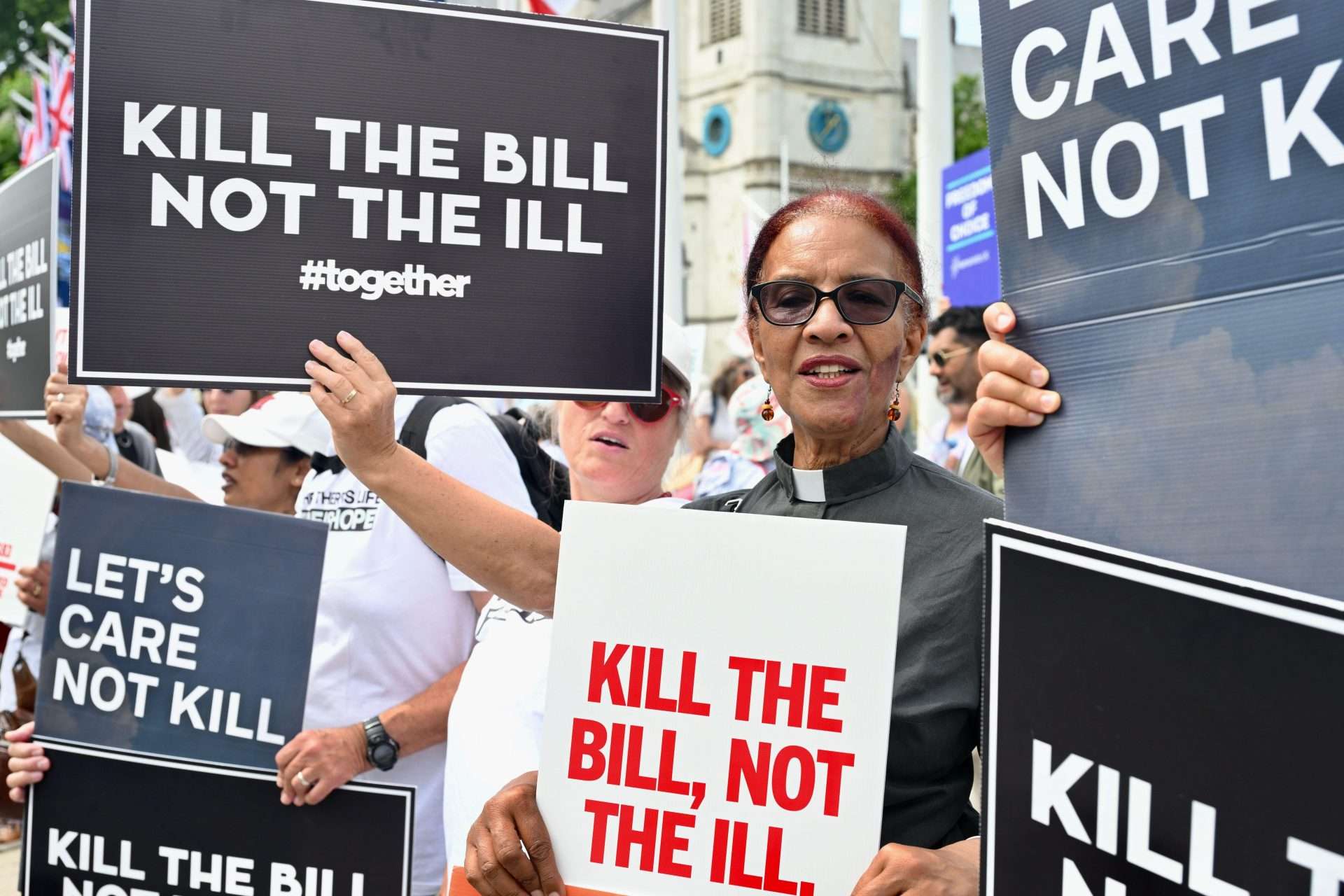
Protestors outside Parliament object to the assisted dying Bill which the Anscombe Centre argued forcefully against.
Michael Melia / Alamy
The Anscombe Bioethics Centre, based in Oxford and regarded as one of the finest institutes for bioethics in the world, is to be closed down ‘on financial grounds’.
The Anscombe Bioethics Centre, that has provided some of the most eloquent commentary on recent legislative developments on abortion and assisted dying, is to close.
Staff at the centre have recently been informed that it is to shut down, a decision made on financial grounds by the centre’s corporate trustee, the Catholic Trust for England and Wales, which supports the legal, financial and charitable activities of the Catholic Bishops’ Conference of England and Wales.
Operations will cease at the end of the month and donations are no longer being sought.
“It is the earnest hope of staff at the centre that some means may be found to continue to make available the resources of that the centre has generated, and also to continue the vital work of bioethical research and education that fully respects the dignity of the human person,” the Anscombe Centre said in a newsletter to supporters today.
The centre acknowledged the generous financial support it has received from numerous trusts, organisations, communities and individual donors.
“We are also well aware that the core funding that came through the Day for Life fund came from the generosity of many thousands of parishioners. And finally, we would like to acknowledge the support the centre has received from the Catholic community in Ireland, especially during the pandemic when second collections were not possible,” it said.
It also emphasised the crucial role of the donations in helping educate and support generations of conscientious healthcare professionals, clerics, and lay people over almost 50 years: “This support has also helped prevent repeated attempts to legalise euthanasia or assisted suicide in Britain and Ireland from 1993 to the present.”
Even where campaigns against legislation have not succeeded, the centre has continued to give advice to professionals, carers and patients about how to act ethically. Despite its efforts, however, assisted suicide bills have continued to make progress both in Scotland and in England and Wales.
“While the Centre will no longer be in a position to provide new resources, we urge people to make use of the resources we have already made available and to engage with the Scottish Parliament and with the House of Lords as these bodies continue to debate dangerous and ill-thought-out legislation,” the centre said.
Dr Michael Wee, former bioethicist at centre and now a postdoctoral researcher at the University of Oxford, told The Tablet, “Institutions like the Anscombe Centre are not easily replaceable. They cannot be grown overnight. This decision to close the Centre is a major setback for Catholic bioethics in Britain. The Church will lose a valuable voice that speaks with both scholarly rigour and a sensitivity to the real-life challenges of doctors, nurses, midwives, chaplains, and ordinary patients.
“I am proud to have been part of the Centre’s distinguished tradition of providing intellectual and moral formation for doctors, medical students, priests, and seminarians. I worry that without strong institutions, keeping such formation ongoing and of a consistent quality will not be possible.”
A spokesperson for the Bishops’ Conference told The Tablet: “At a recent meeting, the Catholic Trust for England and Wales considered the future of the Anscombe Bioethics Centre. For a number of years, the Governors and Director of the Anscombe Bioethics Centre have been exploring a range of options to secure the continued work of the Centre after its funding dropped to unsustainable levels. Sadly, none of these options appeared viable. As such, the Director was informed that a period of consultation would begin regarding future staffing of the Centre which is inevitably related to the future of the Centre itself. That period of consultation will end on 31 July 2025, and it is appropriate for any discussions to remain confidential.
“The bishops of England and Wales are deeply grateful for the work that the Centre has done since its inception in 1977, including the work of Prof David Jones, the current director. The Centre has established an international reputation. The decision to consult with staff about their future employment was taken solely for financial reasons.”
Stay updated — add us as a preferred news source on Google:


Help us keep The Tablet’s voice independent, clear and far-reaching.
Founded in 1840, The Tablet is the leading independent English-language Catholic weekly, celebrated for great writing, astute analysis, brilliant arts and books reviews and trustworthy reporting from correspondents in Britain, Ireland, Rome and across the world.
Independent, high-quality journalism is at the heart of what we do. The Tablet does not have deep pockets and we are not funded by rich donors. If you appreciate our work please consider supporting The Tablet’s Development Fund. It only takes a moment and you can cancel at any time.
- Support with £5 per month
- Support with £10 per month
- Support with other amount.

MOST READ ARTICLES
-
1
Pope returns to Vatican after hospital discharge
-
2
Diverse schools that are 100 per cent Catholic
-
3
Under endless skies
-
4
Battling confession fatigue
-
5
Nigerian bishop scorns suggestion of running in presidential election
-
6
Schismatic Spanish nuns strip contents of convent before eviction
FROM THE EDITOR'S DESK