Assisted dying bill to return to parliament unchanged despite Lords’ objections


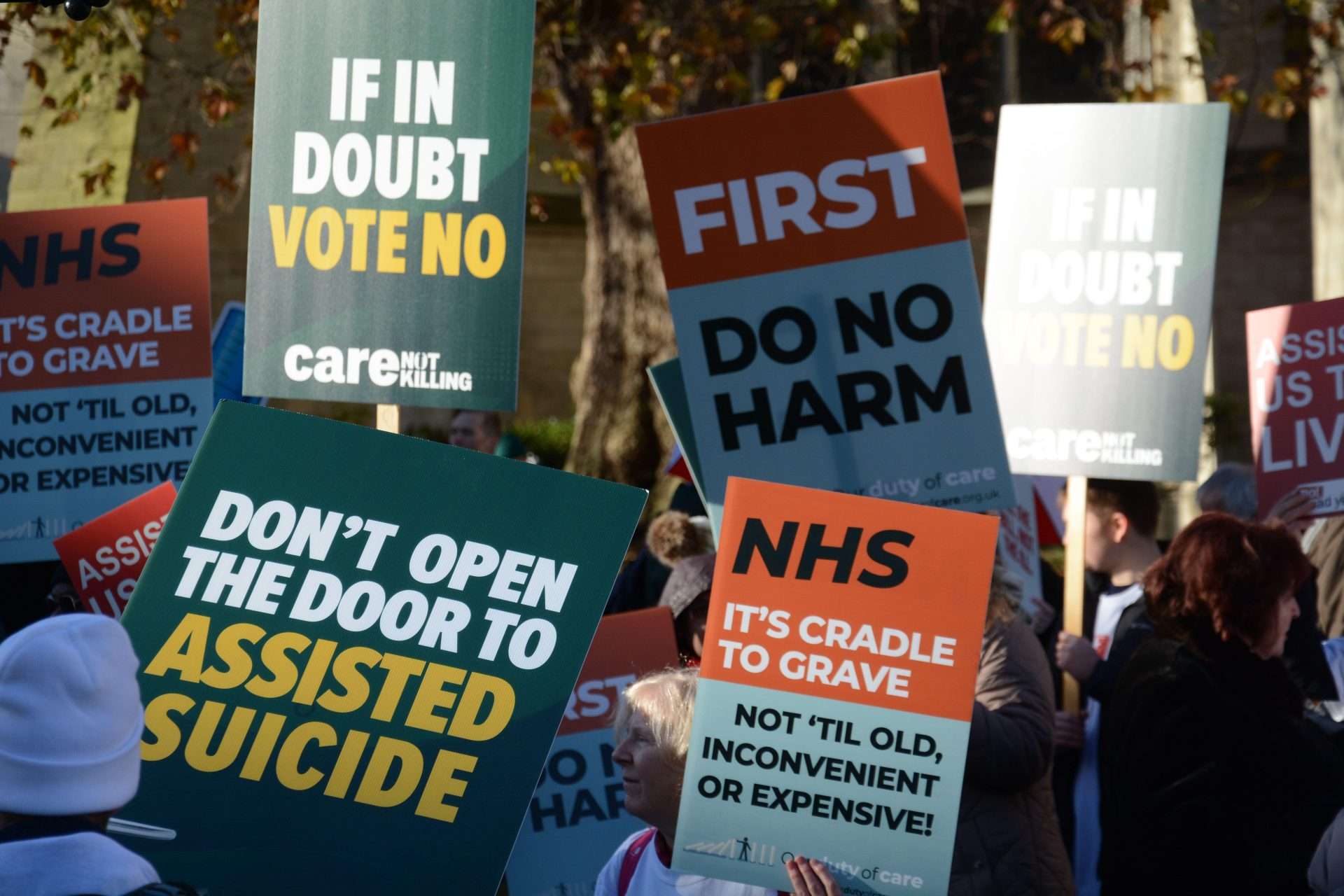
Paul Smyth, Alamy
The assisted dying bill for England and Wales, which ran out of time in the House of Lords in April, is set to return to parliament, raising concerns that MPs might try to push it through parliament without the approval of the Lords.
Lauren Edwards, Labour MP for Rochester and Strood, said she would bring an identical bill to the one passed by the Commons last year.
The proposed law, known as the Terminally Ill Adults (End of Life) Bill, would allow adults who are expected to die within six months to be given help to end their own life.
By bringing back the exact same legislation, Edwards is threatening to use rarely used powers to override the Lords’ objections, should they refuse to pass it again.
Bills normally only become law if both Houses of Parliament agree on its final wording, but the powers under the Parliament Act, only used seven times in the last century, mean that if MPs pass an identical bill in two consecutive parliamentary sessions, the Lords cannot block it the second time.
A poll last month found that in every constituency, the majority of voters said they would not want their MP to support a law pushed through Parliament without full scrutiny in both the Lords and Commons.
Dr Gordon Macdonald, the chief executive officer of Care Not Killing, said, “We are obviously disappointed by this illogical and ideological decision to bring back the a deeply flawed bill: a bill that was so riddled with errors not a single doctors’ group or disabled group supported it.
“Trying to introduce an assisted dying law is a complex and technical matter that must not be rushed, because if it is, vulnerable people will pay the price with their lives.”
Dr Macdonald stressed that since Labour did not include the bill in its manifesto ahead of the last election, it lacks a democratic mandate.
“Indeed, when the main arguments are put to members of the public, support for changing the law drops to just 13 per cent,” he said.
“Polling consistently shows the public would rather members of parliament to concentrate on fixing palliative care, addressing the housing crisis, easing the cost-of-living crisis, tackling immigration and many other issues, over introducing a law to allow people to kill themselves.”
The Delegated Powers and Regulatory Reform Committee has described the bill as “skeleton legislation” with “sweeping, unspecified and unjustified” powers given to ministers, while the Equality and Human Rights Commission said it cannot be guaranteed that access will not be expanded by the courts.
The Equality and Human Rights Committee also said the government has not done enough on safeguarding and coercion.
In addition, the government would have to divert money from existing NHS budgets to fund assisted dying: health minister Stephen Kinnock has admitted that the government would have to “reprioritise spending” to fund assisted dying.
Lord Simon Stevens, former chief executive of the NHS, has warned that the bill is a “Trojan horse” for fundamental change to the NHS by the back door and encourage “self-coercion in the name of altruism”, where vulnerable patients might choose to die early out of a misguided desire to prevent their being a burden and “protect the NHS”.
Moreover, 23 per cent of people given a six-month prognosis are still alive three years later, which may mean that some patients would end their lives prematurely.
Stay updated — add us as a preferred news source on Google:


Help us keep The Tablet’s voice independent, clear and far-reaching.
Founded in 1840, The Tablet is the leading independent English-language Catholic weekly, celebrated for great writing, astute analysis, brilliant arts and books reviews and trustworthy reporting from correspondents in Britain, Ireland, Rome and across the world.
Independent, high-quality journalism is at the heart of what we do. The Tablet does not have deep pockets and we are not funded by rich donors. If you appreciate our work please consider supporting The Tablet’s Development Fund. It only takes a moment and you can cancel at any time.
- Support with £5 per month
- Support with £10 per month
- Support with other amount.

MOST READ ARTICLES
-
1
Pope returns to Vatican after hospital discharge
-
2
Diverse schools that are 100 per cent Catholic
-
3
Under endless skies
-
4
Battling confession fatigue
-
5
Nigerian bishop scorns suggestion of running in presidential election
-
6
Schismatic Spanish nuns strip contents of convent before eviction
FROM THE EDITOR'S DESK


