Archbishop ‘deeply thankful’ to all who contributed to failure of assisted dying Bill


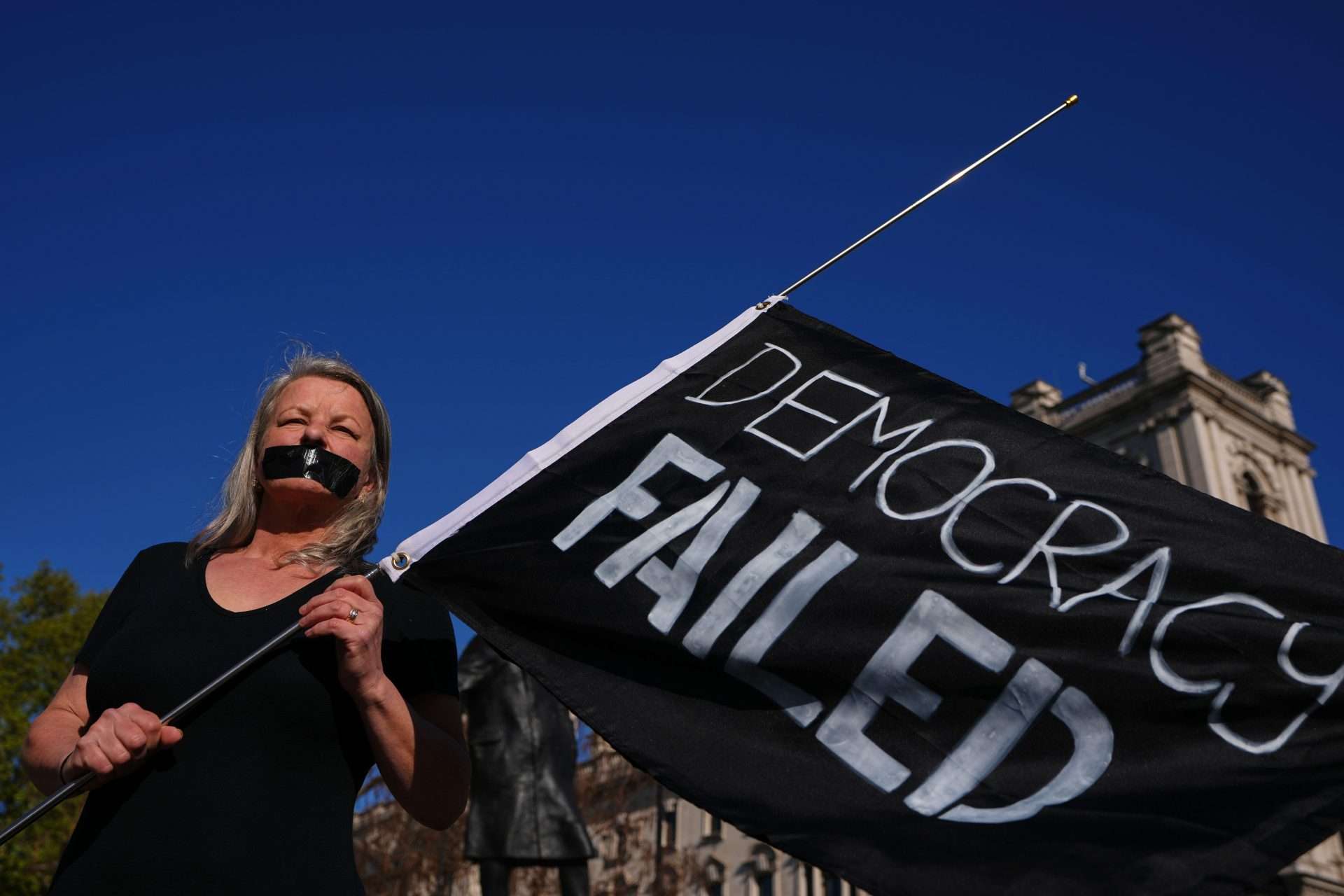
Campaigner Louise Shackleton held a banner outside parliament in London as the proposed law to legalise assisted dying in England and Wales moved towards running out of time on today, more than a year after MPs first voted in favour of it.
Kirsty Wigglesworth, Associated Press, Alamy
Archbishop of Liverpool John Sherrington, lead bishop for life issues, thanked ‘all those Parliamentarians who have worked tirelessly to preserve the dignity of every human life and ensure that end-of life care remains rooted in compassion and respect until the natural end of life’.
He said that Catholics, along with many others, had opposed the “deeply flawed” Bill and the debates over the legislation had drawn attention to “the profound needs of vulnerable people at the end of life”. True compassion is never about hastening death, he added, calling for Parliament to focus on ensuring compassionate end-of-life care is available for all.
After the final day of debate in the House of Lords, when the Bill ran out of time, Dr Gordon Macdonald of Care Not Killing also urged MPs and peers to focus on palliative care.
He said, “The House of Lords scrutiny exposed this Bill as ‘skeleton legislation’ riddled with gaping holes. It is now clear that this Bill was both unsafe and unworkable.
“Peers have uncovered a series of alarming realities: from the Government admitting they will have to raid existing NHS budgets to fund assisted dying, the shocking fact that children don’t even have to be informed before a parent’s life is ended, lack protections against coercion, no support for those with hidden disabilities including autism, and many non-terminal conditions such as anorexia, bulimia and diabetes, would have been eligible for an assisted death.
“In an attempt to sort out the complete dog’s breakfast of a Bill, peers tabled over 1,000 amendments, including nearly 80 from Lord Falconer, who sponsored the draft legislation, spending on average just six and half minutes per amendment.
“Had this Bill passed, it would have risked prioritising cheap deaths over quality palliative care and left the most vulnerable in our society, including those who are suicidal or facing financial pressure, dangerously exposed. As Lord Simon Stevens, former Chief Executive of the NHS, warned, the Bill was a ‘Trojan horse’ for fundamental change to the NHS by the back door. He warned that it will encourage ‘self-coercion in the name of altruism’ where vulnerable patients might choose to die early out of a misguided desire to prevent them from being a burden and protect the NHS.
“We would urge all MPs and peers to turn their attention to the UK’s patchy palliative care system, because if we can end the scandal of the postcode lottery for this type of care, then assisted suicide or euthanasia won’t be needed as a way to alleviate the suffering of people let down by an underfunded and under-resourced system. As we have argued since 2003, we need more care, not killing.”
The Anglican Bishop of Newcastle, Helen-Ann Hartley, said adequate scrutiny of the assisted dying Bill before Parliament was a “moral necessity” and not just a “procedural detail”.
Bishop Helen-Ann Hartley, said the more closely the Terminally Ill Adults (End of Life) Bill had been examined, the more concerns came into focus, not fewer, as she spoke in the final day of the Bill in the House of Lords.
“In our context, where questions of life, death, care and conscience are so closely intertwined, the quality of our scrutiny is not a procedural detail, it is a moral necessity,” she said. “Some may dismiss my contribution as one which is grounded in a faith, but this is as legitimate and significant as any other viewpoint – grounded in faith, belief or none. Whilst my faith informs my alarm at our designation of dignity or the lack of it, it is from my experience on the Select Committee, that I have found that the more closely we have examined this Bill, the more concerns have come into focus, not fewer. For a Bill of this magnitude in terms of societal change, the highest level of scrutiny is imperative.”
The Private Member’s Bill would allow someone with a terminal diagnosis and six months or less to live to be provided with drugs to end their life if they have capacity and meet the eligibility criteria.
Archbishop of Canterbury, Sarah Mullally, speaking briefly in the debate, emphasised the shared wish of both opponents and proponents of the Bill that those who are terminally ill should be treated with compassion and be able to die in a pain-free and dignified way. She paid tribute to the work that had gone into the Committee Stage of the Bill.
“I oppose this Bill in principle, both as a priest and as a nurse,” she said. “But what is clear is that there are some things that unify us. Whether we are in support of this Bill, or we oppose it, we are unified by the fact that what we want is as many people to die in a dignified, pain-free and compassionate way, with the least possible fear that they can have. I also believe that we are unified in that we do believe there needs to be investment in palliative care now.”
However, organisations such as Humanists UK and My Death, My Decision deplored the use of what they described as “dirty tactics” and urged MPs to bring the Bill back in the next parliamentary session. Humanists UK chief executive Andrew Copson said: “The actions of a small group of unelected peers on this Bill have been deplorable. It’s a stain on our democracy and a slap in the face to hundreds of terminally ill people and their families, who were given hope when MPs voted in favour last year.
“The elected chamber must bring back this Bill. Dying people want choice and compassion at the end of their lives. The status quo leaves people dying in pain with three awful options: fly to Switzerland, refuse food and treatment, or suffer. Those options are unacceptable.”
Stay updated — add us as a preferred news source on Google:


Help us keep The Tablet’s voice independent, clear and far-reaching.
Founded in 1840, The Tablet is the leading independent English-language Catholic weekly, celebrated for great writing, astute analysis, brilliant arts and books reviews and trustworthy reporting from correspondents in Britain, Ireland, Rome and across the world.
Independent, high-quality journalism is at the heart of what we do. The Tablet does not have deep pockets and we are not funded by rich donors. If you appreciate our work please consider supporting The Tablet’s Development Fund. It only takes a moment and you can cancel at any time.
- Support with £5 per month
- Support with £10 per month
- Support with other amount.

MOST READ ARTICLES
-
1
Pope returns to Vatican after hospital discharge
-
2
Diverse schools that are 100 per cent Catholic
-
3
Under endless skies
-
4
Battling confession fatigue
-
5
Nigerian bishop scorns suggestion of running in presidential election
-
6
Schismatic Spanish nuns strip contents of convent before eviction
FROM THE EDITOR'S DESK