African Church pledges to honour peace plea of ‘post-colonial pope’


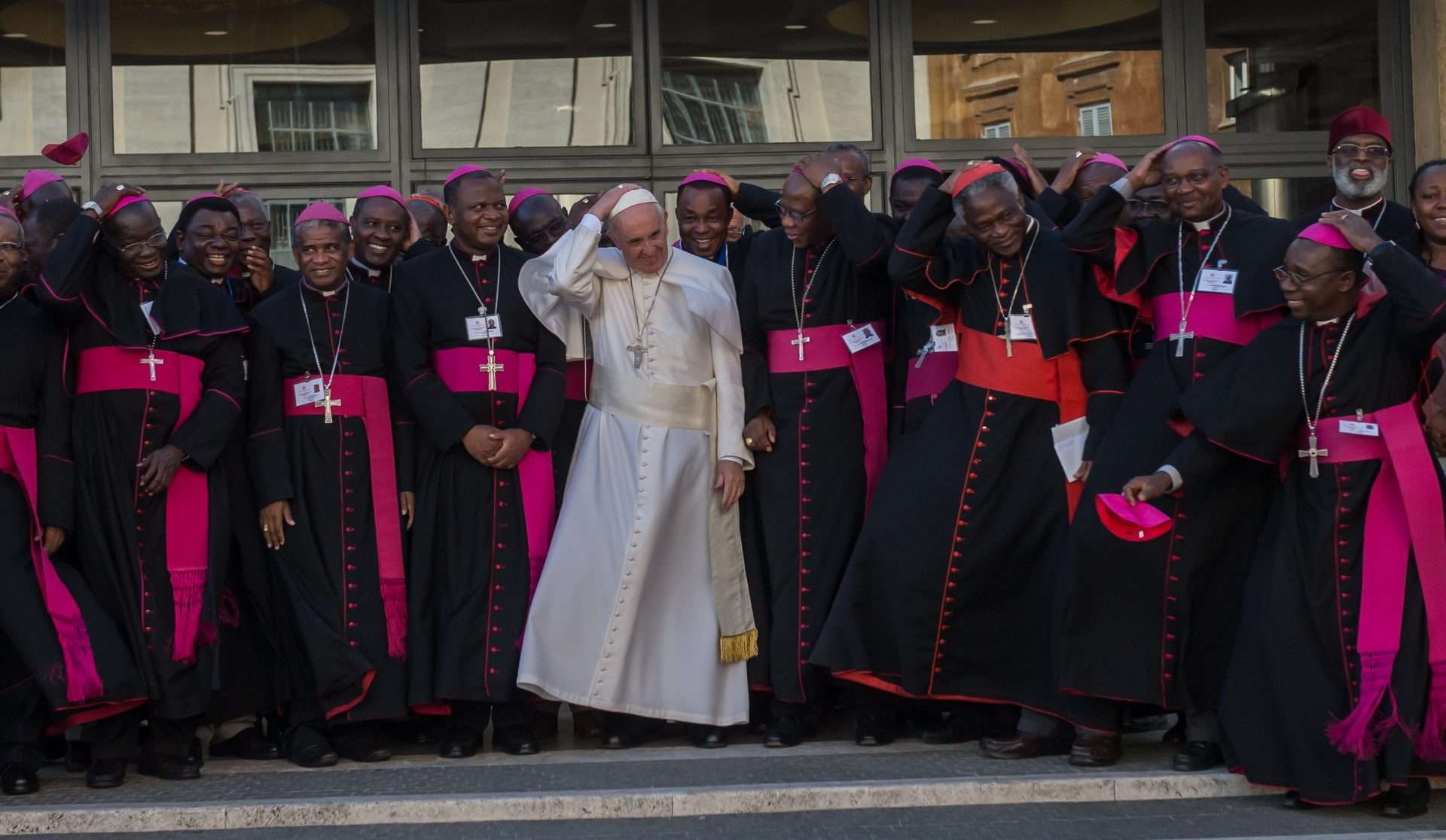
Pope Francis was ‘a profound source of inspiration, particularly for us in Africa’.
Catholic Church in England and Wales / Mazur
‘Throughout his pontificate, Pope Francis has been a strong voice in favour of justice, in favour of peace throughout the world, in favour of the promotion of the small, the weak.’
Bishops across Africa pledged to honour Pope Francis’ plea for peace on the continent after his death.
In his Urbi et Orbi address on Easter Sunday, the day before his death, the Pope appealed for peace across the world including in the Sahel, South Sudan, Sudan, the Horn of Africa and the Democratic Republic of Congo.
The Archbishop of Kinshasa Cardinal Fridolin Ambongo Besugu, the president of the Symposium of Episcopal Conferences of Africa and Madagascar (SECAM), said this was Francis’ last wish and one the Church must work to fulfil.
“Throughout his pontificate, Pope Francis has been a strong voice in favour of justice, in favour of peace throughout the world, in favour of the promotion of the small, the weak,” Cardinal Ambongo told Vatican Radio.
“For us, it sounds like a testament that he is leaving us and that we must continue to pursue for the recovery of this continent that is suffering so much, for the dignity of men and women who are today victims of all kinds of violence, all kinds of injustice, to gain a little more dignity, as Pope Francis always wanted.”
In a statement on behalf of SECAM, Ambongo said Francis was “a profound source of inspiration, particularly for us in Africa”.
“His unwavering commitment to social justice, peace and dignity of every human being resonated with our continent’s struggles and aspirations,” he said. “Throughout his papacy, he visited Africa, taking time to understand our realities, listen to our stories, and amplify our voices on the global stage.”
Bishops in the DR Congo thanked Francis for his pastoral care for their country, marked by his historic visit to the country in January 2023.
“A close pastor of the poor, a witness of mercy and a defender of creation, Pope Francis remains a model of living faith and hope for the church family in the DRC,” said Archbishop Fulgence Muteba Mugalu of Lubumbashi, the president of the National Episcopal Conference of Congo.
In a statement on Monday, the Southern African Catholic Bishops’ Conference said the Pope’s death “comes as a great shock and sadness to us”.
“Over the past years we have been touched by his warm smile, his courageous messages, his emphasis on mercy, his denouncement of injustice, wars and the dehumanisation of people. Through and beyond our sadness, we cannot but give thanks to God for blessing us with such a great Pope and caring pastor,” the bishops said.
The president of the Nigerian bishops’ conference said the Pope’s death on Easter Monday carried great spiritual significance.
“His return to the Lord in this sacred season offers us a consoling reminder of the Christian hope in resurrection and the promise of eternal life,” said Archbishop Lucius Iwejuru Ugorji of Owerri, in a statement on behalf of Nigeria’s bishops.
He said Francis’ pontificate had been characterised by a strong emphasis on mercy, justice and care of creation.
“He was a tireless advocate for migrants and refugees, promoted a more synodal church rooted in responsibility, and called for a culture of kindness and human fraternity,” said Archbishop Ugorji. “He also advanced interreligious dialogue, fostering peace and mutual understanding among the peoples’ of different faiths.”
Archbishop Ignatius Chama of Kasama, the president of the Zambian bishops’ conference, offered thanks for “the gift of the universal shepherd who with faith and selflessness guided the church of Christ for 12 years”.
Archbishop Philip Anyolo of Nairobi said Francis was a voice of the voiceless and an advocate for peace, mercy and human dignity.
“Pope Francis dedicated his life to the Gospel of Christ and the service to humanity. His humility, compassion and prophetic leadership touched countless lives across all nations and faiths,” he said.
Pope appeals against ‘logic of fear’ in Urbi et Orbi message
The Pope from the ends of the earth
Kenya’s President William Ruto was among the African political leaders who paid tribute to the late Pope as an outstanding moral voice and advocate for peace and human dignity. He said Francis exemplified servant leadership through his humility, commitment to inclusivity and justice, and deep compassion for the poor and vulnerable.
President Paul Kagame of Rwanda acknowledged Francis’ role in strengthening the relationship between his government and the Catholic Church, which had been damaged by the role of Catholics – including clergy – in the 1994 genocide.
“His leadership was marked by an honest recognition of the church’s history in Rwanda, leading to a new era of fruitful relations between the catholic Church and our nation – one rooted in truth, reconciliation, and a shared commitment to the wellbeing of Rwandans,” said Kagame.
Bishop Mathew Hassan Kukah of Sokoto, in Nigeria, said that although Francis could not achieve all he hoped to in Africa, not least due to the Covid pandemic which “slowed things down a lot”, it was a key part of his pontificate.
“His concerns for the weak and the poor naturally meant that Africa was not far away from his thoughts,” Bishop Kukah told The Tablet.
In his visit to the DR Congo in January, 2023, Francis spoke out against the exploitation of the country’s vast natural resources by western countries and multinationals, describing it as “economic colonialism” that leaves most people on the continent without access to clean water, decent health care, education or electricity, struggling to survive in the face of high levels of unemployment, poverty and inequality.
The theologian Fr Stan Chu Ilo, of the Pan-African Theology and Pastoral Network (PACTPAN), worked closely with the late Pope serving as the North American coordinator for “Doing Theology from the Existential Peripheries of Life” – a synodal initiative launched by the Dicastery for Promoting Integral Human Development.
He said that the Pope’s deep interest in the capitalist exploitation of Africa by international interests marked him as the “post-colonial pope.”
“The whole idea of colonialism in the first place was Westerners going to other people’s places, taking their land, destroying their history and then imposing their own economic and political system on the people,” Ilo told The Tablet.
Pope Francis understood that colonialism might have ended on paper, but Africa is still living under its yoke, he said.
“Pope Francis understands that colonialism … has merely evolved. New forms persist through the globalisation of poverty, health inequity, violence, and war,” Ilo said, which explained his commitment to economic justice for the global south.
The Pope, the Moderator and the Archbishop of Canterbury – DR Congo and South Sudan
Stay updated — add us as a preferred news source on Google:


Help us keep The Tablet’s voice independent, clear and far-reaching.
Founded in 1840, The Tablet is the leading independent English-language Catholic weekly, celebrated for great writing, astute analysis, brilliant arts and books reviews and trustworthy reporting from correspondents in Britain, Ireland, Rome and across the world.
Independent, high-quality journalism is at the heart of what we do. The Tablet does not have deep pockets and we are not funded by rich donors. If you appreciate our work please consider supporting The Tablet’s Development Fund. It only takes a moment and you can cancel at any time.
- Support with £5 per month
- Support with £10 per month
- Support with other amount.

MOST READ ARTICLES
-
1
Pope returns to Vatican after hospital discharge
-
2
Diverse schools that are 100 per cent Catholic
-
3
Under endless skies
-
4
Battling confession fatigue
-
5
Nigerian bishop scorns suggestion of running in presidential election
-
6
Schismatic Spanish nuns strip contents of convent before eviction
FROM THE EDITOR'S DESK


