Church and state: a struggle for Armenia’s identity and survival


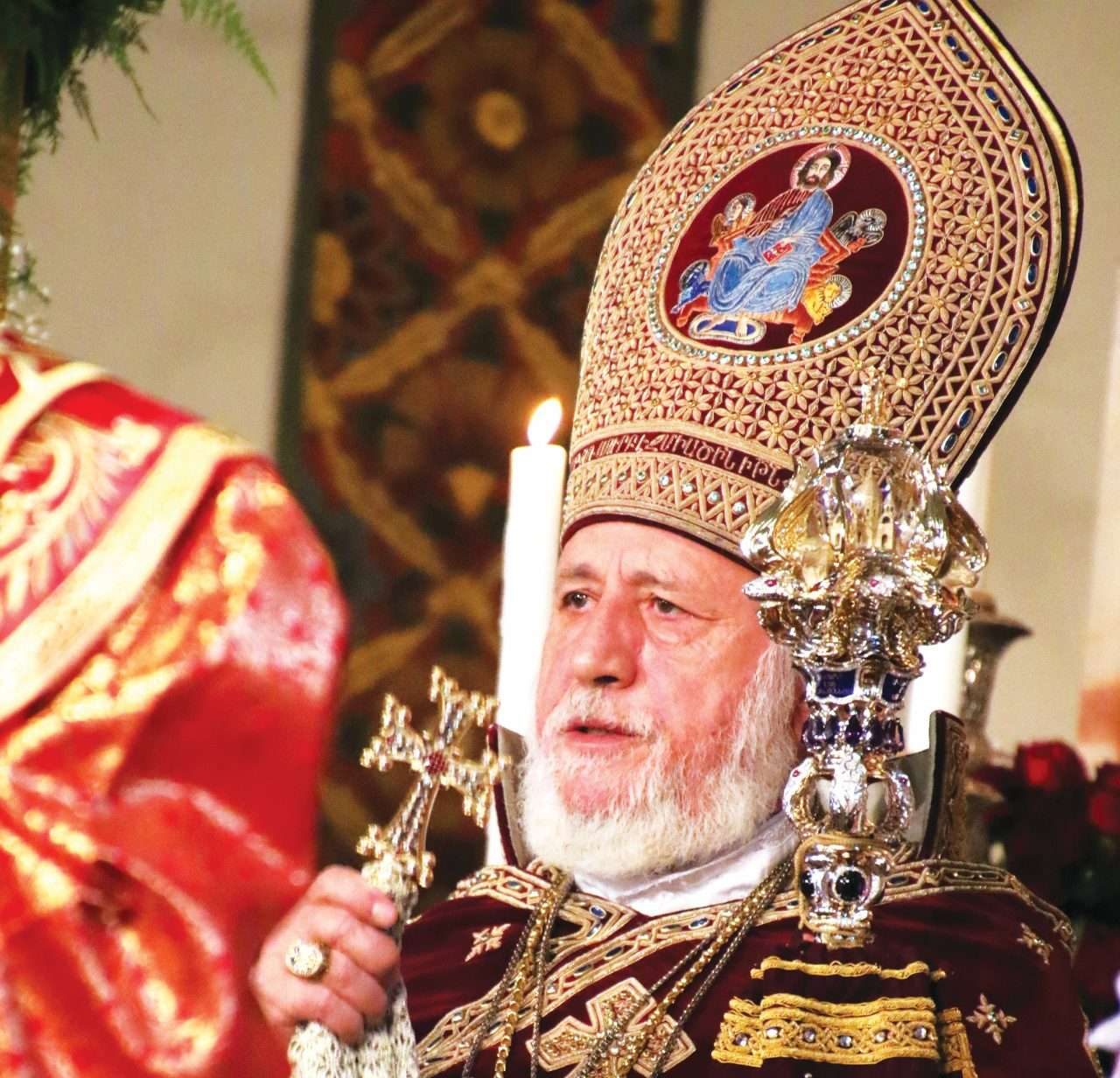
Catholicos Karekin II
WIKIMEDIA COMMONS, YVES PICQ, RAIMOND SPEKKING
Behind the bitter personal rift between the prime minister and the head of the Armenian Apostolic Church lies the long and complex history of a small and resourceful nation which has suffered trauma and adversity.
THE ARMENIAN ELECTIONS in June were followed with an unusual level of interest, and were widely regarded as a test of public support for Prime Minister Nikol Pashinyan’s policy of geo- political reorientation towards Europe and away from Russia. In May this year, the first EU-Armenia summit and the eighth European Political Community summit brought Sir Keir Starmer, Emmanuel Macron, Mark Carney, Volodymyr Zelenskyy and Ursula von der Leyen to the country’s capital, Yerevan. Days later, Pashinyan rebuffed the Kremlin’s invitation to attend the Victory Day parade in Moscow. When Pashinyan’s Civil Contract Party was re-elected by a large majority a few weeks later, it was seen as a decisive realignment of Cold War polarities and even as a reassertion of the values of democracy – akin, perhaps, to Péter Magyar’s landslide victory over Viktor Orbán in Hungary. But, as with everything to do with Armenia, it’s not quite so simple.
Get Instant Access
Continue Reading
Register for free to read this article in full
Subscribe for unlimited access
From just £37.50 quarterly
Print copy of The Tablet delivered directly to your door.
Complete access to all Tablet website content including all premium content.
Access to the weekly digital copy of The Tablet.
Full access to The Tablet’s archive – over 180 years of back issues.

Already a subscriber? Login

Help us keep The Tablet’s voice independent, clear and far-reaching.
Founded in 1840, The Tablet is the leading independent English-language Catholic weekly, celebrated for great writing, astute analysis, brilliant arts and books reviews and trustworthy reporting from correspondents in Britain, Ireland, Rome and across the world.
Independent, high-quality journalism is at the heart of what we do. The Tablet does not have deep pockets and we are not funded by rich donors. If you appreciate our work please consider supporting The Tablet’s Development Fund. It only takes a moment and you can cancel at any time.
- Support with £5 per month
- Support with £10 per month
- Support with other amount.

MOST READ ARTICLES
-
1
Pope returns to Vatican after hospital discharge
-
2
Diverse schools that are 100 per cent Catholic
-
3
Nigerian bishop scorns suggestion of running in presidential election
-
4
Under endless skies
-
5
Battling confession fatigue
-
6
‘Peace does not mean ignoring injustice’ says bishop in war-torn Ethiopia
FROM THE EDITOR'S DESK


