Desecrated tombs and mutilated medieval treasures


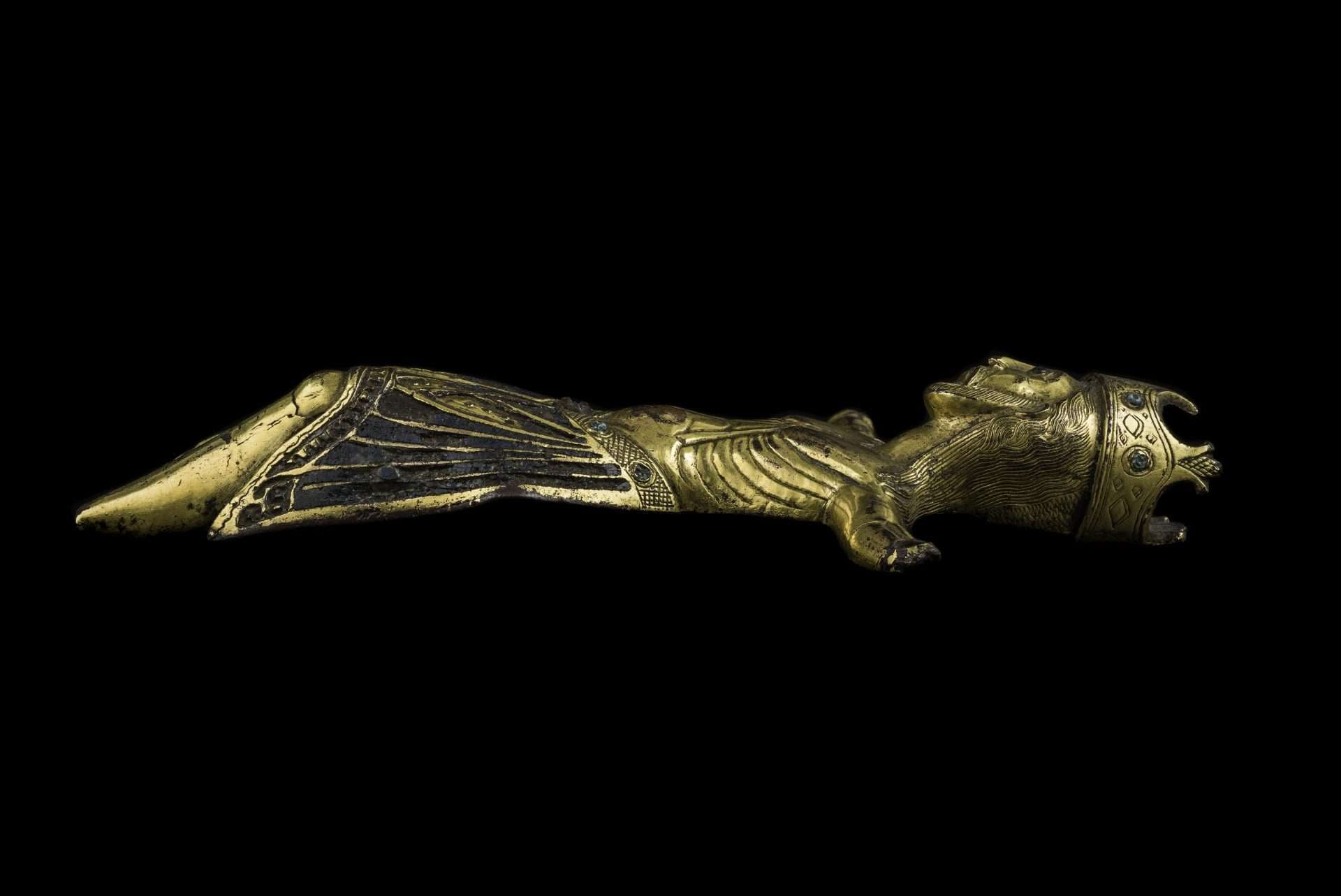
Crowned figure of Christ found in the ruins of the Benedictine of St Mary, York, in 1826.
Yorkshire Museum
Found hidden under chancel floors, they reveal how the Reformation in England destroyed cherished liturgical and devotional objects originating in Limoges
I have always been fascinated by the vivid colours of enamels. The addition of powdered glass of different colours on to copper-alloy surfaces, and their firing at a very high temperature, transforms these decorative pieces of craftsmanship. Their colours are vibrant and permanent: the fused glass keeps its hues for ever.
The most productive European centre of enamel-making from about 1150 was Limoges, in south-western France. Its enamels are distinctive for their brilliant shades of blue, and stylised rosettes in green, yellow, blue and red, as seen for example in a Gospel cover once owned by a Catholic priest, Benedict Rayment (1764-1842), for three decades the resident missioner in York. But the more I learnt about Limoges enamels sur viving from medieval England, an unexpected and disturbing story began to emerge.
Limoges enamels have been found all over Europe and beyond, but Anglo-Norman England was a crucial early market for them. Limoges was in Aquitaine, and from 1152 this was under English rule, thanks to the marriage of Henry II of England (1154-89) to the heiress Eleanor of Aquitaine. The most splendid sur viving example of Limoges work in England is a royal tomb in Westminster Abbey: that of Edward I’s cousin, William de Valence (d. 1296). Nothing is known of its cost or its maker, but it probably resembles a docu mented Limoges enamel tomb made for Walter de Merton, Lord Chancellor of England, founder of Merton College in Oxford and Bishop of Rochester (d. 1277). This is known to have been commissioned from Master John of Limoges, who was paid £4, plus travel costs, to bring it from Limoges to Rochester Cathedral.
Walter de Merton’s tomb was destroyed at the time of the Reformation. Of the few other documented instances of royal expenditure on Limoges enamels, none survives. Several English ecclesiastics are known to have been owners of such enamels, especially as donors to churches such as St Paul’s Cathedral and Rochester Cathedral Priory. Described as “work of Limoges”, these gifts consisted of coffers, candlesticks, basins and Gospel covers.
Get Instant Access
Continue Reading
Register for free to read this article in full
Subscribe for unlimited access
From just £37.50 quarterly
Print copy of The Tablet delivered directly to your door.
Complete access to all Tablet website content including all premium content.
Access to the weekly digital copy of The Tablet.
Full access to The Tablet’s archive – over 180 years of back issues.

Already a subscriber? Login

Help us keep The Tablet’s voice independent, clear and far-reaching.
Founded in 1840, The Tablet is the leading independent English-language Catholic weekly, celebrated for great writing, astute analysis, brilliant arts and books reviews and trustworthy reporting from correspondents in Britain, Ireland, Rome and across the world.
Independent, high-quality journalism is at the heart of what we do. The Tablet does not have deep pockets and we are not funded by rich donors. If you appreciate our work please consider supporting The Tablet’s Development Fund. It only takes a moment and you can cancel at any time.
- Support with £5 per month
- Support with £10 per month
- Support with other amount.

MOST READ ARTICLES
-
1
Pope returns to Vatican after hospital discharge
-
2
Diverse schools that are 100 per cent Catholic
-
3
Under endless skies
-
4
Battling confession fatigue
-
5
Nigerian bishop scorns suggestion of running in presidential election
-
6
Schismatic Spanish nuns strip contents of convent before eviction
FROM THE EDITOR'S DESK


