Aid agencies call for immediate ceasefire in Lebanon as Israeli strikes intensify


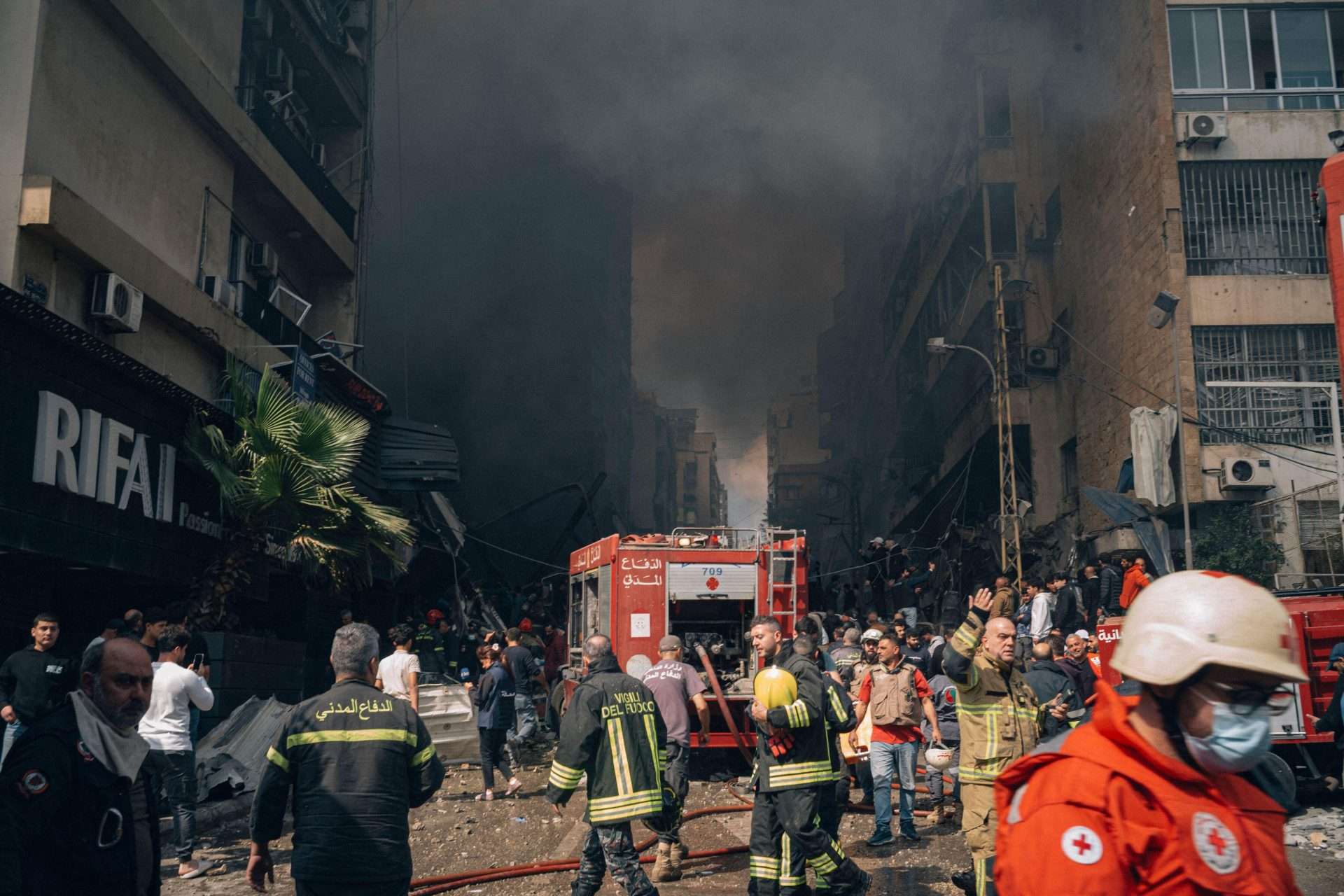
On 8 April Israel carried out its most intense wave of strikes on the city of Beirut since the war began.
LE PICTORIUM/Alamy Live News
‘Rockets are obliterating hundreds of lives every day,’ said Tearfund’s country director for Lebanon and Syria. ‘It’s savage, it’s senseless and it’s entirely stoppable.’
Humanitarian agencies have stressed that the ceasefire agreed between the US and Iran must urgently be extended to Lebanon, where Israeli strikes have killed hundreds of people since 8 April.
More than 250 people were killed and more than 2,000 injured in a “drastic escalation” of ongoing Israeli airstrikes, according to the Christian relief and development agency Tearfund.
Benjamin Netanyahu said on 9 April that Israeli strikes on Lebanon will continue “with full force” despite the two-week ceasefire agreed with Iran; Israel has approached Lebanon for negotiations, but Lebanon said that a ceasefire must be in place before they can negotiate.
Marielle Boutros, project coordinator for Aid to the Church in Need (ACN), who lives and works in eastern Beirut, said people believed they were in the safety of their own homes when bombs exploded.
She said, “Two days ago more than 100 bombs fell over Beirut. It was here and there, not just the south of the capital, it was around the whole city – you could hear the bombs from our office.
“Some areas were not previously targeted so the people thought that they were safe but actually they were not. It was scary, it caused anger, it caused sadness especially when you hear a ceasefire is happening elsewhere. It was really tragic.”
ACN has been supporting displaced families with fuel, medical support, food parcels, psychological support for children, and support for schools and churches.
“Right now the schools in South Lebanon are not operating,” Boutros said. “Some of them are operating online and teachers need to be paid. This is a real emergency. We cannot afford to stop education again. Schools were closed in 2019 and during Covid and then an economic crisis.
“You have to cope with your anxiety, fears and guilt that have developed over the last few years. For me, this is the worst thing – when you are relieved that it’s not your family, but you have families on the ground dead.
“We have this pressure to continue our daily life because you cannot afford not to because of the economic crisis. We are not fine. We are surviving but in the heart of each one of us we want this nightmare to end in some way.”
“People are losing everything in an instant – their homes, their loved ones, their livelihoods,” said Jaime Abraham, Tearfund’s country director for Lebanon and Syria. “Many tell us they’re terrified and losing hope, as nowhere feels safe – the entire country is under attack.
“In a week where billions of dollars have been spent to see the dark side of the moon, the dark side of humanity is raining down on Lebanon. Here, rockets are obliterating hundreds of lives every day. It’s savage, it’s senseless and it’s entirely stoppable.”
Abraham echoed a statement by Sir Keir Starmer and other European leaders on 8 April, welcoming the ceasefire in Iran and calling for it also to be implemented in Lebanon: “They must make sure this happens.
“Air strikes and violence against Lebanese civilians have to stop, right now, and leaders must work towards a sustainable peace.
“We’re seeing people forced to make impossible choices. What do you do with the last coins in your pocket? Buy fuel that’s gone up by a third, to try to escape the airstrikes? Or buy tomatoes, double the price they were last month, to feed at least some of your children?”
Keir Starmer has been in the Gulf over the past three days until 10 April, and Abraham asked, “Will he spend time with the people suffering the most, to look them in the eye – as our partners do every day – and reassure them the world has not forgotten about them?”
The head of Middle East advocacy at Christian Aid, William Bell, also stressed that the ceasefire must include Lebanon: “Israel cannot be allowed to continue bombing and displacing innocent civilians at will in a country where almost a quarter have already been forced to leave their homes.
“As with Gaza, a ceasefire has to mean exactly that: an end to all military activity by all. Not a continuation of killing and misery.”
Cafod calls for immediate ceasefire as Lebanon suffers mass displacement, destruction and trauma
Leo sees hope in Middle East ceasefire after ‘unacceptable’ Trump threats
War will only destabilise the region further, Middle East experts warn
Stay updated — add us as a preferred news source on Google:


Help us keep The Tablet’s voice independent, clear and far-reaching.
Founded in 1840, The Tablet is the leading independent English-language Catholic weekly, celebrated for great writing, astute analysis, brilliant arts and books reviews and trustworthy reporting from correspondents in Britain, Ireland, Rome and across the world.
Independent, high-quality journalism is at the heart of what we do. The Tablet does not have deep pockets and we are not funded by rich donors. If you appreciate our work please consider supporting The Tablet’s Development Fund. It only takes a moment and you can cancel at any time.
- Support with £5 per month
- Support with £10 per month
- Support with other amount.

MOST READ ARTICLES
-
1
Archbishop of Cardiff-Menevia meets with other worldwide Catholic Church leaders to discuss liturgy
-
2
Let there be light
-
3
World Humanitarian Day: aid workers face a ‘crisis of protection’
-
4
Ruling allows French private hospitals limited exemption from assisted suicide
-
5
A tract for our times
-
6
The wisdom of the saints
FROM THE EDITOR'S DESK