Bioethics network launched to address ‘urgent need’ for research that centres human dignity


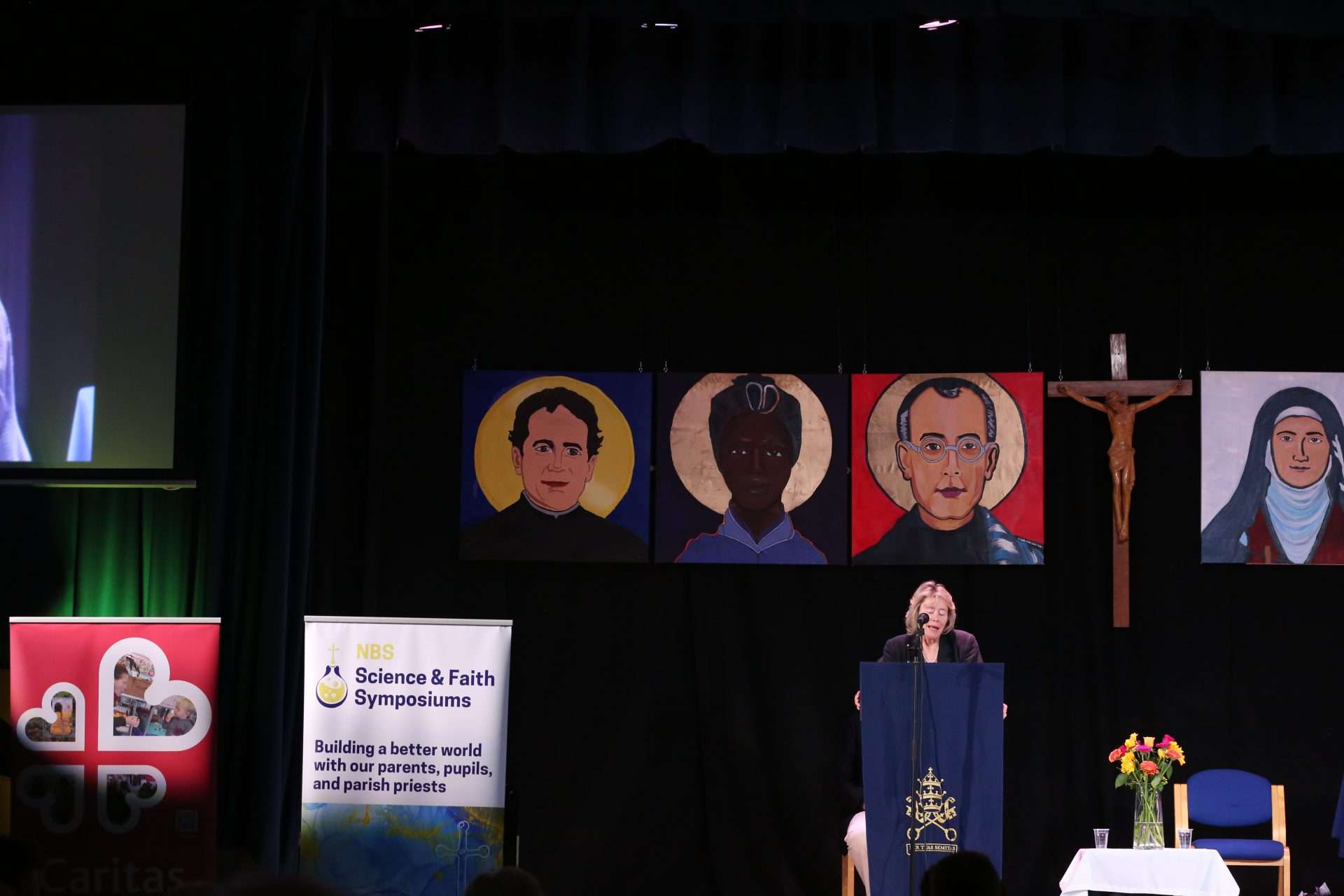
Baroness Julie Smith spoke on palliative care and the meaning of medicine alongside Professor David Albert Jones and Majlinda Thompson.
Nicholas Breakspear School
‘The majority of academic bioethics mixes a focus on autonomy with utility. In contrast, the Augustine Bioethics Network has been established to discover and give voice to a more profound vision of bioethics that encompasses both the dignity and the vulnerability of every human person.’
A new international bioethics network, the Augustine Bioethics Network, supported by the Catholic Medical Association UK, was launched on 30 March, “to promote a vision of bioethics that encompasses both the dignity and the vulnerability of every human person”.
It has been established to address the “urgent need” for ethical bioethics research by connecting people with experience and expertise from different countries, carrying out research and scholarship in bioethics, publishing resources and promoting engagement with public policy on bioethics.
Professor David Albert Jones, research fellow in bioethics at St Mary’s University, Twickenham, and committee secretary of the Augustine Bioethics Network, said, “There has never been a greater need for serious ethical reflection on healthcare: on issues such as assisted suicide, conscientious objection, resources allocation, gene editing, abortion and the use of artificial intelligence.
“Currently, the majority of academic bioethics mixes a focus on autonomy with utility. In contrast, the Augustine Bioethics Network has been established to discover and give voice to a more profound vision of bioethics that encompasses both the dignity and the vulnerability of every human person, a vision it finds in the great philosopher and theologian, Augustine of Hippo.”
Professor Jones, who was previously the director of the Anscombe Bioethics Centre until it closed for financial reasons in July 2025, told The Tablet, “The Augustine Bioethics Network will address challenges for people working in healthcare and biomedical science and for all of us who are at some point patients or carers. It is a need that that has not gone away but seems to grow ever larger.
“While the Scottish Parliament has rejected assisted suicide, and a Bill in the House of Lords seems destined to run out of time, a radical amendment to the law on abortion will decriminalise abortion up to birth, the GMC is revising its guidance on conscientious objection by doctors.
“The challenges of bioethics affect our common humanity and are international. To respond we have developed a network which is international, so that we can both learn from each other and also support and encourage each other in the task of respecting the dignity and addressing the vulnerability of every human person.”
Dr Adrian Farrell, president of the Catholic Medical Association, said, “Medicine in the 21st century, facing the application of rapid scientific advances, needs a strong, stable ethical framework. The Augustine Bioethics Network has been launched to provide resources and expertise to address such ethical challenges. The Catholic Medical Association UK is delighted to endorse this initiative and looks forward to working with the ABN.”
The ABN, whose committee members include Professor Jones and Professor Neil Scolding and advisory board includes Professor Daniel Sulmasy and Baroness Hollins, will host an event on 14 April to officially mark the launch of the international network. The speakers will analyse the attempts to introduce assisted suicide legislation in England, Wales, and Scotland.
Professor Jones also spoke on palliative care and the meaning of medicine alongside Baroness Smith, who has been active in opposing assisted dying in the House of Lords, and Majlinda Thompson, who works with people with disabilities at Caritas St Joseph, at a Science and Faith Symposium (a projected funded by ECLAS and Scientists in Congregations) at Nicholas Breakspear Catholic School, St Albans on 23 March.
The speakers discussed the challenges that affect the way we think about medicine and the development of biomedical technologies, exploring how science and technology can be used for the good and why the understanding of what medicine is for has changed for some people amid debates about assisted suicide.
They covered the duty of the care for the sick, the complexities of healthcare delivery, ethical and legal boundaries, and social responsibility toward the most vulnerable.
Stay updated — add us as a preferred news source on Google:


Help us keep The Tablet’s voice independent, clear and far-reaching.
Founded in 1840, The Tablet is the leading independent English-language Catholic weekly, celebrated for great writing, astute analysis, brilliant arts and books reviews and trustworthy reporting from correspondents in Britain, Ireland, Rome and across the world.
Independent, high-quality journalism is at the heart of what we do. The Tablet does not have deep pockets and we are not funded by rich donors. If you appreciate our work please consider supporting The Tablet’s Development Fund. It only takes a moment and you can cancel at any time.
- Support with £5 per month
- Support with £10 per month
- Support with other amount.

MOST READ ARTICLES
-
1
Archbishop of Cardiff-Menevia meets with other worldwide Catholic Church leaders to discuss liturgy
-
2
Let there be light
-
3
World Humanitarian Day: aid workers face a ‘crisis of protection’
-
4
Ruling allows French private hospitals limited exemption from assisted suicide
-
5
A tract for our times
-
6
The wisdom of the saints
FROM THE EDITOR'S DESK