Peace – this is what has been won for us by the Resurrection


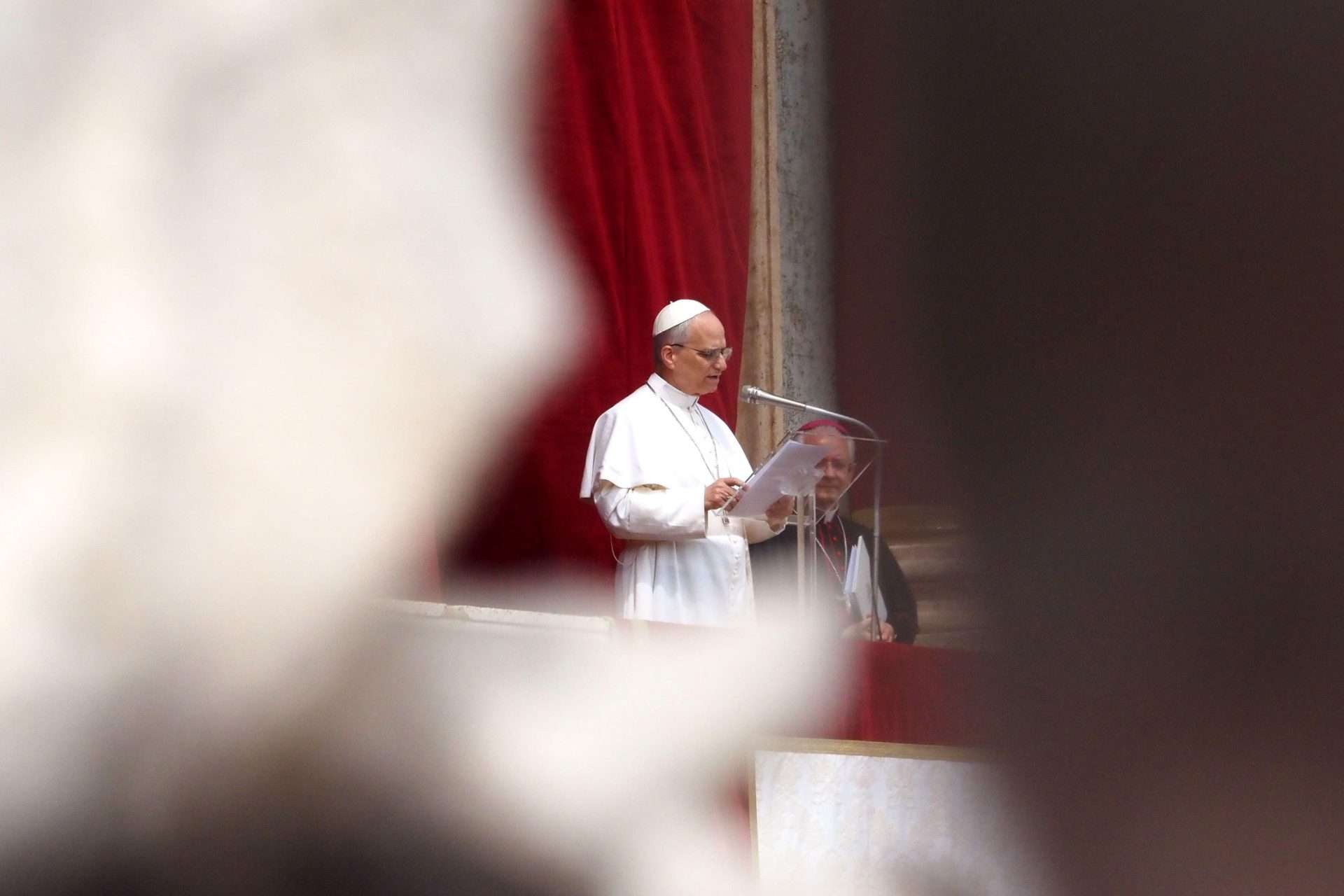
Peace has quickly become a key theme in the early days of the papacy of Pope Leo XIV
Alamy
EASTER 6 C | 25 MAY 2025 | JOHN 14:23-29
“Peace” is the first word Jesus utters to the fear-filled apostles when he greets them after his resurrection. It is also his final greeting before being taken from their sight at the ascension. “Peace” sums up what has been won for us by his Resurrection and Ascension. Peace was prophesied by Zechariah, the father of John the Baptist, in the words of the Benedictus: “He will give light to those in darkness, those who dwell in the shadow of death, and guide us into the way of peace.” On most of the earliest Christian sarcophagi, Pax is often the only word to be found. The gift of peace echoes throughout the liturgy. “Peace be with you” is the liturgical greeting used uniquely by bishops at the beginning of Mass. During Mass, it is spoken of no less than seven times between the Canon and Communion. It is the greeting shared immediately before receiving Holy Communion and at the end of the liturgy, we are exhorted to go forth in peace. In the sacrament of confession, the words of absolution pray that God will grant us not only pardon but peace. This peace, which Jesus himself says neither the world nor anybody in the world can either give or take from us, is not just the absence of anxiety, but the presence of deep-rooted joy and all-pervading hope. It is the presence of Christ himself who, in sharing his life and love in friendship, shares with us also his peace: “Peace, I leave you, my peace I give you.” In other words, it is he himself who is our peace, and the peace of his presence touches and informs every part of our living and our dying. The greatest destroyer of our peace, especially as we get older and frailer, is our dread of death. But that natural dread now rests on an illusion, an illusion dispelled by the resurrection. Death is no longer the end, but the ushering in of a new beginning, which will have no end. As John Donne has it:
One short sleep past, we wake eternally, And death shall be no more; Death, thou shalt die. (Holy Sonnets X)
In a real sense, death is already behind, not ahead of us. When we were baptised, we entered with Christ into his tomb and, with him, rose to newness of life, a newness of life we experience concretely here and now in every act of selfless kindness, in every act of heartfelt forgiveness, in every act of genuine generosity. It is this new life that we celebrate and affirm in the sacraments, especially the Mass. It is this new life, which has already begun, that enables us not just to accept, but to embrace our dying. When the time for our physical death comes, we can now look on our Crucified and Risen Lord and go with him confidently, not into “death’s dateless night”, but into endless day, where there is no past or future, because all is forever now, all is in Christ.
It is significant that in one of the most ancient prayers in the Roman Liturgy, we ask God, just before Communion, “to protect us from all anxiety” (ab omni perturbatione). It couldn’t be more apt. As every Christian belief is rooted in our conviction that God’s love for us can never fail, so every sin arises ultimately from our failure to hold on to that fundamental truth. Instead, we spend much of our time, consciously or unconsciously, seeking to sooth our anxieties, whether about the past or the future (or both), about our possessions and achievements (or lack of same), about what people think of us (or whether they ever think of us at all), and a thousand other niggling worries, feverishly searching for peace where it patently is not to be found. In the longest passage of the Sermon on the Mount, Jesus, understanding perfectly the human nature he shares with us, gently reassures us: “Do not be anxious about your life, what you shall eat or what you shall drink, nor about your body, what you shall put on….seek first his kingdom and his righteousness, and all these things shall be yours as well.” (Matthew 6:25-33) The message couldn’t be clearer. We need no longer be anxious about anything. When tempted to worry, we can take heart from St Paul’s unequivocal guidance: “Have no anxiety about anything, but with prayer and supplication, make all your needs known to God.” (Philippians 4:6) Christ has risen. He is our peace.

Help us keep The Tablet’s voice independent, clear and far-reaching.
Founded in 1840, The Tablet is the leading independent English-language Catholic weekly, celebrated for great writing, astute analysis, brilliant arts and books reviews and trustworthy reporting from correspondents in Britain, Ireland, Rome and across the world.
Independent, high-quality journalism is at the heart of what we do. The Tablet does not have deep pockets and we are not funded by rich donors. If you appreciate our work please consider supporting The Tablet’s Development Fund. It only takes a moment and you can cancel at any time.
- Support with £5 per month
- Support with £10 per month
- Support with other amount.

MOST READ ARTICLES
-
1
Pope returns to Vatican after hospital discharge
-
2
Diverse schools that are 100 per cent Catholic
-
3
Under endless skies
-
4
Battling confession fatigue
-
5
Nigerian bishop scorns suggestion of running in presidential election
-
6
Schismatic Spanish nuns strip contents of convent before eviction
FROM THE EDITOR'S DESK