World cannot ‘get used to war’ warns Pope in plea for Ukraine


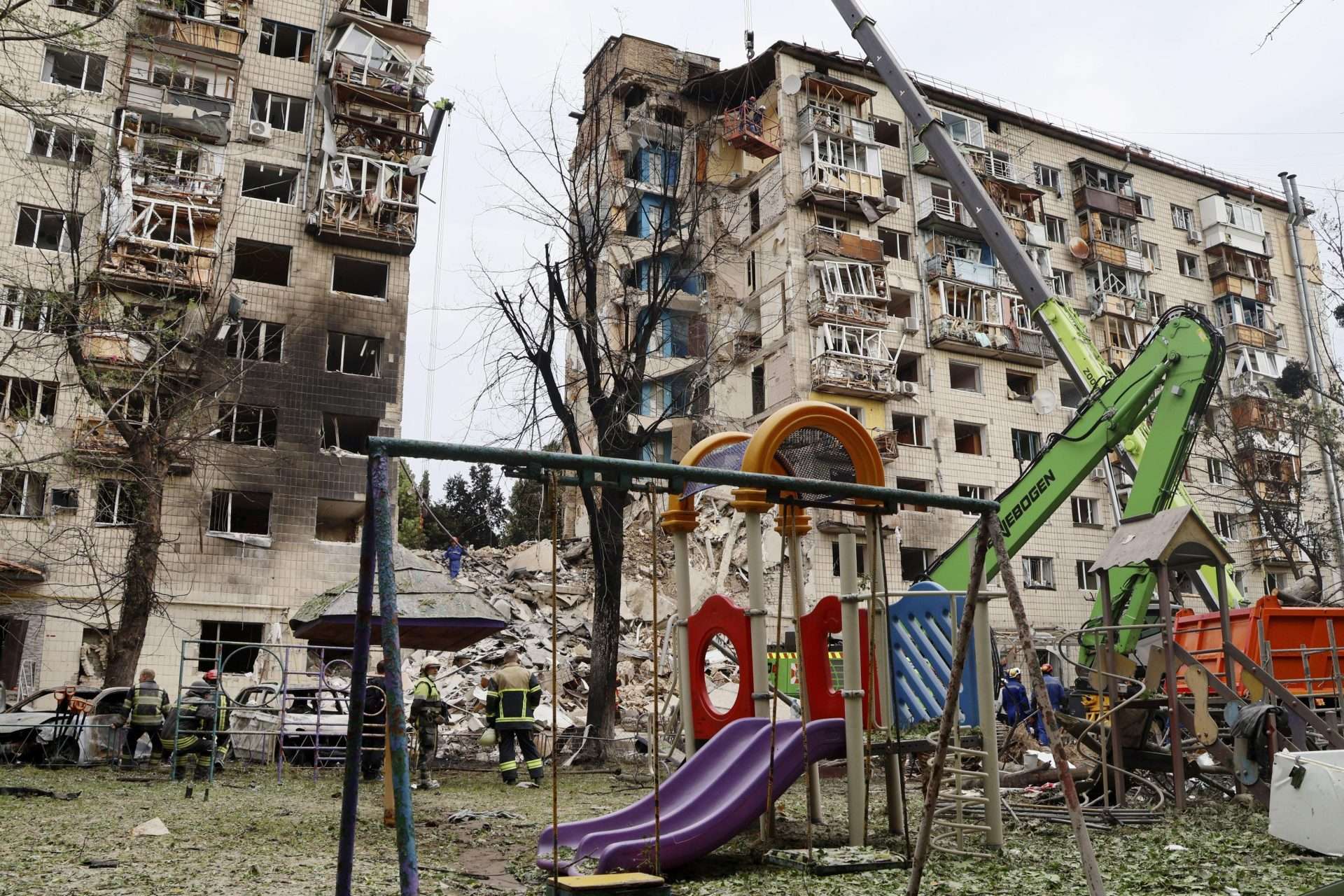
Damaged apartment buildings in Kyiv after Russian strikes on 17 June.
Newscom / Alamy
In southern Russia, a Catholic parish was scheduled to host an event in support of ‘participants in the special military operation’, as the Kremlin still refers to the invasion of Ukraine.
Pope Leo XIV renewed his appeal for peace last week, echoing Pope Francis’ words: “War is always a defeat!”
Speaking at the weekly general audience on Wednesday, Pope Leo said the Church’s spirit was being shattered by ongoing conflicts worldwide, particularly those in Ukraine, Iran, Israel and Gaza.
“We must never get used to war,” Leo said, only a day after Kyiv experienced the deadliest attack by Russia this year, part of a wider assault involving 400 drones and 32 missiles across Ukraine that struck residential complexes, killing 28 and injuring over 150.
Bishop Pavlo Honcharuk of Kharkiv-Zaporizhzhia, who attended the general audience and met the Pope, said “everything is being destroyed” in his diocese close to the frontline.
“The pain is immense, and the suffering seems endless,” he told Vatican News. “We live in a situation where life and death walk side by side – there may be an explosion on one street, and children walking down the next. This is our reality.”
Metropolitan Epifaniy, the primate of the Orthodox Church of Ukraine, condemned the attacks and called for support from the “civilised world to help stop the terrorist Kremlin regime, thwart its plans to destroy Ukraine, end the daily Russian crimes against humanity, and punish the criminals”.
The strikes on Kyiv coincided with the G7 leaders’ summit in Canada earlier this week. US President Donald Trump left the meeting early without agreeing on a joint declaration of support for Ukraine and new military aid to Kyiv.
Archbishop Georg Gänswein, the apostolic nuncio to the Baltic States, reported the concerns in the region at the Trump administration’s attitude towards Ukraine and Russia.
Speaking to EWTN News, Gänswein said that “major powers play a major role” in the Baltic and its governments had “expected something different” from the US.
Vilnius, where the nunciature is based, is just over 370 miles from Kyiv. Locals have welcomed the deployment of Germany’s 45th Brigade on Nato’s eastern flank, while many continue to support Ukraine through various initiatives including permanent collections at Catholic parishes to fund treatment of wounded Ukrainian troops and to care for refugees.
“There is an atmospheric presence of war,” said Gänswein.
He also said ecumenical relations had been strained by the war, noting the tensions it had caused within the Orthodox world and specifically criticising Patriarch Kirill of Moscow.
“How can the patriarch support the war? It is actually a fratricidal war, i.e. Orthodox fighting Orthodox. How can he support it?” Gänswein asked.
He referenced the increasing efforts among Orthodox believers in the region to break ties with the Russian Orthodox Church (ROC) and change allegiance to the Ecumenical Patriarchate.
Moscow-affiliated Churches have faced restrictions in the Baltic, in response to concerns that Russia could use them as a vehicle for international influence. Ukraine’s Ministry of Defence said last week that the ROC’s recent expansion into Africa was part of a hybrid operation by the Kremlin.
“Under the guise of a ‘spiritual mission’, the ROC is forming pro-Russian networks to promote narratives beneficial to the Kremlin,” warned Andriy Yusov, a representative of the ministry, in a statement on social media.
In southern Russia, a Catholic parish was scheduled to host an event in support of “participants in the special military operation”, as the Kremlin still refers to the invasion of Ukraine.
Reports following the announcement from the Ministry of Culture in the Astrakhan region said the concert on 22 June would be the first event in support of the military held in a Catholic institution since the invasion in February 2022.
The Russian Federation marks 22 June as the anniversary of Nazi Germany’s attack on the Soviet Union in 1941. According to the Katolik.Life outlet, the Church of the Assumption of the Blessed Virgin Mary in Astrakhan was to host a charity concert of organ music for the occasion, with proceeds of ticket sales going to the local military hospital.
The “Revival of the Astrakhan Organ” foundation, which regularly organises concerts in the church, said Russia’s “defenders” would be the recipients of the support. Since Russia has yet to implement full mobilisation despite heavy losses, most of the troops fighting in Ukraine are contracted soldiers rather than regulars or volunteers.
Pope Leo asks Putin for ‘gesture of peace’ on first call
The war in Ukraine and a peace worth fighting for
Stay updated — add us as a preferred news source on Google:


Help us keep The Tablet’s voice independent, clear and far-reaching.
Founded in 1840, The Tablet is the leading independent English-language Catholic weekly, celebrated for great writing, astute analysis, brilliant arts and books reviews and trustworthy reporting from correspondents in Britain, Ireland, Rome and across the world.
Independent, high-quality journalism is at the heart of what we do. The Tablet does not have deep pockets and we are not funded by rich donors. If you appreciate our work please consider supporting The Tablet’s Development Fund. It only takes a moment and you can cancel at any time.
- Support with £5 per month
- Support with £10 per month
- Support with other amount.

MOST READ ARTICLES
-
1
Pope returns to Vatican after hospital discharge
-
2
Diverse schools that are 100 per cent Catholic
-
3
Under endless skies
-
4
Battling confession fatigue
-
5
Nigerian bishop scorns suggestion of running in presidential election
-
6
Schismatic Spanish nuns strip contents of convent before eviction
FROM THE EDITOR'S DESK