Society must rediscover its moral and spiritual dignity or risk falling into a ‘pit of filth’ warns pope


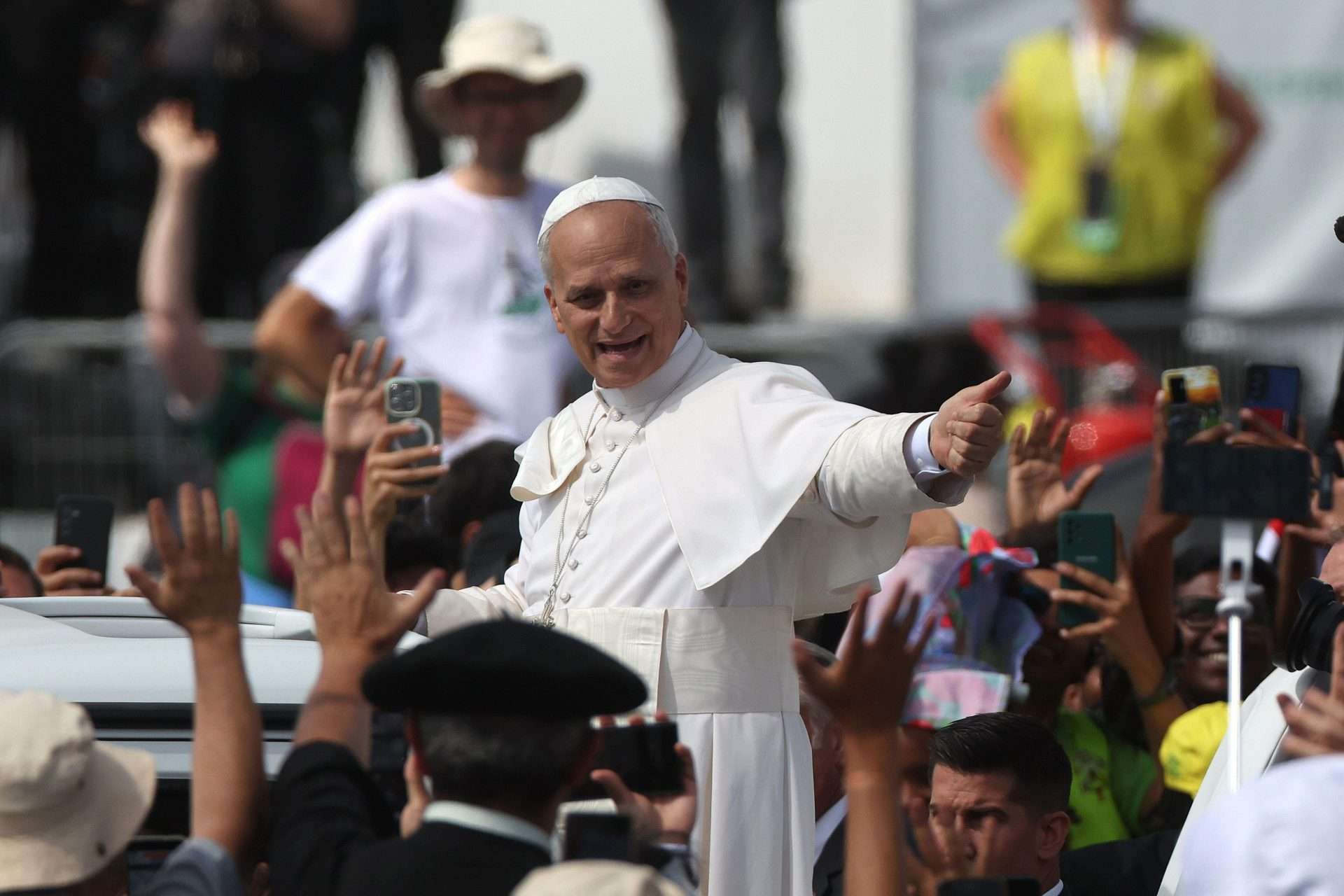
Pope Leo XIV has issued his first Apostolic Exhortation, focusing on love for the poor
Alamy
Faith cannot be separated from love for poor, says Pope Leo XIV in his first apostolic exhortation
In his first apostolic exhortation, Dilexi te, Pope Leo takes up Francis’ call “that all Christians come to appreciate the close connection between Christ’s love and his summons to care for the poor”.
Pope Francis was preparing the exhortation in the last months of his life, as a follow up to his encyclical Dilexit nos.
Pope Leo says in the text, “Having received this project as an inheritance, I am happy to make it my own – adding some reflections – and to propose it again at the beginning of my pontificate, sharing the desire of my beloved predecessor that all Christians may perceive the strong connection that exists between the love of Christ and his call to make us close to the poor.”
Pope Leo says that a society that turns its back on the sufferings of others is a “sick society”.
He warns that in the current “successful” and ”private” model, it can seem not to make sense to invest in order to enable those left behind, the weak or the less gifted to make their way in life. “The question that always comes back is the same: are the less gifted not human beings? Do not the weak have the same dignity as us? Are those born with fewer possibilities less valuable as human beings, and must they simply survive?
“The value of our societies depends on the answer we give to these questions, and our future also depends on it. Either we regain our moral and spiritual dignity or we fall as if into a pit of filth. If we do not stop to take things seriously, we will continue, in explicit or covert ways, to legitimise the current model of distribution, in which a minority believes it has the right to consume in proportions that would be impossible to generalise, because the planet could not even contain the waste products of such consumption.”
He warns also of “a grave deficiency in our societies and also in our Christian communities”. The fact is that many forms of indifference which we encounter today “are signs of a widespread lifestyle, which manifests itself in various, perhaps subtle, ways. Moreover, since we are all so focused on our own needs, seeing someone suffering bothers us, it disturbs us, for we do not want to waste time on other people’s problems. These are symptoms of a sick society, because it tries to build itself by turning its back on suffering.”
Pope Leo writes that Jesus was from a poor background. “I often ask myself why, despite the clarity of the Sacred Scriptures regarding the poor, many continue to think that they can exclude the poor from their care.”
Citing St Augustine, he says, The Doctor of Grace saw caring for the poor as concrete proof of the sincerity of faith. Anyone who claims to love God and has no compassion for the needy is lying… fidelity to Augustine’s teachings requires not only the study of his works, but also a readiness to radically live his call to conversion, which necessarily includes the service of charity.
On the wounded faces of the poor, we find imprinted the suffering of the innocent and, therefore, the very suffering of Christ, he writes.
There are many forms of poverty, he says – that of those who lack material means of support, the poverty of those who are socially marginalised and lack the means to express their dignity and abilities, moral and spiritual poverty, cultural poverty, that of those who find themselves in a condition of personal or social weakness or fragility, the poverty of those who have no rights, no space, no freedom.
“In this sense, it can be said that commitment to the poor and to eliminating the social and structural causes of poverty, while having become important in recent decades, remains insufficient; also because the societies in which we live often favour life- and political-orientation criteria marked by numerous inequalities. Therefore, new forms of poverty, sometimes more subtle and dangerous, are added to the old forms of poverty that we have become aware of and are trying to combat. From this perspective, it is to be welcomed that the United Nations has established the eradication of poverty as one of the Millennium Development Goals.”
He criticises the wealthy elites “who live in a bubble of very comfortable and luxurious conditions, almost in another world from the common people. This means that a culture still persists – sometimes well disguised – that discards others without even realising it and indifferently tolerates millions of people dying of hunger or surviving in conditions unworthy of human beings.”
Having grown up in extreme precariousness, learning to survive in the most adverse conditions, trusting in God with the certainty that no one else takes them seriously and helping one another in the darkest moments, the poor have learned many things, he continues. “Those of us who have not had similar experiences, of a life lived on the edge, certainly have much to learn from that source of wisdom which is the experience of the poor.”
He also reflects on the plight of women in particular. “Although important changes are being observed in some countries, «the organisation of societies throughout the world is still far from clearly reflecting that women have exactly the same dignity and identical rights as men. Certain things are affirmed in words, but decisions and reality shout out another message»,
especially if we think of the poorest women.”
Bishop Richard Moth, chair of the Department for Social Justice of the Bishops’ Conference of England and Wales, welcomed the document.
“As followers of Christ, Christian charity should animate our daily lives. Jesus told the persecuted early Christians, ‘I have loved you’ and we are called to show the same love that God has for us in our love for others, especially the poor. Furthermore, as Dilexi te stresses, each of us has a social responsibility to consider how we behave when it comes to the acquisition and consumption of worldly goods: the world’s resources are meant for all. We cannot serve both God and money.
“I echo Pope Leo when he writes ‘Charity has the power to change reality; it is a genuine force for change in history.’ Catholic charities, such as Cafod and those under the umbrella of the Caritas Social Action Network in England and Wales, have long exercised a preferential option for the poor. As many countries continue to face acute poverty, and with a continuing cost-of-living crisis domestically, this exhortation is a timely reminder to renew our efforts to stand in solidarity, in word and deed, with the poor and marginalised.
“We must not be indifferent to the suffering of others; we must work for the common good and to rebuild solidarity between people. Of course, not all poverty is material, and we must be equally mindful of the spiritual, moral and relational poverty that can afflict our society, even in times of material wealth.”
Stay updated — add us as a preferred news source on Google:


Help us keep The Tablet’s voice independent, clear and far-reaching.
Founded in 1840, The Tablet is the leading independent English-language Catholic weekly, celebrated for great writing, astute analysis, brilliant arts and books reviews and trustworthy reporting from correspondents in Britain, Ireland, Rome and across the world.
Independent, high-quality journalism is at the heart of what we do. The Tablet does not have deep pockets and we are not funded by rich donors. If you appreciate our work please consider supporting The Tablet’s Development Fund. It only takes a moment and you can cancel at any time.
- Support with £5 per month
- Support with £10 per month
- Support with other amount.

MOST READ ARTICLES
-
1
Pope returns to Vatican after hospital discharge
-
2
Diverse schools that are 100 per cent Catholic
-
3
Under endless skies
-
4
Battling confession fatigue
-
5
Nigerian bishop scorns suggestion of running in presidential election
-
6
Schismatic Spanish nuns strip contents of convent before eviction
FROM THE EDITOR'S DESK