Rome confirms opposition to German blessings handbook


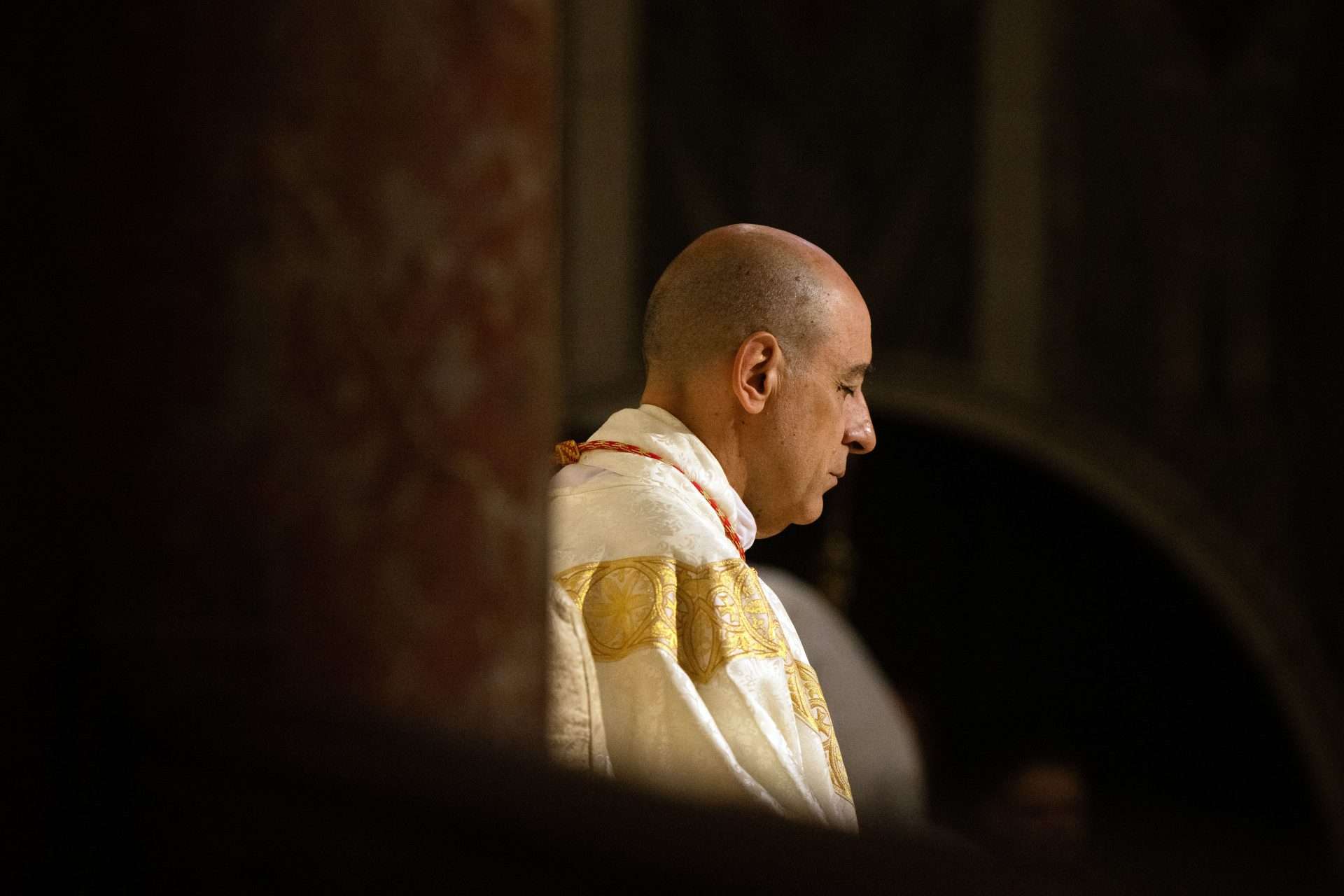
Cardinal Victor Manuel Fernández said his November 2024 letter was ‘the one and only final response’ to the German guidance.
Catholic Church in England and Wales / Mazur
Cardinal Pietro Parolin said the Holy See was in ‘dialogue’ with the German bishops about the blessings and that it was ‘premature’ to discuss formal intervention.
The prefect of the Dicastery of the Doctrine of the Faith confirmed that his criticisms of a draft handbook for blessings submitted by the German bishops also apply to its published version.
On Monday, the dicastery published a letter from Cardinal Víctor Manuel Fernández dated 18 November 2024 addressed to the Bishop of Trier Stephen Ackermann, commenting on a draft of the handbook titled “Blessings for couples that love each other”.
It had been submitted by the then-president of the German bishops’ conference, Bishop Georg Bätzing of Limburg, as “an application of the declaration Fiducia Supplicans for the social and pastoral situation of dioceses in Germany”.
Cardinal Fernández had published Fiducia Supplicans the previous December, introducing the possibility of priests blessing couples in “irregular” situations, including those of the same sex.
In his letter to Bishop Ackermann, Cardinal Fernández said the declaration specifically precluded liturgical blessings that could “offer a form of moral legitimisation” to couples, whereas the German guidance included features proper to a marriage.
“In that sense, it in fact serves to legitimise the status of such couples in a manner contrary to what is affirmed by Fiducia Supplicans,” he said.
Fernández also said that while the handbook repeated the injunction that priests give such blessings “spontaneously and freely”, it also “offers a preferred formula for their implementation” and “prescribes a species of liturgy or para-liturgy regarding the blessing of couples of the same sex”.
The German bishops’ conference and the Central Committee of German Catholics approved a handbook titled “Blessings Strengthen Love” in April 2025, and Bishop Bätzing commended its implementation across German dioceses. During the bishops’ plenary in September, he said the text was developed in consultation with the Dicastery for the Doctrine of the Faith.
However, Fernández told Vatican News this week that his November 2024 letter was “the one and only final response” to the German guidance and that the criticism “also applies to the text” published last year.
Responding to questions from reporters during his flight from Equatorial Guinea to Rome on 23 April, Pope Leo said “we do not agree with the formalised blessing of couples” beyond the terms of Fiducia Supplicans, which he said made clear that “all people receive blessings”.
“The Holy See has already spoken to the German bishops,” he said, while insisting that “the unity or division of the Church should not revolve around sexual matters”.
On Wednesday, the Secretary of State Cardinal Pietro Parolin told reporters in Rome that the Holy See was in “dialogue” with the German bishops about the blessings and that it was “premature” to discuss formal intervention.
He said all parties could share opinions in a synodal manner but “any decision must be in agreement with canon law, with the Second Vatican Council, with the tradition of the Church”.
“Let us hope we never have to get to sanctions, and that problems can be resolved peacefully, as they should be in the Church,” he said.
The Pope of Blessing – Fiducia Supplicans
Stay updated — add us as a preferred news source on Google:


Help us keep The Tablet’s voice independent, clear and far-reaching.
Founded in 1840, The Tablet is the leading independent English-language Catholic weekly, celebrated for great writing, astute analysis, brilliant arts and books reviews and trustworthy reporting from correspondents in Britain, Ireland, Rome and across the world.
Independent, high-quality journalism is at the heart of what we do. The Tablet does not have deep pockets and we are not funded by rich donors. If you appreciate our work please consider supporting The Tablet’s Development Fund. It only takes a moment and you can cancel at any time.
- Support with £5 per month
- Support with £10 per month
- Support with other amount.

MOST READ ARTICLES
-
1
Pope Leo diagnosed with lung cancer after operation
-
2
Breaking up … for now
-
3
The Tablet Lecture 2026: Keeping the dream of peace alive
-
4
Vatican confirms Pope’s Latin America travel plans despite operation
-
5
A tiny gem
-
6
Archbishop bars Catholics from firing squad for US military execution
FROM THE EDITOR'S DESK