Report finds Fulani attacks behind most religious freedom violations in Nigeria


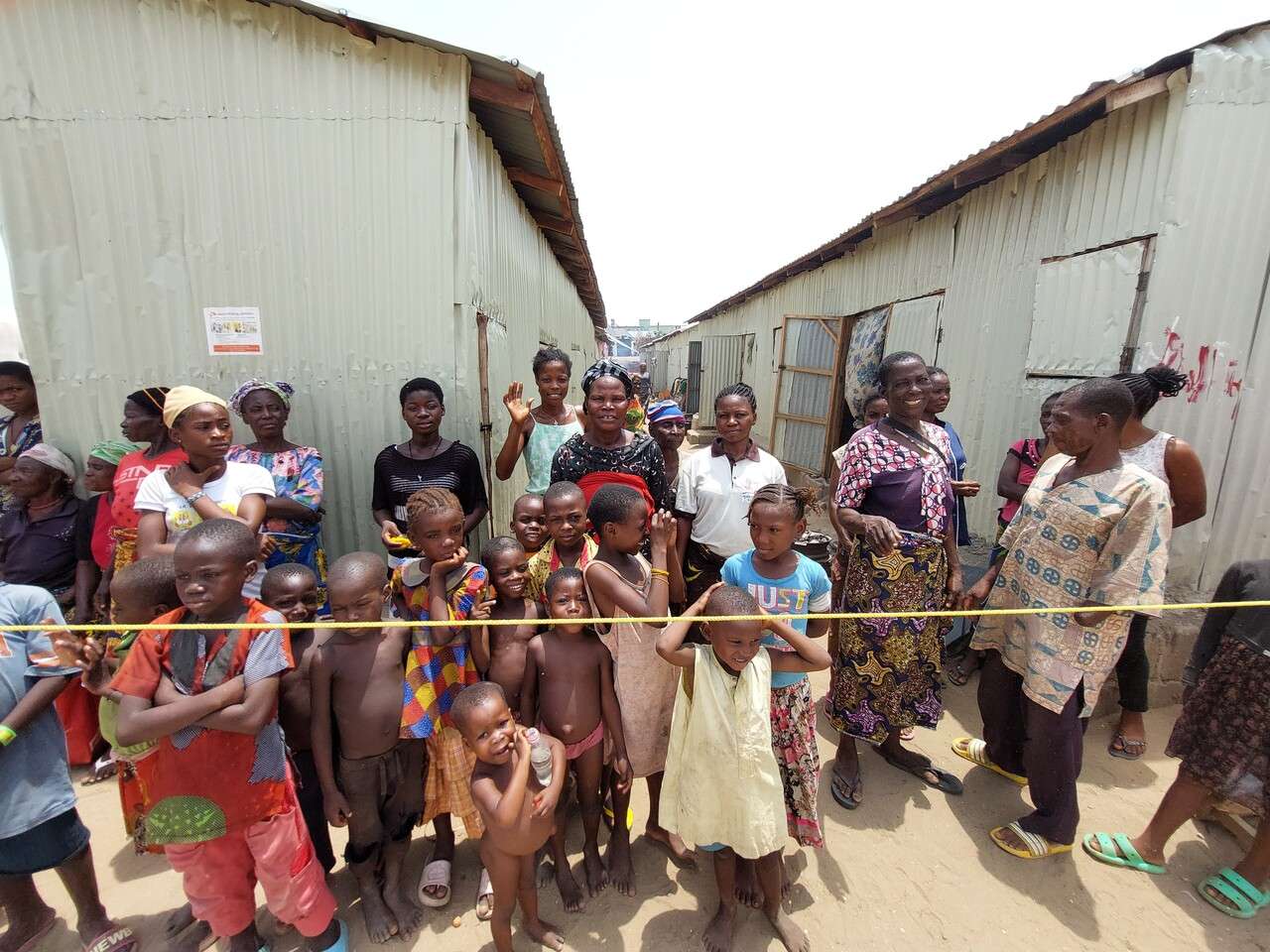
Displaced people in Benue State
© ACN
Attacks by Fulani militants and other armed groups have displaced at least 1.3 million people in the Middle Belt, forcing many into overcrowded camps lacking adequate sanitation and security.
An estimated 30,000 Fulani militants operate across Nigeria in groups ranging from 10 to 1,000 members, according to the May 2026 report released by the US Commission on International Religious Freedom (USCIRF).
It said the militants have become some of the deadliest “non-state violators of religious freedom in Nigeria”, mainly targeting Christians.
The report said attacks carried out by armed actors of Fulani ethnic background intensified insecurity across the Middle Belt and Southern regions, leaving thousands dead, displacing communities and deepening tensions between religious groups.
“Violence by Fulani militants caused the highest number of deaths among all religious communities in Nigeria over the last year as compared to attacks by organised insurgent groups and criminal gangs,” the report stated.
The UCIRF said many of the attacks were directed at Christian communities, though Muslim communities also suffered.
While the Fulani groups lack centralised leadership, the USCIRF reported that some collaborate with criminal gangs and extremist organisations.
“These actors operate in a variety of contexts and with a multiplicity of likely aims and motivations,” it said.
“While many Fulani militant groups wage independent attacks, others periodically coordinate with a wide range of other actors, from conventional bandit gangs seeking financial enrichment to recognised terrorist organisations that espouse a violent interpretation of Islam.”
The USCIRF noted that militants frequently attack isolated rural communities at night using motorcycles.
“They often wield machetes and descend on vulnerable communities during the night, eliciting terror as a way to force victims to quickly leave and to achieve greater control of desired land,” the report said.
It explained that attacks by Fulani militants and other armed groups had displaced at least 1.3 million people in the Middle Belt, forcing many into overcrowded camps lacking adequate sanitation and security.
The report detailed several attacks carried out in 2025 and early 2026, including mass killings in Benue and Plateau states.
“One attack in Benue in June 2025 killed at least 200 people, including internally displaced persons living in a Catholic mission,” the report said.
It also cited the massacre in Yelwata, Benue State, in 2025, where more than 200 Christians – “mostly sleeping women and children” – were reportedly killed and over 3,000 people displaced.
The commission said militants deliberately timed some attacks to coincide with Christian religious holidays: “Militant actors have often carried out operations during Christian holidays such as Christmas or Easter to further maximise the psychological impact.”
Palm Sunday and Easter attacks in April 2026 left dozens dead in Plateau, Kaduna, and Benue states.
“On Easter Sunday, Fulani militants reportedly killed five worshippers at two churches in Kaduna State while abducting 31 others,” the report said.
In February 2026, suspected Fulani militants reportedly killed at least 32 people in Niger State and attacked Holy Trinity Parish in the Diocese of Kafanchan in Kaduna State, killing three people and abducting 11 others, including parish priest Fr Nathaniel Asuwaye.
The report also documented kidnappings targeting both churches and mosques. “In February 2026, armed men kidnapped an imam and seven worshippers from a mosque in Plateau,” the report continued, noting the ₦16 million ransom.
Conflicting narratives surrounding the violence had complicated efforts to determine the motivations behind the attacks, the USCIRF noted.
“Some observers have argued that environmental and economic factors are the driving force behind Fulani militants’ acts of violence, while others have suggested that these actors are engaged in a concerted campaign of outright genocide against non-Muslims, especially Christians,” it said.
“In fact, multiple and overlapping factors, including religion in many cases, likely spur Fulani militants to attack communities or individuals.”
The report criticised federal and state authorities for what it described as inadequate responses to the violence: “Victims have long reported that security forces are consistently slow to respond to attacks on their communities.”
It said some Christian advocates have accused security agencies of showing favouritism toward Muslim communities during investigations and security operations.
Governors from 11 states launched an initiative in June 2025 to establish ranch lands for herders in a bid to reduce clashes over grazing routes and farmland.
At the federal level, the USCIRF linked recent government action to US President Donald Trump’s decision in October 2025 to designate Nigeria as a Country of Particular Concern over religious freedom violations. The following December, Nigeria’s President Bola Tinubu classified kidnappers and violent armed groups, including Fulani militants, as “terrorists”.
The report said security agencies rescued 309 hostages in January 2026 during operations in Kogi and Kwara states, arresting 129 suspected Fulani militants and killing 55 others.
The USCIRF also noted growing scrutiny of the Miyetti Allah Cattle Breeders Association of Nigeria (MACBAN). Christian leaders have accused the organisation of failing to stop militant violence and land invasions, but MACBAN denied supporting criminal activity.
“We do not support, condone, harbour, finance, or protect any form of criminality, extremism, or violence,” the association said, according to the USCIRF report.
The US Congress introduced the Nigeria Religious Freedom and Accountability Act of 2026 in February, proposing sanctions against MACBAN over allegations of involvement in severe religious freedom violations. The USCIRF said that widespread violence persists despite recent security measures and peace initiatives.
“As a result, central Nigeria remains entrenched in an intense, daily, and seemingly perpetual crisis of insecurity,” the report concluded, warning that the crisis would continue “until the federal and several state governments create broader underlying conditions that are more conducive to the safe practice of religious freedom”.
In Washington, the US Secretary of Defence Pete Hegseth reported that President Trump has directed the Pentagon to prioritise the protection of Nigerian Christians targeted by ISIS-linked terrorist groups in parts of Nigeria.
He made the disclosure while speaking about joint counterterrorism operations conducted by US and Nigerian forces against ISIS elements operating in northeastern Nigeria. He claimed the mission led to the killing of Abu-Bilal al-Minuki, described by the Trump administration as ISIS’ second-in-command globally.
Hegseth said that intelligence gathered during the operation contributed to the deaths of “hundreds” of ISIS fighters allegedly connected to attacks on Christians and threats against American interests, and that several senior ISIS figures were also eliminated during coordinated operations involving US Africa Command and Nigerian security forces.
Nigeria’s dangerous Christmas present
Campaigners claim Nigeria’s ranch policy aids jihadis
Stay updated — add us as a preferred news source on Google:


Help us keep The Tablet’s voice independent, clear and far-reaching.
Founded in 1840, The Tablet is the leading independent English-language Catholic weekly, celebrated for great writing, astute analysis, brilliant arts and books reviews and trustworthy reporting from correspondents in Britain, Ireland, Rome and across the world.
Independent, high-quality journalism is at the heart of what we do. The Tablet does not have deep pockets and we are not funded by rich donors. If you appreciate our work please consider supporting The Tablet’s Development Fund. It only takes a moment and you can cancel at any time.
- Support with £5 per month
- Support with £10 per month
- Support with other amount.

MOST READ ARTICLES
-
1
Pope returns to Vatican after hospital discharge
-
2
Diverse schools that are 100 per cent Catholic
-
3
Under endless skies
-
4
Battling confession fatigue
-
5
Nigerian bishop scorns suggestion of running in presidential election
-
6
Schismatic Spanish nuns strip contents of convent before eviction
FROM THE EDITOR'S DESK