Pope Leo entrusts Lebanon to ‘healing’ of St Charbel


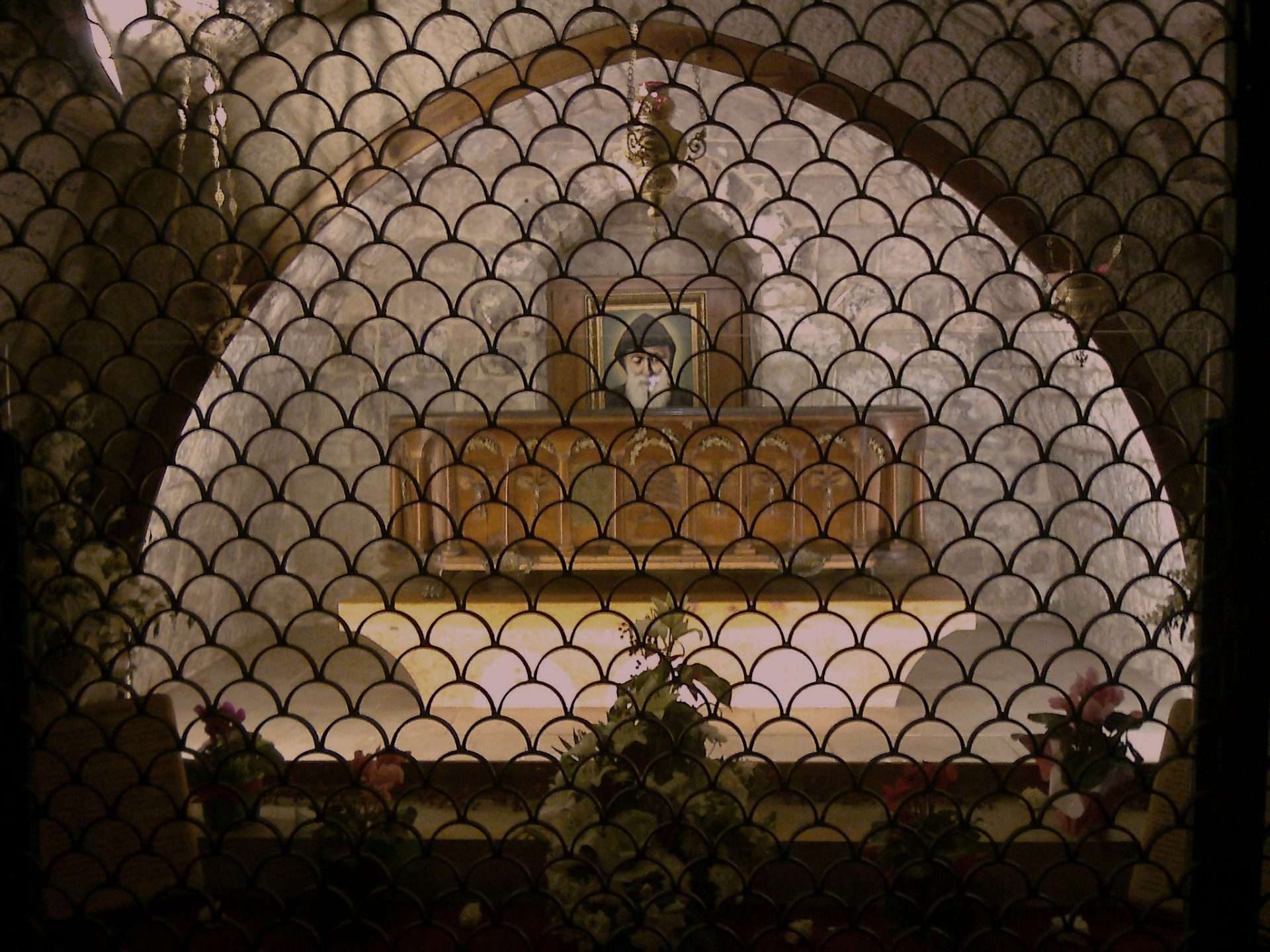
The tomb of St Charbel in the monastery of St Maron in Annaya
Gilbert-Noël Sfeir Mont-Liban / flickr | Creative Commons
The Pope prayed for unity within the Church and for peace in Lebanon at the saint’s tomb, after urging the country’s political leaders to be peacemakers.
Pope Leo made a pilgrimage to the tomb of St Charbel Makhlouf, entrusting the country and the wider Middle East to the intercession of the saint whom Lebanese, Christians and Muslims alike, invoke as the “heavenly physician”.
The Pope travelled by car on Monday from the apostolic nunciature in Harissa, where he is staying during his visit to Lebanon, to the hilltop monastery of St Maron in Annaya. The monastery’s archives record nearly 30,000 miracles attributed to St Charbel’s intercession, including many reported by Muslims, a sign, Leo said, of the saint’s unique place in Lebanon’s spiritual landscape.
Leo, the first Pope to visit the monastery, prayed in silence at Charbel’s tomb before being welcomed by Abbot Hady Mahfouz, Superior General of the Lebanese Maronite Order. He then offered a reflection on Charbel.
“What does St Charbel teach us today?” Pope Leo asked. Despite leaving behind no writings, he said, the hermit of Annaya continues to speak with surprising power. “The Holy Spirit formed him so that he could teach those who live without God how to pray, those immersed in noise how to be silent.”
Charbel also teaches “those who live ostentatiously how to be modest, and those who seek riches how to be poor”, Leo said, adding that the message is addressed to all Christians and “reminds us, bishops and ordained ministers, of the evangelical demands of our vocation”.
The Pope prayed for unity within the Church and for peace in Lebanon and the Levant. “There is no peace without conversion of hearts,” he warned.
He offered a lit lamp to the monastery, praying that Lebanon “may always walk in the light of Christ”. He concluded with a prayer in French, asking God, through St Charbel’s example, to grant the Lebanese people faith, inner silence, healing of body and soul, and renewed strength in trials.
In an address to Lebanon’s leaders at the Presidential Palace in Baabda shortly after his arrival in the country on Sunday, Leo urged them to embrace tenacity, dialogue and a renewed commitment to the common good.
“Blessed are the peacemakers,” he began, adding that peace “takes tenacity” and “perseverance to protect and nurture life”. His remarks came as Lebanon seeks stability after years of political paralysis, economic collapse and the trauma of regional conflict.
The Lebanese parliament elected Joseph Aoun on as Lebanon’s fourteenth president on 9 January this year after more than two years without a head of state. A Maronite Christian and career army officer born in Beirut in 1964, Aoun welcomed Pope Leo to the Presidential Palace on Sunday for a ceremony that included a traditional dabke dance and the planting of a “cedar of friendship” in the palace gardens.
Pope Leo acknowledged the difficulty of governing “in circumstances that are highly complex, conflictual, and uncertain”, but praised the resilience of the Lebanese people. “You are a people who do not give up,” he said.
He described Lebanon as “a community of communities, united by a common language: hope”. Despite the burden of crisis and what he called “an economy that kills”, he said Lebanon has repeatedly shown its capacity to “start again”.
The Pope urged the country’s leaders to remain close to their people, emphasise the role of youth and civil society, and resist reducing national life to competing interests. “The common good is more than the sum of many interests,” he said.
Reconciliation is indispensable, he said, warning that without this process “we would remain stuck, each imprisoned by our own pain”.
Pope Leo spoke of the sorrow caused by emigration and the courage required to remain or return. He highlighted the contributions of women, whom he called uniquely gifted in “the work of peacemaking”.
Closing his address, the Pope reminded Lebanon that peace is not only a human achievement but also a gift that shapes the heart and teaches people to “harmonise our steps with those of others”.
Speaking to reporters during his flight from Turkey to Lebanon earlier that day, Pope Leo said he and the Turkish President Recep Tayyip Erdoğan had found common ground during their talks on the role Ankara can play in peace efforts in the Holy Land and Ukraine.
“We spoke about both situations,” the Pope said. “The Holy See has publicly supported, for several years, the proposal of a two-state solution. Israel at this moment does not accept it, but we see it as the only solution that could bring an end to this conflict. We are also friends of Israel, and we try to be a mediating voice between both sides.”
Pope Leo said Erdoğan “agrees with this proposal” and Turkey “has an important role it could play”, both in Gaza and in efforts to ease the war in Ukraine. He noted that Turkey previously helped broker the Black Sea grain corridor, which allowed Ukraine to export food supplies safely through the war zone before the agreement collapsed in 2023.
Now, he said, “there are concrete proposals for peace”, and Erdoğan’s contact with Kyiv, Moscow and Washington could help advance “dialogue, a ceasefire, and a way to resolve this conflict”.
Reflecting on his visit to Turkey, Pope Leo said his meetings and liturgies were marked by a spirit of “simplicity and profundity”, noting especially Friday’s commemoration in Iznik for the 1,700th anniversary of the Council of Nicaea.
He said Turkey’s Christian minorities are a reminder that peaceful coexistence is possible even amid differences. At the same time, he acknowledged that Turkey has “experienced difficult moments in this regard throughout its history”.
The Pope also disclosed ecumenical discussions ahead of 2033, marking 2,000 years since the Redemption. Church leaders, he said, are considering a shared Christian gathering for the anniversary, possibly in Jerusalem.
Bear witness to the Gospel through reconciliation, says Pope at Nicaea
Christians can rediscover ‘logic of littleness’ in Turkey, says Leo
Stay updated — add us as a preferred news source on Google:


Help us keep The Tablet’s voice independent, clear and far-reaching.
Founded in 1840, The Tablet is the leading independent English-language Catholic weekly, celebrated for great writing, astute analysis, brilliant arts and books reviews and trustworthy reporting from correspondents in Britain, Ireland, Rome and across the world.
Independent, high-quality journalism is at the heart of what we do. The Tablet does not have deep pockets and we are not funded by rich donors. If you appreciate our work please consider supporting The Tablet’s Development Fund. It only takes a moment and you can cancel at any time.
- Support with £5 per month
- Support with £10 per month
- Support with other amount.

MOST READ ARTICLES
-
1
Pope returns to Vatican after hospital discharge
-
2
Diverse schools that are 100 per cent Catholic
-
3
Under endless skies
-
4
Battling confession fatigue
-
5
Nigerian bishop scorns suggestion of running in presidential election
-
6
Schismatic Spanish nuns strip contents of convent before eviction
FROM THE EDITOR'S DESK