Pastors face charges under disputed Rajasthan anti-conversion law


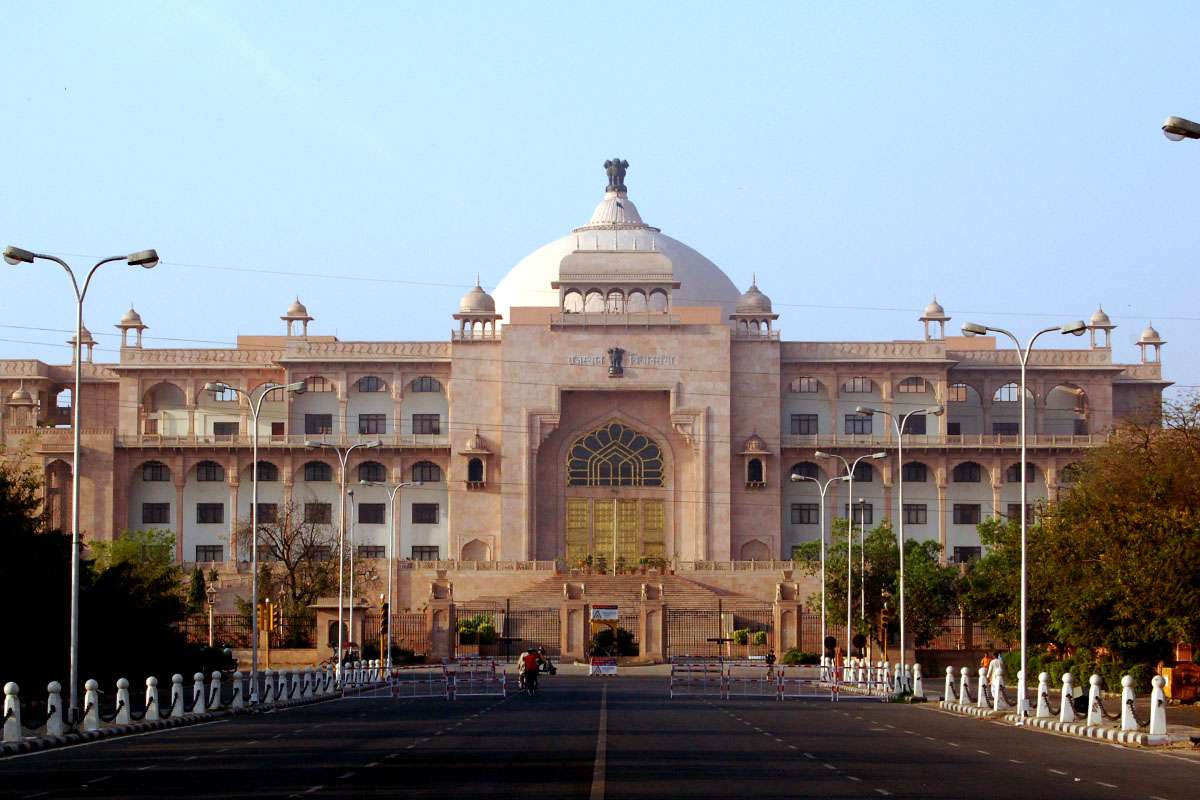
The Rajasthan Legislative Assembly passed an anti-conversion law with penalties including life imprisonment, fines up to rupees one crore (RS10 million – about £85,290) and confiscation and demolition of properties.
Wikimedia Commons
The Rajasthan Prohibition of Unlawful Conversion of Religion Act 2025 is the severest anti-conversion law of any state in India and has drawn criticism for its steep penalties.
Two missionaries face prosecution for alleged “proselytisation” in the first such case under a newly-enacted anti-conversion law in the Indian state of Rajasthan. Religious freedom campaigners said the legislation was “fuelling” engineered vigilantism in the north-western state.
Police registered the case against pastors Chandy Varghese and Arun John on 20 November for allegedly carrying out religious conversions through “allurement” during a retreat at Beersheba Church in the city of Kota.
The case was registered following a complaint by Hindu nationalist groups – Bajrang Dal and Vishwa Hindu Parishad (“World Council of Hindus”) – that the missionaries had conducted “forced conversions”, made “offensive remarks” against Hindus and described the state government as the “devil’s kingdom”.
John denied the charges, saying: “We do no illegal activity. Police are acting on doctored videos on social media purportedly showing alluring speeches, inciting people to convert.”
The Rajasthan Prohibition of Unlawful Conversion of Religion Act 2025, was promulgated on 29 September. It is the severest anti-conversion law of any state in India and has drawn criticism for its steep penalties, including life imprisonment, fines up to rupees one crore (RS10 million – about £85,290) and confiscation and demolition of properties for carrying out conversions through fraud, allurement or coercion.
However, the Supreme Court last week admitted a petition moved by the Jaipur Catholic Welfare Society challenging the validity of the act. The court has issued a notice to the state government.
The society contended that the law was “constitutionally flawed” and contradicted Supreme Court judgments. The plea also asserted that the state legislature had exceeded its authority in enacting the law.
Meanwhile, the advocacy group Citizens for Justice and Peace (CJP) said that attacks on Christians have escalated dramatically since the law came into effect. Scattered raids and police warnings against Christian prayer meetings have led to an organised harassment campaign repackaged as “anti-conversion vigilance”, the CJP said in a report.
Simple acts like prayer meetings, community outreach, and interfaith marriages become triggers for criminal investigation and property seizure, driven by right-wing groups and enabled by police complicity, it said.
“In several districts, including Alwar, Dungarpur, and Jaipur, the people abusing Christians worked with police and other authorities, a relationship that demonstrated their collusion.”
Opponents say anti-conversion laws are in breach of Articles 14 and 15 of the Constitution. Under Article 14, the state shall not deny to any person equality before the law, while under Article 15, the state shall not discriminate against any citizen on grounds only of religion, race, caste, sex, place of birth or any of them.
Under the new law, “any person” can complain and the offences are made non-bailable. The Supreme Court recently quashed several police reports filed under the Uttar Pradesh Prohibition of Unlawful Conversion of Religious Act 2021, because they were filed by a third party and not by a competent authority like a victim or their immediate family members.
The court said allowing unrelated third parties to initiate criminal proceedings on conversion is an impermissible intrusion into individual freedom and could lead to frivolous or malicious litigation.
Another controversial provision of the new law exempts reconversion to “ancestral” faiths, privileging some religious routes over others in violation of constitutional guarantees of equality.
In Rajasthan, Christians represent only 0.14 per cent of the 68 million population, making them particularly vulnerable to persecution. It joins 11 other states in India with anti-conversion laws.
Michael Williams, president of the United Christian Forum, an ecumenical persecution watchdog, said there was a national agenda of anti-conversion measures. He said that since the Hindu nationalist Bharatiya Janata Party came to power in 2014, hate-crime incidents against the community have increased by 500 per cent – from 139 in 2014 to 834 in 2024.
‘Enough is enough’: Indian Christians protest spiralling hate crimes
Stay updated — add us as a preferred news source on Google:


Help us keep The Tablet’s voice independent, clear and far-reaching.
Founded in 1840, The Tablet is the leading independent English-language Catholic weekly, celebrated for great writing, astute analysis, brilliant arts and books reviews and trustworthy reporting from correspondents in Britain, Ireland, Rome and across the world.
Independent, high-quality journalism is at the heart of what we do. The Tablet does not have deep pockets and we are not funded by rich donors. If you appreciate our work please consider supporting The Tablet’s Development Fund. It only takes a moment and you can cancel at any time.
- Support with £5 per month
- Support with £10 per month
- Support with other amount.

MOST READ ARTICLES
-
1
Pope returns to Vatican after hospital discharge
-
2
Diverse schools that are 100 per cent Catholic
-
3
Under endless skies
-
4
Battling confession fatigue
-
5
Nigerian bishop scorns suggestion of running in presidential election
-
6
Schismatic Spanish nuns strip contents of convent before eviction
FROM THE EDITOR'S DESK