O’Malley asks Vatican departments not to use Rupnik artwork


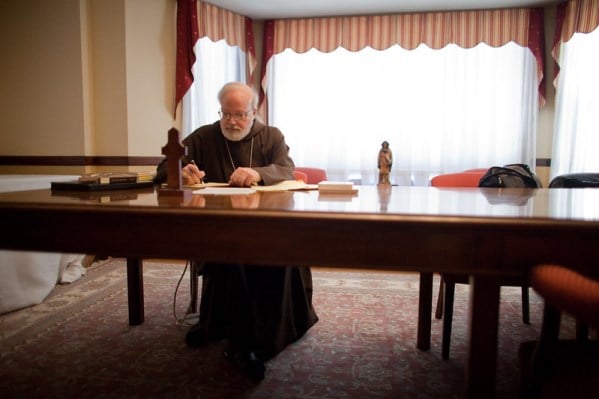
Cardinal O’Malley wrote to Vatican departments emphasising the need for “pastoral prudence” in their use of art.
Roman Catholic Archdiocese of Boston
Cardinal Seán O’Malley, the president of the Pontifical Commission for the Protection of Minors, asked all Vatican dicasteries to avoid using artwork that could “indicate indifference to the pain and suffering of so many victims of abuse”.
The letter to curial officials on 26 June followed comments five days earlier by the prefect of the Dicastery for Communications, Paolo Ruffini, denying that removing artwork by the alleged abuse Fr Marko Rupnik from Vatican websites was a way to “be more close to victims”. He told reporters who suggested as much: “I really think you’re wrong.”
Rupnik’s art, which decorates major shrines across the world including Lourdes, has been subject to scrutiny since allegations over the past two years of his repeated spiritual and sexual abuse of women.
Vatican outlets have continued to use his work for illustrations since the Dicastery for the Doctrine of the Faith reopened its investigation of claims against him in October.
Cardinal O’Malley emphasised the need for “pastoral prudence” in the conduct of Vatican departments. “We must avoid sending a message that the Holy See is oblivious to the psychological distress that so many are suffering,” he said.
“Pope Francis has urged us to be sensitive to and walk in solidarity with those harmed by all forms of abuse. I ask you to bear this in mind when choosing images to accompany the publication of messages, articles, and reflections through the various communication channels available to us.”
On 28 June, five former nuns who alleged that they were abused by Rupnik wrote to more than 100 bishops, religious superiors and nunciatures with responsibility for his artwork, asking that it be removed from display. Several allegations against the artist relate to abuse perpetrated in the course of creating his artworks.
“Notwithstanding the years that have passed, the trauma that each suffered has not been erased, and it lives again in the presence of each of Fr Rupnik’s works,” said the letter, signed by the Italian lawyer Laura Sgro on behalf of the alleged victims.
Speaking separately, they welcomed Cardinal O’Malley’s intervention. “It’s a sign that times have matured,” said Mirjam Kovac, a former member of Rupnik’s community in Slovenia who is now a canon lawyer based at the Pontifical Gregorian University.
Earlier in June, the university’s Institute of Anthropology, headed by the safeguarding expert Fr Hans Zollner SJ, hosted a conference on the relationship between safeguarding and disability, opened by the Vatican’s secretary of state Cardinal Pietro Parolin.
Addressing the conference, Baroness Hollins, a former member of the Pontifical Commission for the Protection of Minors, said that “although disabled people might be a minority demographically, they’re at considerably greater risk [of abuse], and if disclosure was easier for them they may actually constitute a majority of abused people”.
She warned of the dangers of “unconscious bias” in Church environments which could prevent disabled people from disclosing abuse, and said that engaging with disabled people should be part of seminary formation.
“I think that we could actually change things quite substantially by getting priests to get to know disabled people,” she said.
Stay updated — add us as a preferred news source on Google:


Help us keep The Tablet’s voice independent, clear and far-reaching.
Founded in 1840, The Tablet is the leading independent English-language Catholic weekly, celebrated for great writing, astute analysis, brilliant arts and books reviews and trustworthy reporting from correspondents in Britain, Ireland, Rome and across the world.
Independent, high-quality journalism is at the heart of what we do. The Tablet does not have deep pockets and we are not funded by rich donors. If you appreciate our work please consider supporting The Tablet’s Development Fund. It only takes a moment and you can cancel at any time.
- Support with £5 per month
- Support with £10 per month
- Support with other amount.

MOST READ ARTICLES
-
1
Archbishop of Cardiff-Menevia meets with other worldwide Catholic Church leaders to discuss liturgy
-
2
Let there be light
-
3
World Humanitarian Day: aid workers face a ‘crisis of protection’
-
4
Ruling allows French private hospitals limited exemption from assisted suicide
-
5
A tract for our times
-
6
The wisdom of the saints
FROM THE EDITOR'S DESK