Largest Irish diocese takes steps to confront financial deficit


New initiatives are being developed in the Archdiocese of Dublin to ensure its funding model ‘is sustainable into the future’, Archbishop Dermot Farrell has told The Tablet.
In its 2024 financial report, the largest diocese in the Irish Church reported a deficit of €3.2m (£2.77m).
The total parish income for that period was €31m (£26.8m), down from €31.1m (£26.9m) in 2023, while expenditure amounted to €34.2m (£29.6m).
Collections in support of the priests of the diocese were €14.1m (£12.2m), down from €14.3m (£12.3m), while the Share collection amounted to €5.7m (£4.9m), up from €5.6m (£4.8m).
Speaking to The Tablet about the financial challenges Dublin faces and concerns about future sustainability, Archbishop Farrell said measures to manage the diocese’s cost base are being considered which will “primarily” look at building requirements into the future.
“A significant portion of parish buildings are listed by local authorities as protected and these buildings are especially expensive to maintain,” he said.
Dublin is currently implementing Building Hope, the pastoral strategic planning initiative of the diocese, to address declining priest numbers and diocesan finances.
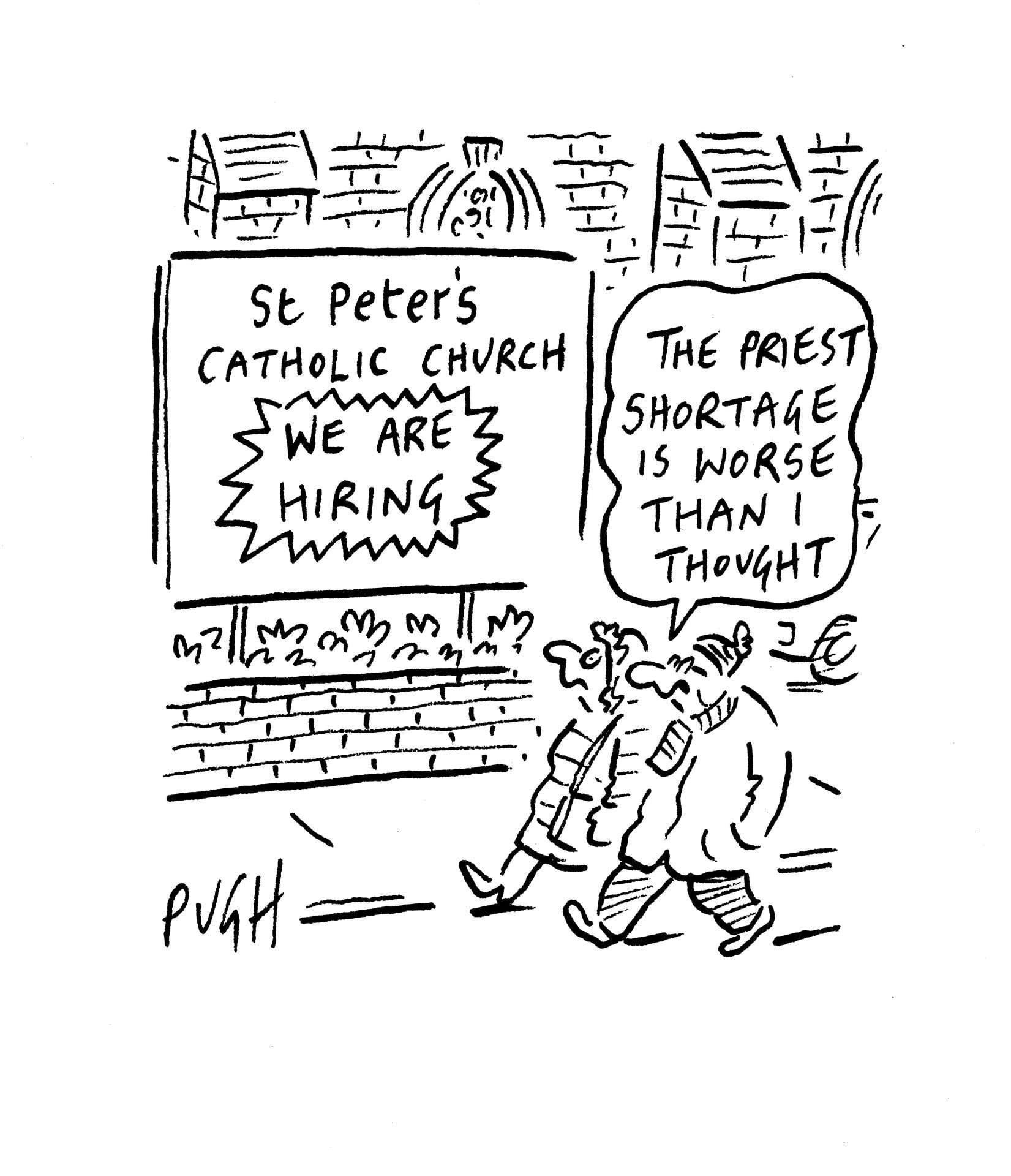
If there’s a shortage of priests in Ireland, why not ordain women to the diaconate?
The 361 priests are mainly elderly and there have been just two ordinations since 2020.
As part of its future-proofing strategy, Dublin’s 195 parishes have been grouped into 53 partnerships, which will see a greater sharing of resources and priests while enabling more members of the laity to become involved as volunteers and in paid lay ministry roles.
The number of staff employed centrally by Dublin diocese was 44 in 2024, an increase of three on the previous year, at a cost €2.8m (£2.4m), up from €2.6m (£2.2m) in 2023.
“Parishes actively encourage volunteers to participate, but it is also anticipated that the number of paid pastoral roles will increase in partnerships given the continued decline in the number of priests,” Archbishop Farrell said.
He explained that new diocesan roles in support of parish life and ministry are primarily in the areas of pastoral mission, as well as governance and compliance.
Financial projections are being prepared to ensure that all roles are “financially viable and make a valuable contribution to the mission of the diocese, partnerships and parishes.”
Asked about bringing in clergy from overseas, Archbishop Farrell said more priests from overseas are now providing support in Dublin parishes than before. He added that they generally stay for a short period of time as they are also needed in their diocese of origin.
Stay updated — add us as a preferred news source on Google:


Help us keep The Tablet’s voice independent, clear and far-reaching.
Founded in 1840, The Tablet is the leading independent English-language Catholic weekly, celebrated for great writing, astute analysis, brilliant arts and books reviews and trustworthy reporting from correspondents in Britain, Ireland, Rome and across the world.
Independent, high-quality journalism is at the heart of what we do. The Tablet does not have deep pockets and we are not funded by rich donors. If you appreciate our work please consider supporting The Tablet’s Development Fund. It only takes a moment and you can cancel at any time.
- Support with £5 per month
- Support with £10 per month
- Support with other amount.

MOST READ ARTICLES
-
1
Pope returns to Vatican after hospital discharge
-
2
Diverse schools that are 100 per cent Catholic
-
3
Under endless skies
-
4
Battling confession fatigue
-
5
Nigerian bishop scorns suggestion of running in presidential election
-
6
Schismatic Spanish nuns strip contents of convent before eviction
FROM THE EDITOR'S DESK