Estonian Council of Churches speaks out against attack on Holy Family Catholic Church in Gaza


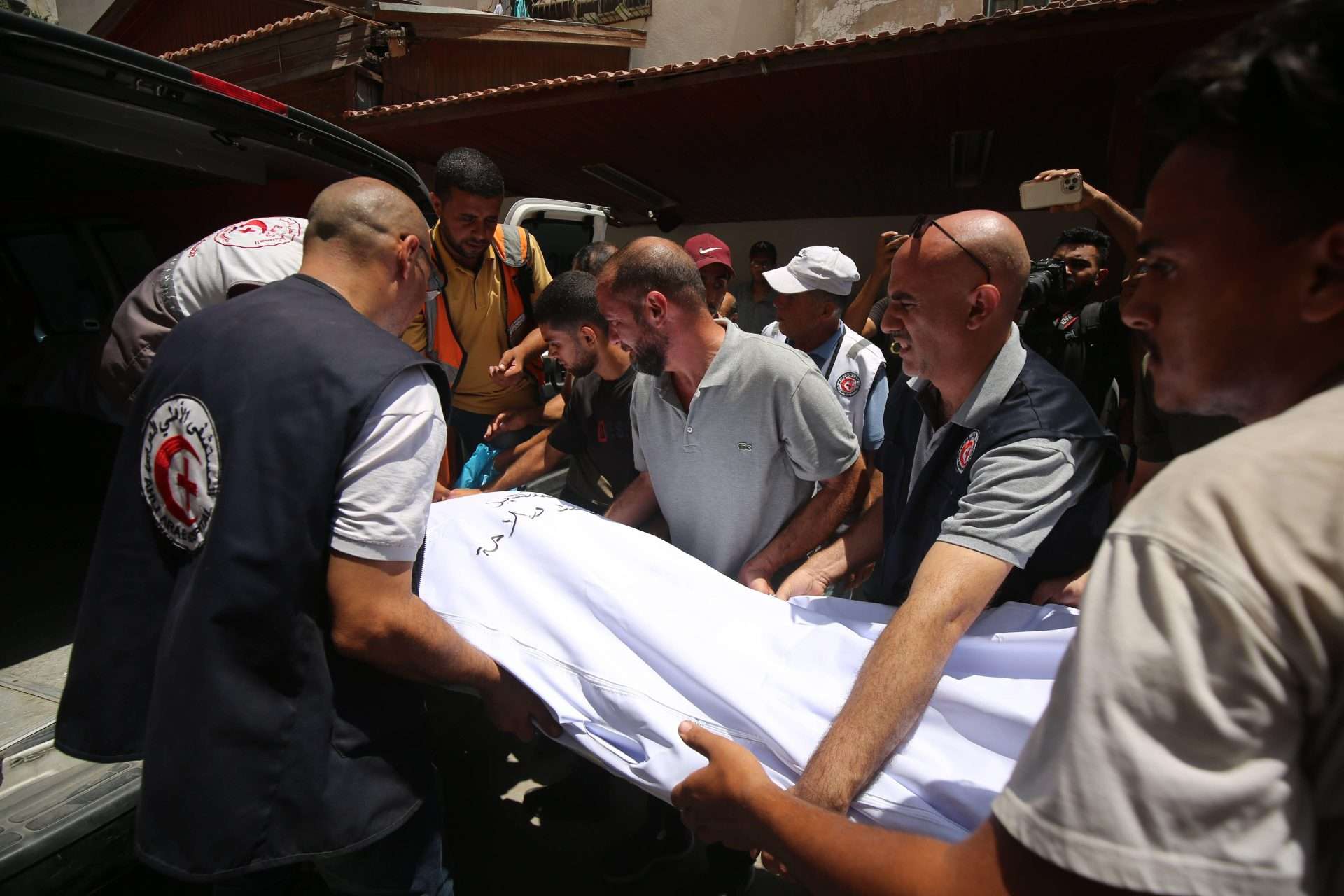
Christian Palestinian mourners take the body of a loved one for burial from the city’s Arab Ahli, also known as Baptist Hospital, following the Israeli strike on the Holy Family Church on 17 July.
Imago via Alamy
The Estonian Council of Churches is the latest body to speak out against the 17 July attack on the Holy Family Catholic Church in Gaza, urging all the faithful to pray for peace
The statement, released on July 21, expresses deep sadness and concern regarding the bombing of churches in Gaza that resulted in numerous civil casualties and offers condolences to the Christians in Gaza and all those affected by the attacks.
“We also recall the attack on the only Orthodox church in Gaza, the Church of St Porphyry, a year and a half ago, in which at least 18 civilians were killed. Each church in Gaza is a refuge for approximately 500 refugees, both Christians and Muslims. These shrines, which were a place of refuge and hope for many people, should be protected from all violence and military action,” the statement said.
At the same time, the statement reminds about the ongoing war in Ukraine, where regular bombings have damaged or completely destroyed more than 500 churches.
“We urge respect for places of worship, which are never legitimate military targets, and to protect innocent lives, regardless of their faith or nationality…. We pray for the achievement of peace, justice, and reconciliation in the Holy Land, in Ukraine, and throughout the world,“ the document says.
The Estonian Council of Churches consists of the Catholic, Protestant and Orthodox member churches, with Bishop Philippe Jourdan of Tallinn as its Vice President.
The ecumenical prayer for peace is going to be one of the features during the upcoming beatification that is the first of a kind in the history of the Catholic Church in Estonia. The event, which will take place on September 6, in Tallinn Freedom Square, will honour the heroic martyrdom of the Archbishop Eduard Proffitlich SJ (1890-1942) and more than 20,000 Estonians who died in the Soviet prison camps.
A German-born Proffitlich had a chance to escape the Soviet occupation and subsequent persecution of the church, instead, he chose to remain with his flock and shared their fate. In the 1940s, around one-fifth of the Estonian population were deported to Siberia, many died there.
Stay updated — add us as a preferred news source on Google:


Help us keep The Tablet’s voice independent, clear and far-reaching.
Founded in 1840, The Tablet is the leading independent English-language Catholic weekly, celebrated for great writing, astute analysis, brilliant arts and books reviews and trustworthy reporting from correspondents in Britain, Ireland, Rome and across the world.
Independent, high-quality journalism is at the heart of what we do. The Tablet does not have deep pockets and we are not funded by rich donors. If you appreciate our work please consider supporting The Tablet’s Development Fund. It only takes a moment and you can cancel at any time.
- Support with £5 per month
- Support with £10 per month
- Support with other amount.

MOST READ ARTICLES
-
1
Pope returns to Vatican after hospital discharge
-
2
Diverse schools that are 100 per cent Catholic
-
3
Under endless skies
-
4
Battling confession fatigue
-
5
Nigerian bishop scorns suggestion of running in presidential election
-
6
Schismatic Spanish nuns strip contents of convent before eviction
FROM THE EDITOR'S DESK