End ‘silence’ on migrant exploitation, Italian bishop demands after workers killed


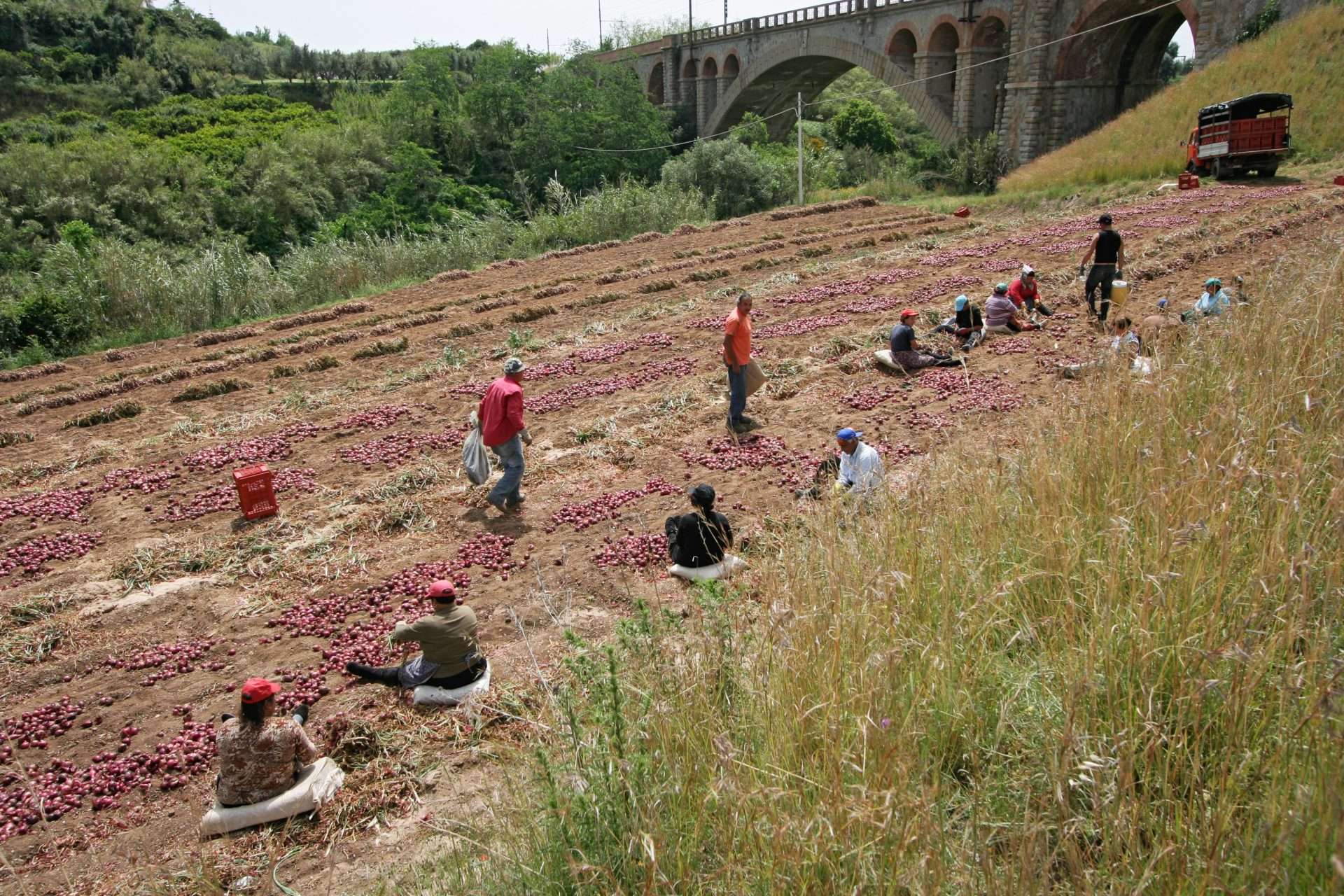
Workers on a Calabrian farm
Marc Anderson / Alamy
‘The gangmaster network is not a peripheral aberration, it is not an ancient forgotten remnant of the fields. It is a system. It is a structure of power. It is time to say enough.’
Italy must break its “sordid silence of convenience” about the exploitation of migrant workers, a bishop said, after four men were burned to death in a car in Calabria.
Police arrested two Pakistani men on charges of aggravated murder after the deaths on Monday. CCTV footage at a garage in Amendolara, near Cosenza, showed the suspects pouring petrol into the boot of the vehicle and setting it on fire, holding the doors shut with the victims inside.
The authorities named the victims on Wednesday: three Afghans, Amin Fazal Khogjani, 28, Ullah Ismat Qiemi, 19, and Safi Iayjad, 27, and Waseem Khan, a 29-year-old Pakistani.
A fourth Afghan named as Taj Mohammed Alamyar, 35, escaped the car with severe burns. He alleged that the perpetrators belonged to a “huge Pakistani mafia” that forced the men to work as fruit pickers without pay. Police named the suspects as Ahmed Safeer and Ali Raza, both 31.
Italy’s Prime Minister Giorgia Meloni said it was “essential to shed light on this terrible crime and bring all those responsible to justice”. Union leaders said the case exposed the caporalato (“gangmaster”) system of organised crime that operates in Italian agriculture.
Networks of gangmasters control the trafficking of migrant workers – some of them irregular arrivals but many others who arrive legally with a promise of legitimate work. All four of those killed on Monday had permission to work in Italy.
“The caporalato is not a peripheral aberration, it is not an ancient forgotten remnant of the fields,” said Bishop Francesco Savino of Cassano All’Jonio, a Calabrian diocese. “It is a system. It is a structure of power. It is time to say enough.”
Speaking to Vatican News, he demanded a “civil mobilisation that cannot be the usual ritual, the usual routine or the emotion of the moment that fades after a few days”.
“What I am calling for is a rebellion of conscience, a moral uprising of citizens and communities, believers and non-believers, where the dignity of the person is really at stake,” said Savino, the vice president of the Italian bishops’ conference.
“I think that the state, in its different forms and powers, needs above all to be present in the countryside, in the agricultural supply chains, in the places where labourers are recruited, in the unsuitable accommodation, in the blacked-out transport, in the irregular work deals, in the pockets of vulnerability where the caporalato takes root.”
‘End this crime against humanity’: Leo decries human trafficking
Stay updated — add us as a preferred news source on Google:


Help us keep The Tablet’s voice independent, clear and far-reaching.
Founded in 1840, The Tablet is the leading independent English-language Catholic weekly, celebrated for great writing, astute analysis, brilliant arts and books reviews and trustworthy reporting from correspondents in Britain, Ireland, Rome and across the world.
Independent, high-quality journalism is at the heart of what we do. The Tablet does not have deep pockets and we are not funded by rich donors. If you appreciate our work please consider supporting The Tablet’s Development Fund. It only takes a moment and you can cancel at any time.
- Support with £5 per month
- Support with £10 per month
- Support with other amount.

MOST READ ARTICLES
-
1
Pope returns to Vatican after hospital discharge
-
2
Diverse schools that are 100 per cent Catholic
-
3
Under endless skies
-
4
Battling confession fatigue
-
5
Nigerian bishop scorns suggestion of running in presidential election
-
6
Schismatic Spanish nuns strip contents of convent before eviction
FROM THE EDITOR'S DESK