Calls for unity and peace conclude papal visit to Turkey


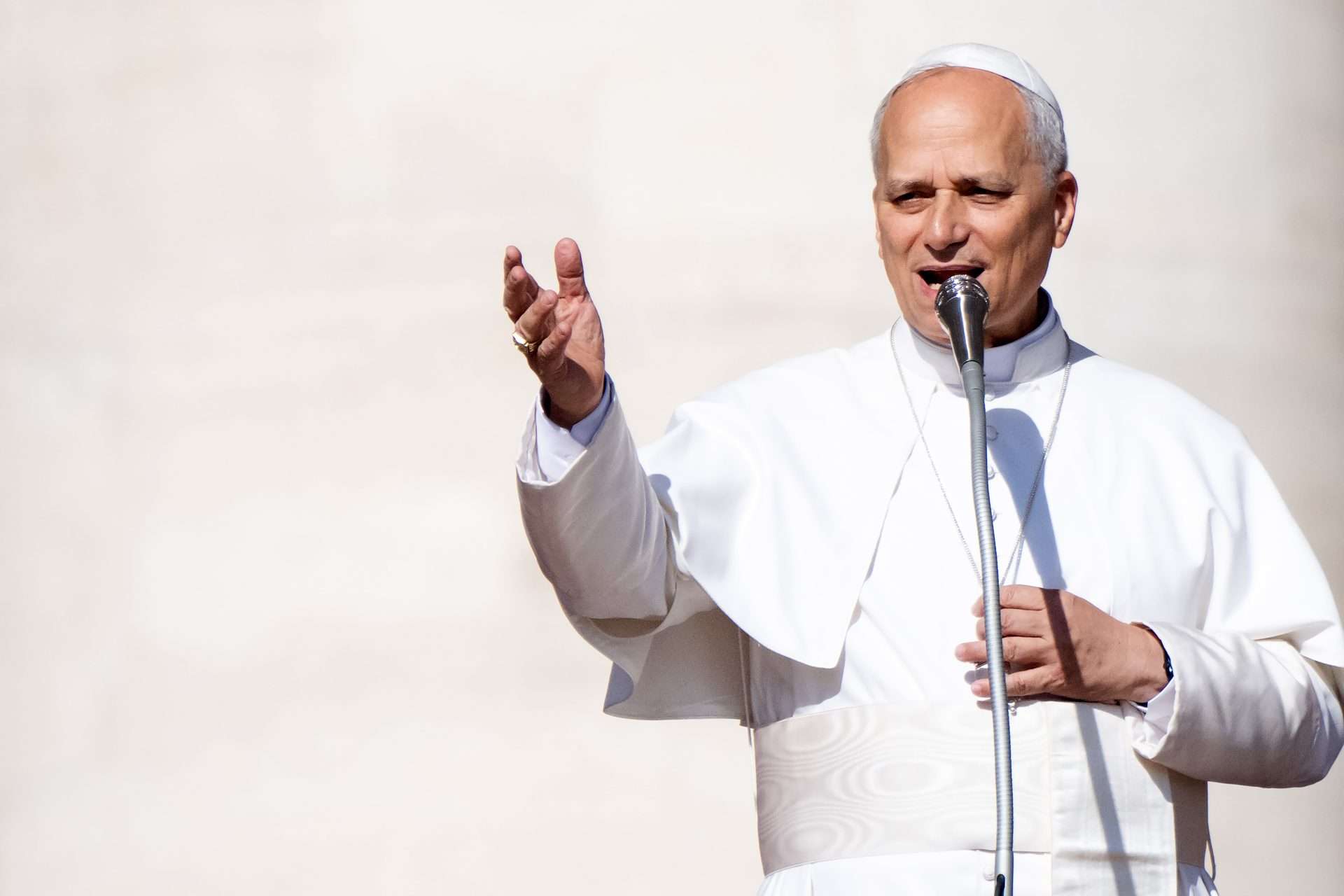
Pope Leo: ‘Peace must be sought through prayer, penance, contemplation and nurturing a living relationship with the Lord.’
Catholic Church in England and Wales / Mazur
The Pope signed a joint appeal for peace with the Ecumenical Patriarch, rejecting the use of religion to justify violence and urging support for global peace efforts.
Pope Leo marked the start of Advent on Saturday during his visit to Turkey with an appeal for unity and peace
He told thousands gathered for Mass in Istanbul that Christians “journey as if on a bridge that connects earth to heaven”, keeping their eyes “fixed on both shores” until they are united “in the house of the Father”.
The Pope celebrated Mass at the Volkswagen Arena, a multipurpose venue in Istanbul’s Uniq cultural complex. The liturgy, on the eve of the feast of St Andrew, patron of Turkey, took place during the third day of his first international apostolic journey.
In his homily, the Pope reflected on the beginning of Advent, saying it prepares believers “to experience anew at Christmas the mystery of Jesus, the Son of God, begotten, not made, consubstantial with the Father”.
Leo pointed to two key images in the first reading (Isaiah 2:1-5). The first was the mountain “established as the highest of the mountains”, which he said reminds Christians that God’s gifts “are a gift not only for us, but for everyone”. He cited examples of evangelising witness: St Peter meeting Christ through St Andrew’s enthusiasm, and St Augustine coming to the faith through St Ambrose.
Recalling words of St John Chrysostom – “The miracle happens and passes, but the Christian life remains and continually edifies” – he urged the faithful to “keep watch” with prayer, charity, and spiritual vigilance.
The second image was the prophet’s vision of peace: “They shall beat their swords into ploughshares … neither shall they learn war anymore.” Leo said the message is especially urgent today, calling the Church to be a sign of reconciliation in a world marked by conflict.
The Pope commented on the logo for his visit to Turkey, which features the Bosphorus Bridge, joining Asia and Europe. He said the image points to three essential “bridges of unity”: within the Catholic community, in relations with other Christians, and in dialogue with other religions.
A choir of about 200 members represented the four rites of Turkey’s Catholic community, while readings and prayers were in Turkish, Aramaic, Syriac, English, Armenian and Arabic.
Leo said the four traditions – Latin, Armenian, Chaldean, and Syriac – had “a catholicity that unites”. Unity, he said, “needs care, attention, and maintenance”. Citing Christ’s prayer “that they may all be one”, he appealed again for Christian unity and encouraged believers to be peacemakers.
Earlier in the day, the Pope signed a joint appeal for peace with the Ecumenical Patriarch Bartholomew I of Constantinople, rejecting the use of religion to justify violence and urging support for global peace efforts. It said they were “deeply alarmed by the current international situation” and affirmed the place of different faiths in ending violence while calling on civil and political leaders to “do everything possible to ensure that the tragedy of war ceases immediately”.
The document, signed at the Palace of the Ecumenical Patriarchate, reaffirmed their shared commitment to dialogue aimed at restoring full communion between Catholic and Orthodox churches, reflecting on the 1,700th anniversary of the First Council of Nicaea and the Nicene Creed as a shared foundation of faith.
Leo and Bartholomew also marked the anniversary of the lifting of mutual excommunications in 1965 by Paul VI and Patriarch Athenagoras and called for renewed courage in pursuing dialogue, voicing hope for a common celebration of Easter in future.
Earlier in the day, Pope Leo joined Patriarch Bartholomew for a doxology, a liturgical prayer of praise, at St George’s Ecumenical Orthodox Patriarchal Church in Istanbul. The Pope said he felt “great emotion” upon entering the historic church, noting that he was mindful of the gestures of his predecessors and grateful for the friendship he has shared with Bartholomew since the beginning of his ministry as Bishop of Rome.
On Saturday morning, the Pope also met privately with leaders of Christian churches in Turkey at the Syriac Orthodox Church of Mor Ephrem in Istanbul, where he was welcomed by the Syriac Orthodox Patriarch Ignatius Aphrem II. Concluding the meeting, he reflected on the significance of the Council of Nicaea and the Gospel of the Incarnation, calling the assembled leaders to prayer, unity, and renewed evangelisation. He invited them to journey together toward the 2033 Jubilee with the hope of advancing toward full communion, inspired by the motto In Illo Uno Unum (“Unity in the One”).
Mor Ephrem, located in Yeşilköy, is the first church to be built in Turkey since the founding of the Republic. Construction began nearly a decade before its inauguration in 2023 but was slowed by administrative delays, the Covid-19 pandemic and the 2023 earthquake.
The Pope dedicated the final morning of his visit to Turkey on Sunday to the Armenian Apostolic Church, thanking God for “the courageous Christian witness of the Armenian people throughout history, often amid tragic circumstances”.
Speaking at the Armenian Apostolic Cathedral in Istanbul, Leo reflected on the deepening relationship between the Catholic Church and the Armenian Apostolic Church and key developments in their modern ecumenical journey.
In 1967, Catholicos Khoren I became the first primate of an Oriental Orthodox church to visit the Bishop of Rome, then Paul VI. Three years later, Catholicos Vasken I and Paul VI signed the first joint declaration between their churches, urging Christians “to rediscover themselves as brothers and sisters in Christ with a view to fostering unity”.
While the Armenian Patriarchate of Constantinople is autonomous in its internal governance, it recognises the spiritual primacy of the Catholicos of All Armenians in Echmiadzin. Patriarch Sahak II Mashalian received Pope Leo at the cathedral.
In his address, the Pope again emphasised the unifying force of the Nicene Creed. “We must draw from this shared apostolic faith in order to recover the unity that existed in the early centuries between the Church of Rome and the ancient Oriental Churches,” he said. Full communion “does not imply absorption or domination, but rather an exchange of the gifts received by our churches from the Holy Spirit”.
Pope Leo also honoured Armenian saints, especially the twelfth-century Catholicos and poet Nerses IV Shnorhali. “May the example of St Nerses inspire us and his prayer strengthen us on the path to full communion,” he said, noting the recent 850th anniversary of his death.
Later in the day, the Pope Leo returned to the Orthodox Patriarchal Church of St George for the Divine Liturgy of the Feast of St Andrew, patron of the Ecumenical Patriarchate and of Turkey. In an address, acknowledged unresolved tensions between Christian churches.
“There are still obstacles preventing us from achieving full communion. Nevertheless, we must not relent in striving towards unity,” he said, and emphasised the shared role of Christians in responding to global challenges.
“Peace must be sought through prayer, penance, contemplation and nurturing a living relationship with the Lord,” he said. He appealed for renewed care for creation, warning that the ecological crisis demands “spiritual, personal, and communal conversion”, and encouraged Catholics and Orthodox to respond together to new technologies “in promoting their responsible use … ensuring their benefits are not reserved to a small number of people or the interests of a privileged few”.
He ended with a broad call to collaboration: “All Christians, the members of other religious traditions, and all men and women of goodwill can cooperate harmoniously in working together for the common good.”
‘Common heritage’ of Nicaea can restore unity, says Leo in apostolic letter
What really happened at Nicaea
Stay updated — add us as a preferred news source on Google:


Help us keep The Tablet’s voice independent, clear and far-reaching.
Founded in 1840, The Tablet is the leading independent English-language Catholic weekly, celebrated for great writing, astute analysis, brilliant arts and books reviews and trustworthy reporting from correspondents in Britain, Ireland, Rome and across the world.
Independent, high-quality journalism is at the heart of what we do. The Tablet does not have deep pockets and we are not funded by rich donors. If you appreciate our work please consider supporting The Tablet’s Development Fund. It only takes a moment and you can cancel at any time.
- Support with £5 per month
- Support with £10 per month
- Support with other amount.

MOST READ ARTICLES
-
1
Pope returns to Vatican after hospital discharge
-
2
Diverse schools that are 100 per cent Catholic
-
3
Under endless skies
-
4
Battling confession fatigue
-
5
Nigerian bishop scorns suggestion of running in presidential election
-
6
Schismatic Spanish nuns strip contents of convent before eviction
FROM THE EDITOR'S DESK