Assisted dying in the Netherlands – how it is now seen often as ‘the best course of action’


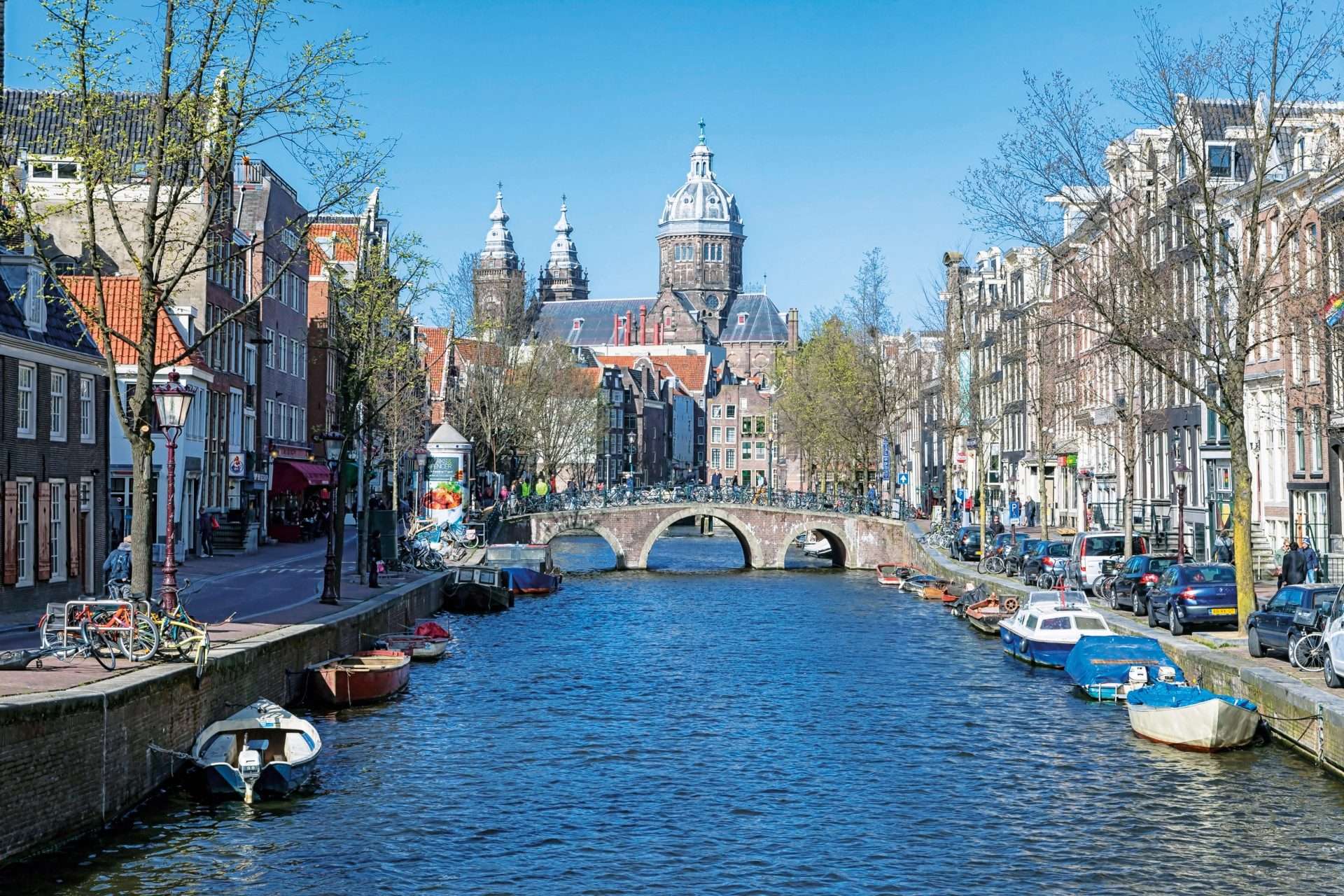
The Basilica of St Nicholas, the city’s primary Catholic church, seen from an Amsterdam canal.
Alamy, Joanna Cruse.
Since assisted suicide was decriminalised in the Netherlands, what was once unthinkable has become normalised – and the attitudes of Catholics, too, are changing
The last time I walked into Amsterdam’s University Medical Centre (UMC), a few kilometres south of the city centre, it was to visit my grandson whose life had just been saved there. So it felt sobering that my visit this week, 12 months on, was to discuss a very different facet of the Dutch health service: not the saving of lives, but the taking of them. The Netherlands became the first country in the world to allow euthanasia, 23 years ago, so now that assisted suicide – or “assisted dying” – seems close to being legalised in Britain, it feels like a good place to go to ask some questions about how it has changed society, how it has affected life for doctors – including those who don’t believe it should be happening – as well as how it has felt to be a campaigner against euthanasia in a place and through a time when that meant taking a stance that was increasingly against the grain.
Get Instant Access
Continue Reading
Register for free to read this article in full
Subscribe for unlimited access
From just £37.50 quarterly
Print copy of The Tablet delivered directly to your door.
Complete access to all Tablet website content including all premium content.
Access to the weekly digital copy of The Tablet.
Full access to The Tablet’s archive – over 180 years of back issues.

Already a subscriber? Login

Help us keep The Tablet’s voice independent, clear and far-reaching.
Founded in 1840, The Tablet is the leading independent English-language Catholic weekly, celebrated for great writing, astute analysis, brilliant arts and books reviews and trustworthy reporting from correspondents in Britain, Ireland, Rome and across the world.
Independent, high-quality journalism is at the heart of what we do. The Tablet does not have deep pockets and we are not funded by rich donors. If you appreciate our work please consider supporting The Tablet’s Development Fund. It only takes a moment and you can cancel at any time.
- Support with £5 per month
- Support with £10 per month
- Support with other amount.

MOST READ ARTICLES
-
1
Pope returns to Vatican after hospital discharge
-
2
Diverse schools that are 100 per cent Catholic
-
3
Under endless skies
-
4
Battling confession fatigue
-
5
Nigerian bishop scorns suggestion of running in presidential election
-
6
Schismatic Spanish nuns strip contents of convent before eviction
FROM THE EDITOR'S DESK