Africa’s debt crisis: seeds of hope


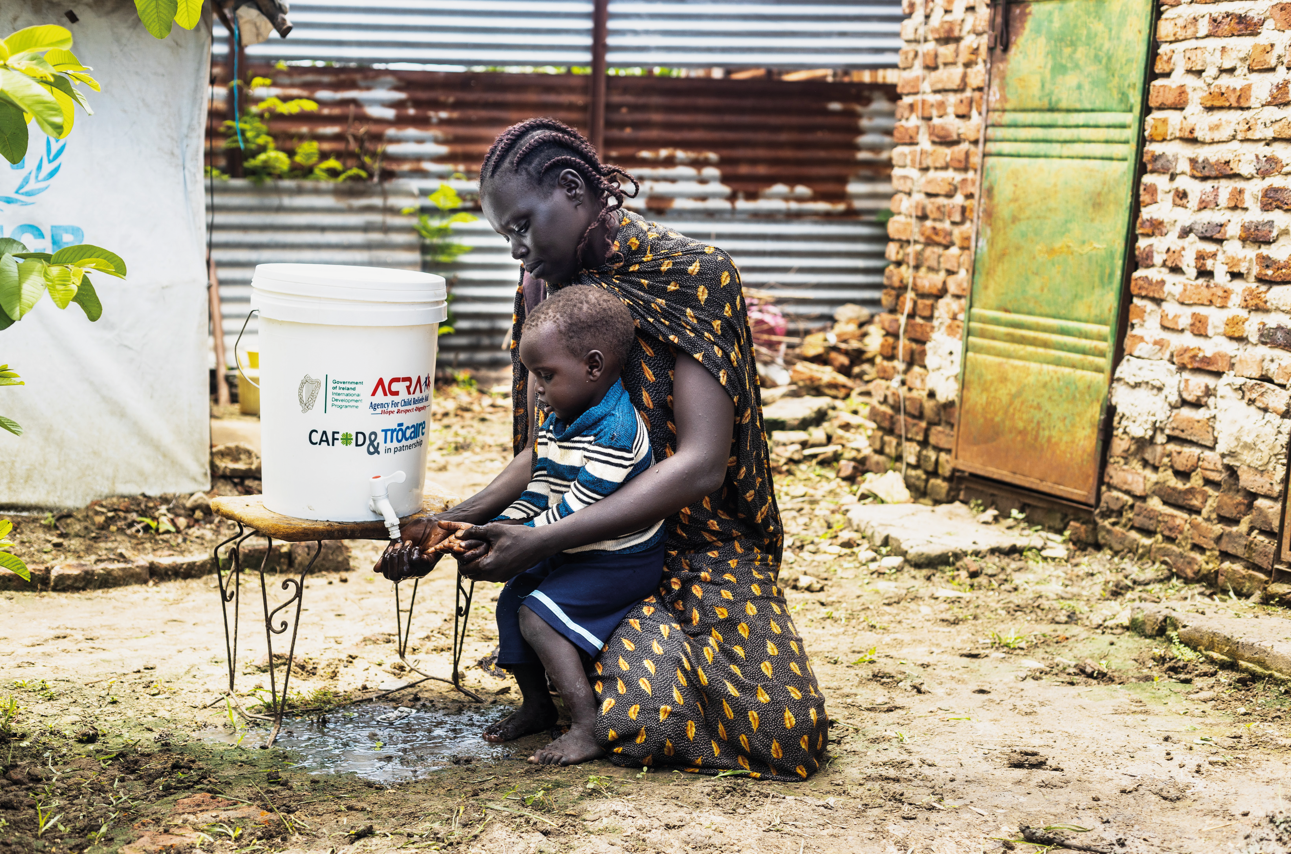
International funding cuts by the US and UK mean the humanitarian aid burden in Africa now falls on local NGOs
CAFOD, ACHUOTH DENG
Dramatic cuts in international aid funding have had a devastating impact on people in the world’s poorest countries. Yet a simple act of legislation could transform the lives of millions
Standing on the banks of the Upper Nile in the Malakal district of South Sudan, watching as fish caught that morning were gutted and sold, I felt the potential of the world’s youngest nation. The soil in Malakal is so rich that this region could feed the whole of South Sudan. Climate change is causing more flooding, but I met women who are beating the problem, and earning an income, by creating floating vegetable gardens that rise and fall with the water level.
South Sudan also has oil reserves that could transform the economy, and yet it is the poorest country in the world, according to the World Bank. It was not difficult to see the reasons why during my recent visit.
Years of internal conflict have stunted development and displaced much of the population, while the civil war in neighbouring Sudan has sent refugees flooding over the border, bringing cases of cholera with them. Meanwhile, the high interest rates charged by foreign lenders on the country’s national debt make things worse for ordinary people, with the government having to repay much more than it borrowed instead of providing stability, basic services for the displaced, or strengthening the economy.
Malakal, close to the border with Sudan, has been on the front line of these crises. “Conflict has shattered the communities, the people, and we pick up the pieces,” said Sr Elena Balatti. The inspirational Comboni missionary sister from Italy leads the work of Caritas in the Diocese of Malakal, which has a longstanding partnership with Cafod. Sr Elena has been in South Sudan since 2008. She was supposed to leave in 2014, but when civil war broke out at the end of 2013, she stayed.
As their need for additional support has grown, communities in South Sudan have been blindsided by the drastic cuts in aid from both the US and Britain. One local NGO had to cancel three of its four food security programmes and lay off most of its staff. This in a country where 60 per cent of the population are suffering acute hunger.
In a camp for displaced people I met 34 year-old Nayjok. She was holding a baby, the youngest of her six children. She had tried to go home to Sudan but had to return because it was too dangerous. Her husband and his brother both died, leaving her without support. Caritas was able to supply only one meal a day to people in the camp. Nayjok said, “We pray to God for support.”
The cuts in international aid funding that have hit humanitarian organisations in South Sudan and many other countries mean more of the burden now falls on local NGOs. Cafod is working to boost its local partners’ ability to manage themselves, helping them in turn to train people in techniques that will help them overcome the effects of climate change and make livelihoods more secure.
In South Sudan, for example, one of our partners worked with Chol Mou Chol, a farmer in an area suffering from persistent flooding. Despite the setbacks, Chol remained steadfast in his determination to rebuild his livelihood, and the training he received in agro-ecological practices such as row planting, construction of water diversion channels, use of mulch and organic manure application have paid off. Chol’s crops of groundnuts, okra and sorghum gave him enough food to sustain his family for eight months, as well as producing sufficient seeds to store for the next planting season. “I have regained my lost dignity,” he said.
Seeds of hope, then. At the African climate summit in Ethiopia in September, a key step in preparing for COP30, the continent united to combat the climate crisis. African banks pledged to mobilise $100 billion (£76 billion) for “green” industry growth and the EU announced an initiative promoting renewables. The impact of global warming is a problem for which the African continent bears little responsibility but much of the human cost.
The summit also called for urgent action to ease the crippling burden of debt faced by many African countries. The unnecessary obstacles woven into our global financial system are an injustice which must be addressed. So it was all the more dispiriting to see the High Court in London ordering South Sudan to pay $657 million – nearly half of its government revenue – to Afreximbank over loans for pandemic and infrastructure support. The ruling essentially forces the country to put debt payments above feeding its people. Banks and other creditors stand to profit handsomely from high interest rates, while children like Nayjok’s baby go hungry.
Britain, sadly, is at the heart of this kind of oppression, because the vast majority of the debt owed to private lenders by low-income countries is held in the City of London. But that also means it is governed by English law and change is possible. A simple act of legislation could turn Britain into a global superpower on tackling unfair debt. All it needs is the political will.
This is the call Cafod and others have been making throughout this Jubilee year. As we approach the year’s close, we are urging the UK government to enact a Debt Justice law without delay, to prevent commercial creditors using English courts to extract vital resources from the world’s most vulnerable nations. With this one step, Britain could transform the lives of millions.
The choice is stark: allow profitable lenders to drain huge amounts of revenue from countries like South Sudan, or champion the kind of debt relief that enables struggling nations to invest in their people’s basic needs – and use their resources to build a path out of poverty rather than to line other people’s already deep pockets.
Christine Allen is the director of Cafod.
Login
Please login to comment
0 Comments
Oldest

Help us keep The Tablet’s voice independent, clear and far-reaching.
Founded in 1840, The Tablet is the leading independent English-language Catholic weekly, celebrated for great writing, astute analysis, brilliant arts and books reviews and trustworthy reporting from correspondents in Britain, Ireland, Rome and across the world.
Independent, high-quality journalism is at the heart of what we do. The Tablet does not have deep pockets and we are not funded by rich donors. If you appreciate our work please consider supporting The Tablet’s Development Fund. It only takes a moment and you can cancel at any time.
- Support with £5 per month
- Support with £10 per month
- Support with other amount.

MOST READ ARTICLES
-
1
Pope returns to Vatican after hospital discharge
-
2
Diverse schools that are 100 per cent Catholic
-
3
Under endless skies
-
4
Battling confession fatigue
-
5
Nigerian bishop scorns suggestion of running in presidential election
-
6
Schismatic Spanish nuns strip contents of convent before eviction
FROM THE EDITOR'S DESK