Advertising feature: Vision of a community: Farnborough Hill


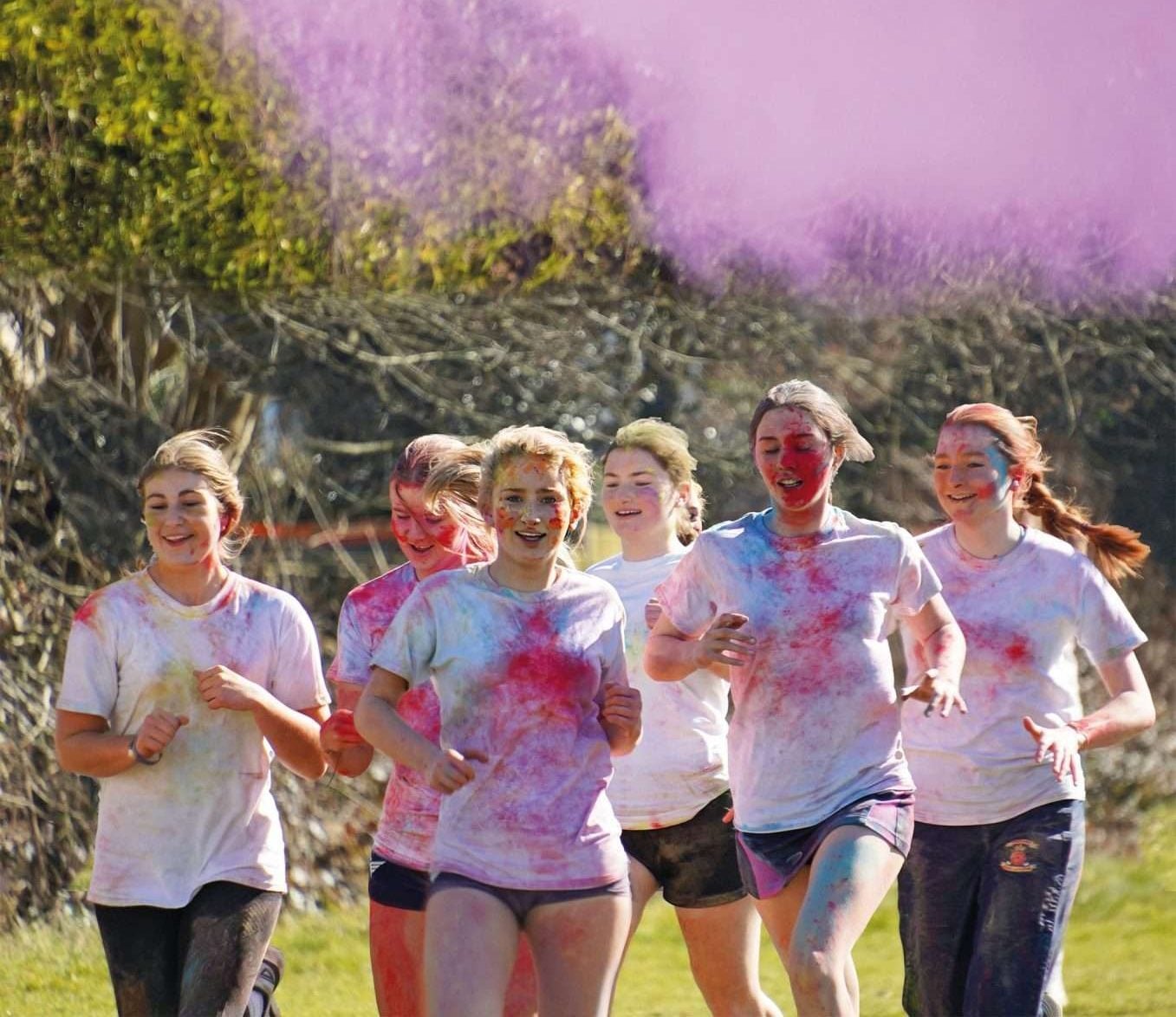
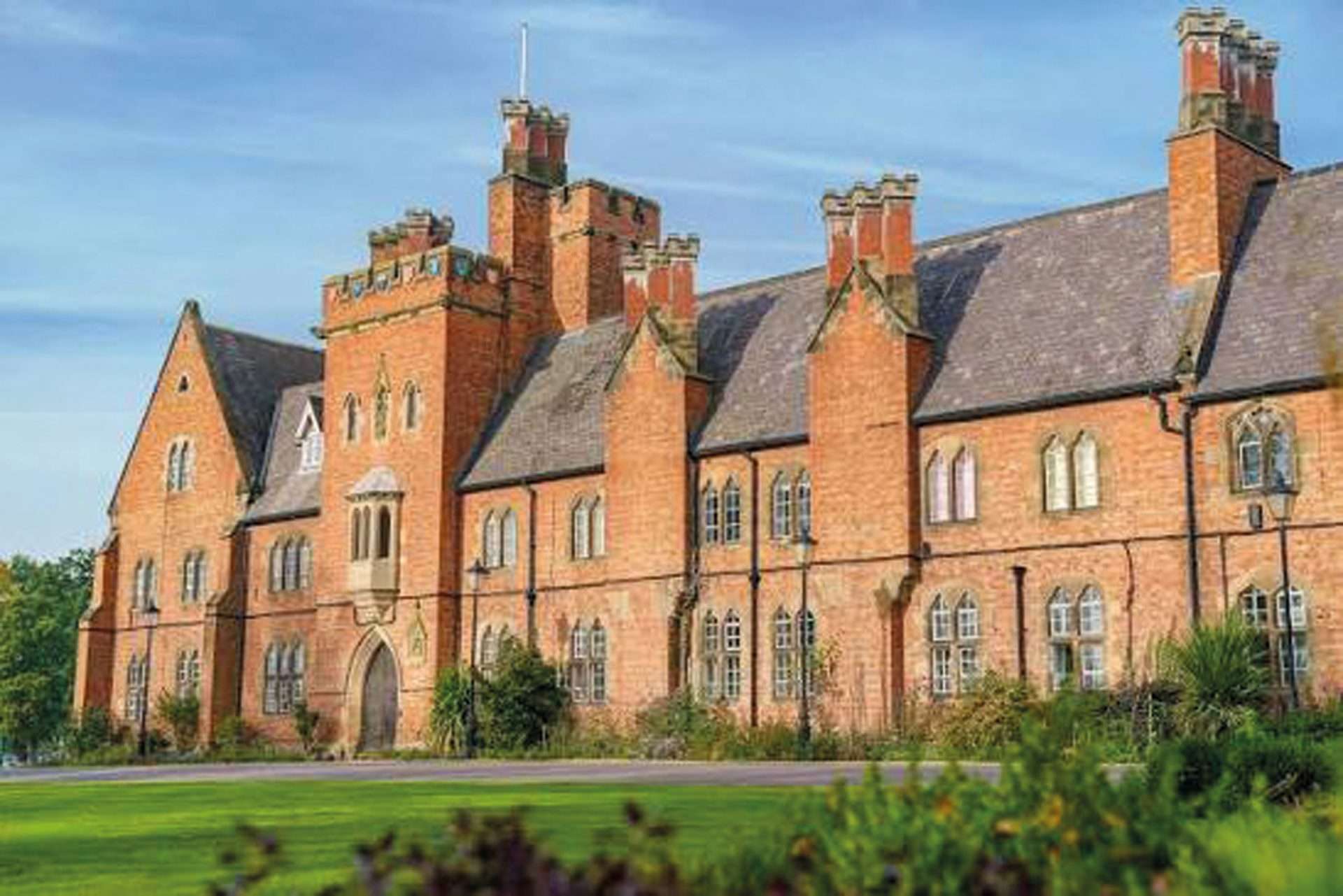
Wholehearted: pupils at Farnborough Hill
FARNBOROUGH HILL, ELLA FEDERICO
Wisdom, strength and dignity: Catholic schools were ‘educating the whole person’ long before it became a pedagogical buzz phrase
Within living memory, the traditional Catholic public school was unmistakable. Run by a religious order, it formed Catholic young people in the faith, traditions and values that would enrich the lives of public service and leadership to which many progressed, including significant numbers into seminaries and religious communities. It is a starkly different picture today.
Farnborough Hill, like many Catholic independent schools, counts itself fortunate to enjoy the continuous prayers and occasional presence of the few remaining sisters in our founding order, the Religious of Christian Education (RCE). They have left us a strong legacy, but with a radically different student clientele today – gloriously inclusive and reflecting the local demography – plus lay leadership and staff, what are we now about? At the recent Catholic Independent Schools’ (CISC) Conference, it was sad to see reduced numbers of Catholic independent schools in attendance: closures, mergers and loss of Catholic status have hit hard. Current financial challenges mean that we must appeal to families of all faiths and none. At the same time, the remaining independent schools must jump through the hoops of a Catholic Inspection Framework designed for a more homogeneous Catholic maintained school, very closely linked to the local Catholic parish and primary schools. As an independent institution, we draw from a much larger hinterland (40-plus feeder schools) and maintain relationships with numerous parishes. It is a very different sort of relationship.
Against these challenges, then, we need to be absolutely certain of the value of our offer, striving for excellence in all areas, remaining rooted in our faith and believing that our holistic approach to education is a very precious gift to the world.
Soon after arriving at Farnborough Hill, I gathered a small group from across the community to discern a new mission statement for our school. Thanks be to God that this was a grace-filled constructive process. The starting point was our RCE Sisters’ vision of a community in which we all serve the Lord “joyfully and wholeheartedly” – as true at the inception of the school in 1889 as it is today – but I also wanted us to consider the journey that lies ahead, what kind of young people we are forming. After much lexical to-ing and fro-ing, we agreed that enabling our girls “to face the future with wisdom, strength and dignity” is distinctive, and captures clearly what we do.
In 2026, we are absolutely inundated with information, and at Farnborough Hill we aim to promote the acquisition of a wisdom that will enable our students to filter the noise of this information overload and to seek truth. Truth can be found in our intentional periods of silence and reflection, in which the girls cultivate familiarity with stillness and grow a living relationship with Jesus at the centre of that silence. Long before “educating the whole person” became a pedagogical buzz phrase, Catholic schools had been doing exactly that: educating and developing the life of the soul was, and is, one of the great challenges and privileges of Catholic schooling. We are fortunate to enjoy an excellent relationship with the Benedictine community of St Michael’s Abbey, Farnborough, and were privileged to have them with us recently, leading Adoration with great beauty and solemnity. What a gift for our non-Catholics, too, to be able to witness and appreciate this solemn time of reflection and transcendence.
Free from some of the curricular pressures in the maintained sector, we can focus on educating our young people in wisdom, teaching our girls how to think rather than what to think. Academic knowledge and excellence is always expected, but educating for wisdom is deeply embedded within our curriculum, particularly in RE and PHSEE (personal, health, social and economic education). Bespoke and innovative programmes place the holistic development of each individual at the centre. Project Qualifications in years 9 and 12 plus an inspiring Enhanced Learning offer encourage independent, non curricular exploration and critical thinking. Additionally, the girls have multiple opportunities, with dedicated curricular time, to work on community outreach projects in the spirit of social justice, developing emp thy and leadership while having plenty of fun. Delivering these projects together, they discover that they really do have the power and ability to work for – and achieve – the common good. Wisdom in action.
Strength is promoted through an intentional Wellbeing programme to nurture the spiritual, emotional and mental health of our whole school community. In this way, pupils develop the ability to cope with chal lenges, recognising them as bumps in the road rather than disasters. As a leader, it has been my constant privilege to enable this kind of growth that comes only when bound aries are tested and comfort zones are abandoned. In the pursuit of promoting greater mental and emotional strength, we have developed an award-winning “Empower” project with local primary schools, during which our girls independently create, pitch and deliver an array of learning activities for Year 5 pupils.
Education with the dignity of the person at its heart is not a concept that one often hears mentioned outside Catholic schools. In acknowledging the dignity of another human person, we learn to recognise our own worth, a lesson that is deeply necessary for all teenagers. We often talk about recognising the face of Christ in all whom we encounter and treating them accordingly – a powerful reminder of the inherent value of each one of us. We often recall St John Henry Newman’s words that “Christ has committed some task to me which he has not committed to another”. This resonates deeply within our young people and embeds in them a living sense of their God-given dignity.
Current educational thinking focuses on the measurables: exam scores, technical proficiencies and career readiness. Naturally, these aims have intrinsic value, but through Catholic eyes they seem alarmingly narrow. St Teresa of Ávila reminds us that “Christ has no body now on Earth but yours”. With fewer priests and Religious to show us what that might look like today, we need every single Catholic school to stay strong and play its unique role in being a part of that body.
Maria Young is the headmistress of Farnborough Hill.
Login
Please login to comment
0 Comments
Oldest

Help us keep The Tablet’s voice independent, clear and far-reaching.
Founded in 1840, The Tablet is the leading independent English-language Catholic weekly, celebrated for great writing, astute analysis, brilliant arts and books reviews and trustworthy reporting from correspondents in Britain, Ireland, Rome and across the world.
Independent, high-quality journalism is at the heart of what we do. The Tablet does not have deep pockets and we are not funded by rich donors. If you appreciate our work please consider supporting The Tablet’s Development Fund. It only takes a moment and you can cancel at any time.
- Support with £5 per month
- Support with £10 per month
- Support with other amount.

MOST READ ARTICLES
-
1
Pope returns to Vatican after hospital discharge
-
2
Diverse schools that are 100 per cent Catholic
-
3
Under endless skies
-
4
Battling confession fatigue
-
5
Nigerian bishop scorns suggestion of running in presidential election
-
6
Schismatic Spanish nuns strip contents of convent before eviction
FROM THE EDITOR'S DESK