The Siberian holy man


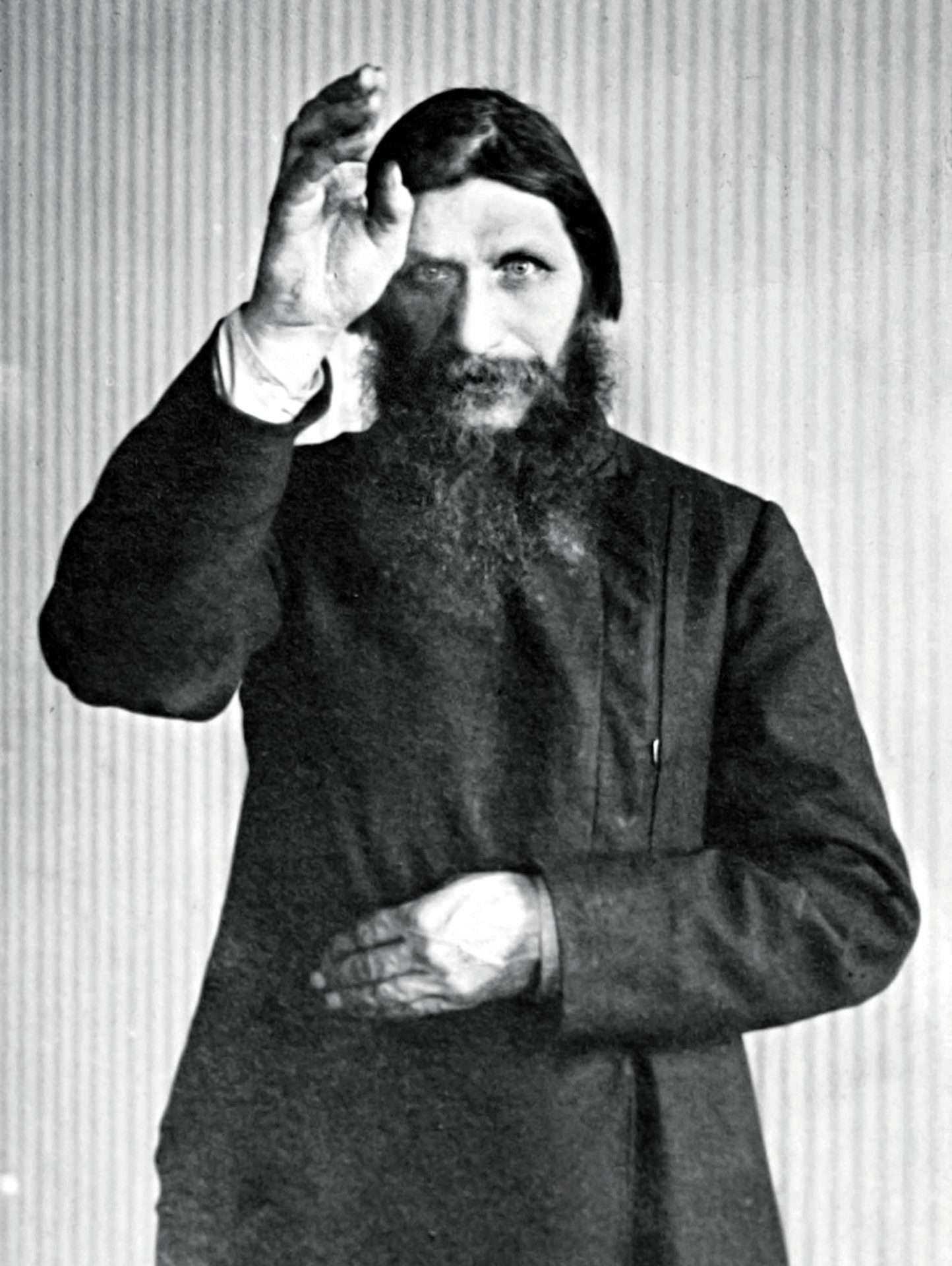
The Russian mystic Grigori Yefimovich Rasputin (January 1869 – 29 December 1916) photographed in 1900. He was often referred to as “The Mad Monk”
ALAMY/GL ARCHIVE
In his own lifetime, the subject of Rasputin was so prominent in the popular Russian imagination that his contemporary Teffi said there were houses in St Petersburg with signs above the fireplace that read “In this house we do not talk about Rasputin”.
The story of Rasputin has attracted countless writers, film-makers and historians. It is easy to see why: sex, power, faith, murder and the end of an empire are just a few of the elements. The first accounts of Rasputin’s life were published almost immediately after his death, and not a decade has gone past without new biographies appearing. Some, such as The Mad Monk of Russia (Sergei Trufanov, an ex-monk and sworn enemy of Rasputin’s, New York, 1917) or the memoirs of his murderer Felix Yusupov (La Fin de Raspoutine, Paris, 1927), are deeply unreliable, but nonetheless cemented the image of Rasputin in the popular imagination. Ironically, Yusupov successfully sued MGM Studios when its 1932 production Rasputin and the Empress implied that Rasputin had slept with his wife, and the huge damages he received were the source of much of his wealth in emigration. The case also directly engendered the now familiar “All characters are fictional …” disclaimer clause.
Get Instant Access
Continue Reading
Register for free to read this article in full
Subscribe for unlimited access
From just £37.50 quarterly
Print copy of The Tablet delivered directly to your door.
Complete access to all Tablet website content including all premium content.
Access to the weekly digital copy of The Tablet.
Full access to The Tablet’s archive – over 180 years of back issues.

Already a subscriber? Login

Help us keep The Tablet’s voice independent, clear and far-reaching.
Founded in 1840, The Tablet is the leading independent English-language Catholic weekly, celebrated for great writing, astute analysis, brilliant arts and books reviews and trustworthy reporting from correspondents in Britain, Ireland, Rome and across the world.
Independent, high-quality journalism is at the heart of what we do. The Tablet does not have deep pockets and we are not funded by rich donors. If you appreciate our work please consider supporting The Tablet’s Development Fund. It only takes a moment and you can cancel at any time.
- Support with £5 per month
- Support with £10 per month
- Support with other amount.

MOST READ ARTICLES
-
1
Archbishop of Cardiff-Menevia meets with other worldwide Catholic Church leaders to discuss liturgy
-
2
Let there be light
-
3
World Humanitarian Day: aid workers face a ‘crisis of protection’
-
4
Ruling allows French private hospitals limited exemption from assisted suicide
-
5
A tract for our times
-
6
The wisdom of the saints
FROM THE EDITOR'S DESK