Celebrating and inspiring inclusion this International Women’s Day


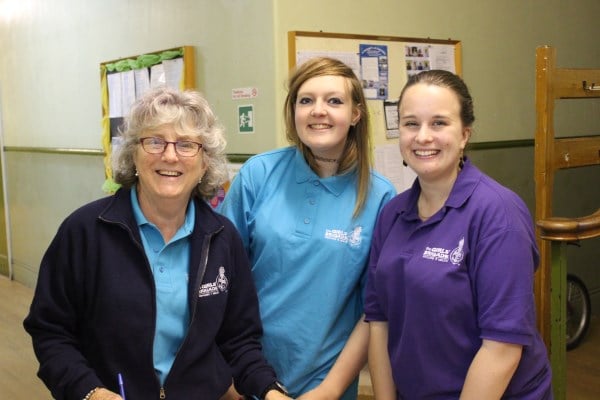
A leader in my Portsmouth Girls’ Brigade community group, Steph Davies, 25, is registered severely sight impaired, has ME, depression, emotionally unstable personality disorder and a history of anorexia.
This might cause some to shy away from a volunteer leadership position. But Steph says, ‘I’m seen as a fellow leader, not Steph with a disability, and if there is something I can’t do, we approach it with a sense of humour. I think it’s good to show the girls that disabled people are the same as everyone else and can still do things, but we might need some adjustments.’
At Girls’ Brigade Ministries we’re 100 per cent behind International Women’s Day 2024 and the theme of #InspiringInclusion – creating an equal world where all girls can thrive.
For 130 years we’ve worked to transform and enrich the lives of girls and young women, supporting, equipping, and empowering them to live life to the full. We give them the confidence to take up leadership and decision-making roles, we help them make informed decisions on a variety of issues, we teach new skills, give them exciting opportunities where they can learn what their talents and gifts are, and we celebrate their achievements. We aim to equip young people for life so they can grow in confidence to change their communities.
The IWD campaign for 2024 says that to truly include women means to openly embrace their diversity of race, age, ability, faith, body image and how they identify. Girls’ Brigade is an organisation that includes women – with volunteer-led community groups for young people to explore life together in a safe and welcoming space for everyone.
However, saying we’re inclusive is one thing but what really matters is how inclusivity is actually lived out in our 330 groups across England and Wales and in our other activities.
I’m in the privileged position of working for Girls’ Brigade but I’m also a volunteer with Steph in my local group. I see inclusivity embedded at a number of levels across our organisation.
Nationally we’ve just completed an equality, diversity and inclusion review and, although there are some goals we’re now setting ourselves as a result, it was great to be thoroughly examined in this area and the strength of our commitment – and practice – is acknowledged and recognised.
Across England and Wales, our groups welcome girls and young women with SEND (special educational needs and disabilities) or other disabilities – many of whom have struggled to find welcoming spaces to belong to in the past.
Motivated by their Christian faith, Girls’ Brigade leaders get the chance to practise their inclusion skills every week during their group meetings – looking past difference and intentionally building relationships and investing in the diverse girls and young women who attend, not just those with a Christian faith. Many of our leadership teams are multi-generational – we have volunteers aged from 18 to 94.
And it’s not just the leaders, but our members who show inclusivity. This was brought home to me recently by one of our 8-year-olds welcoming a new girl to our group and making her feel she belonged straight away. What a powerful story and one which I know is modelled up and down the country.
We see want to see every individual in our organisation as part of the bigger picture. What a challenge it is for all of us to create an equal world where all girls can thrive, be welcomed in and feel like they belong. We hope others will feel similarly inspired.
Catherine Burt is deputy chief executive officer of the Girls’ Brigade.
Login
Please login to comment
0 Comments
Oldest

Help us keep The Tablet’s voice independent, clear and far-reaching.
Founded in 1840, The Tablet is the leading independent English-language Catholic weekly, celebrated for great writing, astute analysis, brilliant arts and books reviews and trustworthy reporting from correspondents in Britain, Ireland, Rome and across the world.
Independent, high-quality journalism is at the heart of what we do. The Tablet does not have deep pockets and we are not funded by rich donors. If you appreciate our work please consider supporting The Tablet’s Development Fund. It only takes a moment and you can cancel at any time.
- Support with £5 per month
- Support with £10 per month
- Support with other amount.

MOST READ ARTICLES
-
1
Pope returns to Vatican after hospital discharge
-
2
Diverse schools that are 100 per cent Catholic
-
3
Under endless skies
-
4
Battling confession fatigue
-
5
Nigerian bishop scorns suggestion of running in presidential election
-
6
Schismatic Spanish nuns strip contents of convent before eviction
FROM THE EDITOR'S DESK


