Settler attacks threaten ancient Christian town in West Bank


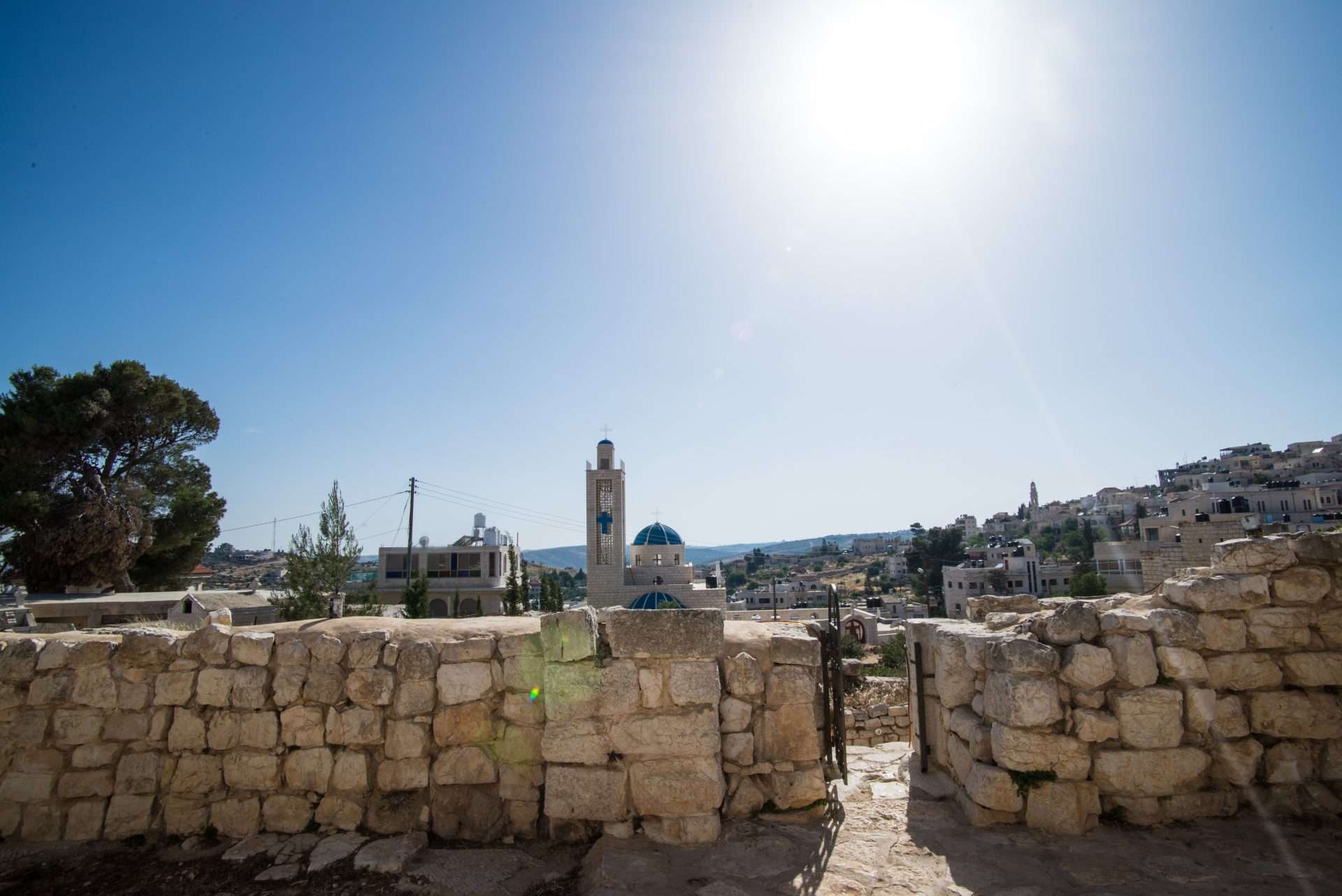
Taybeh is mentioned in John’s gospel as ‘a town called Ephraim in the region near the wilderness’ where Jesus stayed before his Passion (John 11:54).
Michael Swann / flickr | Creative Commons
‘We believe that the Holy Land cannot remain alive without its indigenous people,’ said Taybeh’s priests. ‘Forcibly removing farmers from their land is a wound to the heart of this nation.’
The priests of the only entirely Christian town in the West Bank issued a joint appeal for an end to “the ongoing and grave series of attacks” by illegal settlers.
“These assaults threaten the security and stability of our town and aim at undermining the dignity of its residents and the sanctity of its sacred land,” said a statement posted on social media on Tuesday by the priests of the Greek Orthodox, Greek Melkite Catholic and Latin Catholic communities in Taybeh.
They described an arson attack the previous day on the town’s cemetery and the Greek Orthodox Church of St George, a fifth-century foundation, and “provocatively routine” incursions by settlers grazing cattle on the town’s lands, while its agricultural district “has effectively become an open target for illegal settlement”.
The priests – the Orthodox Fr David Khoury, the Melkite Fr Jack-Nobel Abed and the Latin Catholic Fr Bashar Fawadleh – said they had a “moral and pastoral responsibility” to defend “the last remaining entirely Christian town in the West Bank”. Taybeh is mentioned in John’s gospel as “a town called Ephraim in the region near the wilderness” where Jesus stayed before his Passion (John 11:54).
“It’s wholly Christian population represents a unique presence in the region, a living testimony that dates back to the time of Christ,” the priests said, warning of the “serious risk of erosion and displacement” from the attacks. Following earlier attacks on 26 June, Fr Fawadleh had said it was “under constant fire from settlers, and under the crossfire of the Israeli occupation army”.
“We believe that the Holy Land cannot remain alive without its indigenous people,” the priests’ statement said. “Forcibly removing farmers from their land, threatening their churches and encircling their towns is a wound to the living heart of this nation.”
They called for international actors and churches to investigate the attacks, sending their own delegations and putting pressure on the Israeli authorities to stop illegal settler activity. They asked for support “through economic and agricultural initiatives”.
In a reflection published on Thursday, the chief executive of the Latin Patriarchate of Jerusalem Sami El-Yousef said towns on the West Bank had “quietly turned into large unsafe prisons” during the past months of conflict, with settlers persecuting Palestinians with “indiscriminate attacks, burning homes, cars, trees, and cutting off roads while the government engages in further land grabs and expanding and initiating new settlements”, displacing 70,000 people.
“All of this while actively and systematically destroying refugee camps and forcing people to move out,” he said. “Chaos on the West Bank is just around the corner.”
Addressing the war in Gaza and Israel’s conflict with Iran, he said the region seemed “more distant from peace as all parties are claiming victory, and the talk continues to be about more destruction, revenge, and killing rather than reconciliation and a genuine desire to deal with the core issues”.
Last week, a delegation from the United Nations made a surprise visit to the Holy Family Church in Gaza, the only Latin Catholic parish in territory which shelters around 500 people displaced by the conflict.
“The delegation wanted to see our conditions, greeted our displaced people and collected their testimonies of concern,” reported Fr Gabriel Romanelli IVE, the parish priest, following the visit on 1 July
Representatives from the UN’s Office for the Coordination of Humanitarian Affairs (OCHA) visited the parish premises, toured the compound, and met the severely disabled children from Muslim families cared for by the Missionaries of Charity whose convent is located on the grounds.
“When they said goodbye, they thanked us for the work of solidarity and hospitality that we carry out for the Christian community and for the many Muslim families who live in need here in our neighbourhood,” Fr Romanelli said.
The same day Caritas Internationalis joined more than 160 NGOs to demand a ceasefire in Gaza and changes to the aid distribution system. It called the Israeli- and US-backed distribution scheme in Gaza, including the Gaza Humanitarian Foundation operating on just four military-controlled sites, “deadly”, and called for a return to UN-coordination of aid distribution.
In the five weeks since the launch of the controversial new aid system in Gaza, over 500 Palestinians have been killed and nearly 4,000 injured while attempting to access food. Members of the Israel Defence Forces (IDF) and armed groups have repeatedly opened fire on civilians at the sites.
“States must reject the false choice between deadly military-controlled food distribution and total aid denial,” said Caritas. “We reiterate our urgent calls for an immediate and sustained ceasefire, the release of all hostages and arbitrarily detained prisoners, full humanitarian access at scale, and an end to the impunity that enables ongoing atrocities and denies Palestinians their dignity.”
The Jerusalem-based Kairos Palestine Council thanked the World Council of Churches (WCC) for acknowledging “the reality that Palestinians have endured for over seven decades: systematic oppression, displacement, segregation, and denial of basic human rights” in a statement last month.
The Kairos Palestine Council, which includes the former Latin Patriarch of Jerusalem Michel Sabbah, said the WCC’s “Statement on Palestine and Israel: A Call to End Apartheid, Occupation, and Impunity in Palestine and Israel” published on 24 June was a “turning point in the moral and theological witness of the global church”.
The WCC central committee, which had been meeting in South Africa, had expressed “deep lamentation and outrage as the crisis in Palestine and Israel escalates to levels that flagrantly violate international humanitarian and human rights law as well as the most basic principles of morality”.
It denounced, “the system of apartheid imposed by Israel on the Palestinian people, in violation of international law and moral conscience.”
The statement urged states, churches, and international institutions to impose consequences for violations of international law, including targeted sanctions, divestment and arms embargoes.
“Full support must be given to the International Criminal Court and UN mechanisms investigating potential war crimes and crimes against humanity,” it said, and called for “the end of the occupation and the lifting of the unlawful blockade on Gaza”. It supported the “resilience and witness of Palestinian Christian churches and communities, upholding their right to remain on their land and to practice their faith freely”, calling churches worldwide “to witness, to speak out, and to act”.
The Filipino Cardinal Pablo Virgilio David, the Bishop of Kalookan, meanwhile appealed to the Jewish people to call for an end to the war in Gaza.
In a Facebook post, David said that “the power to end the starvation, displacement, and carnage in Gaza” does not lie with Israeli Prime Minister Benjamin Netanyahu or world powers.
“The only ones who can stop this are the Jewish people themselves – both in Israel and throughout the diaspora – those who know, from the depth of their historical experience, what it means to suffer violence born of hatred and xenophobia. Only they can rise and say, ‘Not in our name’,” said David. “Only they can demand that their state no longer build its future on foundations of vengeance, fear, and resentment.”
The Archbishop of Manila Cardinal Jose Advincula separately requested parishes in his jurisdiction to hold communal prayers for peace in the Middle East and Ukraine. He instructed his archdiocese to include a prayer, in every Mass, that God “may cleanse the world of all violence, greed, and misuse of power that bring suffering and death to many”.
The same week saw the tenth anniversary of the Vatican’s recognition of State of Palestine, which was signed by Archbishop Paul Gallagher, the secretary for relations with states, and the former Palestinian foreign minister, Riad al-Malki on 26 June 2015. It followed 2014’s historic meeting between Pope Francis, the Palestinian President Mahmoud Abbas, and the Israeli President Shimon Peres, during which the three planted an olive tree in the Vatican gardens.
IDF strikes continued in Gaza last week, with the Hamas-run health authority reporting 45 deaths in bombing on Saturday. On Sunday, indirect talks between Israel and Hamas began to discuss the latest proposal for a Gaza ceasefire and hostage release deal. According to the health ministry, at least 57,762 people have been killed in Gaza since the start of Israel’s offensive following Hamas’ attack on 7 October 2023 attack, in which around 1,200 people were killed and 251 others taken hostage.
West Bank Christians plea for protection against land seizure
The Middle East conflict and Israel’s existential choice
Stay updated — add us as a preferred news source on Google:


Help us keep The Tablet’s voice independent, clear and far-reaching.
Founded in 1840, The Tablet is the leading independent English-language Catholic weekly, celebrated for great writing, astute analysis, brilliant arts and books reviews and trustworthy reporting from correspondents in Britain, Ireland, Rome and across the world.
Independent, high-quality journalism is at the heart of what we do. The Tablet does not have deep pockets and we are not funded by rich donors. If you appreciate our work please consider supporting The Tablet’s Development Fund. It only takes a moment and you can cancel at any time.
- Support with £5 per month
- Support with £10 per month
- Support with other amount.

MOST READ ARTICLES
-
1
Archbishop of Cardiff-Menevia meets with other worldwide Catholic Church leaders to discuss liturgy
-
2
Let there be light
-
3
World Humanitarian Day: aid workers face a ‘crisis of protection’
-
4
Ruling allows French private hospitals limited exemption from assisted suicide
-
5
A tract for our times
-
6
The wisdom of the saints
FROM THE EDITOR'S DESK