Middle East faces ‘abyss’ of violence after US strikes


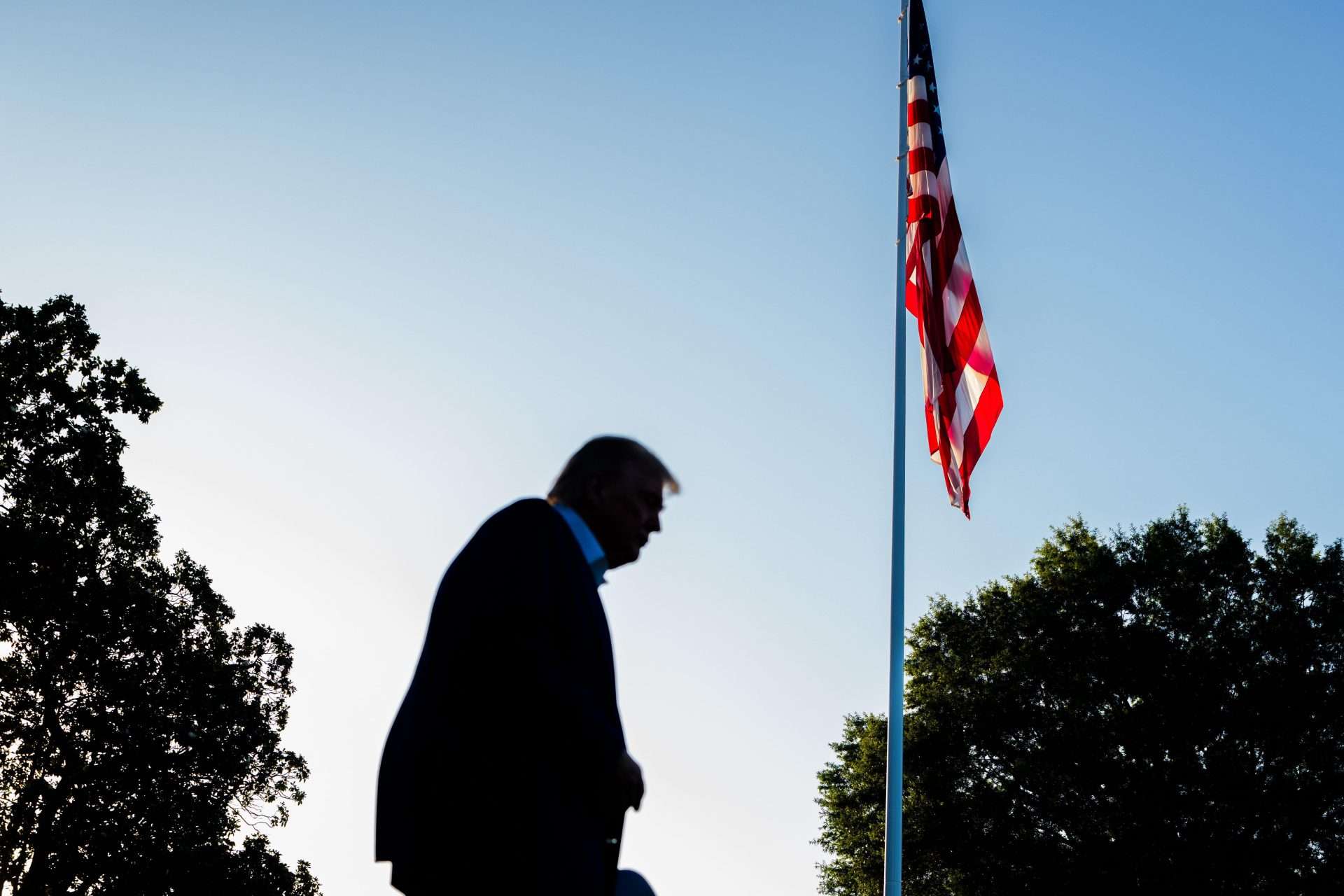
US President Donald Trump at the White House on Tuesday morning after both Israel and Iran broke the ceasefire he announced on Monday.
Aaron Schwartz / Sipa USA / Alamy
‘Peace does not mean silencing people out of fear,’ said Cardinal Domnique Mathieu. ‘Peace is achieved through working for justice, reconciliation and human dignity.’
The Archbishop of Tehran-Ispahan said last weekend’s US attack on Iran “makes us fear the worst, leading us to believe that there are no longer any limits, that anything is possible”.
Cardinal Dominique Mathieu OFM Conv, who leads Iran’s Latin-rite Catholics, rejected the notion of “achieving peace through war” in a reflection published on Monday by the Pontifical Institute for Foreign Missions’ Asia News outlet.
“Peace, however, does not mean silencing people out of fear,” he said. “Peace is achieved through the peaceful resolution of conflicts, working for justice, reconciliation and human dignity.”
In a reflection last week, before the US intervention, Cardinal Mathieu said: “I am not taking sides with any of the parties involved, but it is clear that war is not the solution. It is better that they return to the negotiating table.”
Although President Donald Trump declared a ceasefire would begin on Tuesday, both Iran and Israel accused one another of launching attacks after it began.
Speaking after the Sunday Angelus, the Pope called that day’s reports of the strikes on Iran’s nuclear sites and of missiles fired by Israel and Iran “alarming”.
“Today more than ever, humanity cries out and pleads for peace,” he said. “Let diplomacy silence the weapons! Let nations shape their future with works of peace, not through violence and bloody conflicts!”
Pope Leo said the cry for peace “demands responsibility and reason and must not be drowned out by the roar of weapons or by rhetorical words that incite conflict”. He urged the international community to “stop the tragedy of war before it becomes an irreparable abyss”.
He added that, “no military victory can ever compensate for a mother’s pain, a child’s fear, or a stolen future”.
The Pope warned that “the daily suffering of the population – especially in Gaza and other territories – risks being forgotten, even as the need for adequate humanitarian aid becomes ever more urgent”.
In the US, the Archbishop of the Military Services Timothy Broglio, who is president of the US Conference of Catholic Bishops, prayed for God “to end the proliferation of acts of war and to inspire dialogue before more innocent people are harmed”.
“My heart goes out to all victims and also to those whose lives are in danger,” he said, also offering prayers for US military personnel in the region.
Development and Peace, the Caritas agency in Canada, was among those to denounce what it called the “illegal and unilateral bombing of Iran by the US”, deploring Israel’s “escalation with its unprovoked attacks on Iran on 13 June” and “America’s participation in Israel’s war”.
It noted that in 2003 “the United States began another illegal war based on an outright lie about weapons of mass destruction”, and said that “the horrors it unleashed are still unfolding in Iraq and the wider region”. Development and Peace called on the Canadian government to condemn the attacks and build a coalition committed to peace.
In the Holy Land, the Anglican Archbishop of Jerusalem and the Middle East Hosam Naoum said “many of our church members have endured direct attacks, while a greater number now face the ominous prospect of cross-border escalations”. In a pastoral letter, he called for the Church to promote “understanding, mutual respect and goodwill”.
Anton Asfar, the secretary general of Caritas Jerusalem, reported a worsening situation in Gaza and in the West Bank. He criticised the Israeli-run and US-backed Gaza Humanitarian Foundation (GHF), saying, “This is not aid.”
Gaza’s Hamas-run health ministry said more than 400 Palestinians have been killed as they attempted to receive aid near a distribution site run by the GHF, which took over most aid distribution in Gaza in late May on Israel’s instigation. “100 per cent of Gaza’s population now suffers from nutritional deficiencies,” said Caritas Jerusalem.
Asfar said Caritas Jerusalem has 10 medical points in Gaza, which it was forced to suspend – along with its operations in the West Bank – after Israel attacked Iran on 13 June and faced retaliation. “But our wonderful staff, our very loyal mission operators, they were stubborn – they wanted to provide lifesaving services to the needy,” Asfar said.
The emergency clinic at the Holy Family parish in Gaza was also forced to suspend its operations during the strikes. Around 500 people still shelter in the parish compound, with limited food and poor communications. Clergy must climb onto the roof to find a signal to speak to their bishop, the Latin Patriarchate of Jerusalem Cardinal Pierbattista Pizzaballa, after Israeli airstrikes destroyed telecommunications structures in the area.
Asfar said that “humanitarian conditions have really deteriorated” in the West Bank, where the Israeli authorities have built more fences and gates making it difficult to deliver aid from Jerusalem. He said hospitals in the West Bank city of Jenin, which houses a refugee camp that is under Israeli military control, lack basic supplies.
West Bank residents are often ordered to leave their homes “and they leave everything behind and are left with nothing”, Asfar said.
“We believe in the power of prayer,” he continued. “We feel it over here, and it provides us with a lot of hope and energises us to continue our mission in the Holy Land.” He appealed to the world leaders to bring “a true end” to the conflict.
Vatican News reported last weekend that 12 Palestinian villages in Masafer Yatta, home to more than 2,800 people in the southern West Bank, face demolition after Israel designated the area a “military firing zone”. This move paves the way for further displacement and settlement expansion.
In his homily last Sunday for the Feast of Corpus Christi, where the gospel reading was “The Feeding of the 5,000”, Cardinal Pizzaballa suggested that “in this time of conflict and war, Jesus’ response to the disciples is a call for our ecclesial community to translate into life what we celebrate in the Eucharist”.
He said that “despite everything, we continue to build relationships, open horizons, give trust, have the courage to be inclusive, i.e. to welcome the other when everything points to the opposite … It means being able to share and live, never giving up hope.”
Israel, Iran and Netanyahu’s unjust war
Pope appeals for ‘reason’ between Israel and Iran
Stay updated — add us as a preferred news source on Google:


Help us keep The Tablet’s voice independent, clear and far-reaching.
Founded in 1840, The Tablet is the leading independent English-language Catholic weekly, celebrated for great writing, astute analysis, brilliant arts and books reviews and trustworthy reporting from correspondents in Britain, Ireland, Rome and across the world.
Independent, high-quality journalism is at the heart of what we do. The Tablet does not have deep pockets and we are not funded by rich donors. If you appreciate our work please consider supporting The Tablet’s Development Fund. It only takes a moment and you can cancel at any time.
- Support with £5 per month
- Support with £10 per month
- Support with other amount.

MOST READ ARTICLES
-
1
Pope returns to Vatican after hospital discharge
-
2
Diverse schools that are 100 per cent Catholic
-
3
Under endless skies
-
4
Battling confession fatigue
-
5
Nigerian bishop scorns suggestion of running in presidential election
-
6
Schismatic Spanish nuns strip contents of convent before eviction
FROM THE EDITOR'S DESK


