Reviews: slavery, controversy, and Victor Hugo’s art


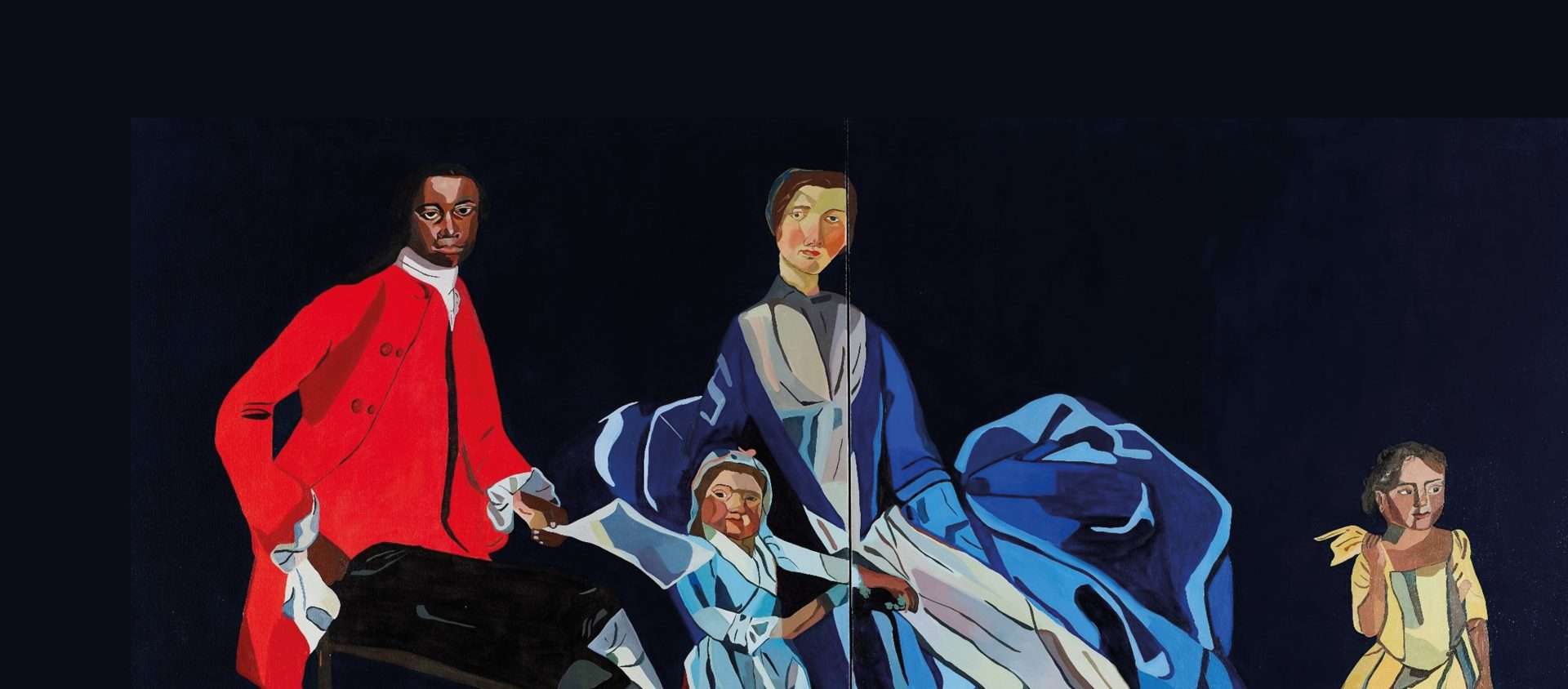
Imagined portrait of a family in the late 1700s by Joy Labinjo.
EXHIBITION: Imagining Abolition
“Rise Up; Resistance, Revolution, Abolition” at the Fitzwilliam Museum, Cambridge, starts with a large, imagined group portrait of the abolitionist Olaudah Equiano and his family, painted by contemporary artist Joy Labinjo, writes Frida Bradbrook. Works like this employ the power of imagination to expand our historical understanding of experiences of slavery and resistance. Other highlights include Keith Piper’s Lost Vitrines collection of fabricated historical objects and books, which both conjure up the small ways enslaved people would rebel and uncomfortably remind us that the brutality of slavery had to be thought out, planned and taught. François Cauvin’s imagined portraits of Haitian revolutionaries allow us to picture the rebels, not through the lens of racist caricaturists who depicted them at the time but as heroic figures worthy of admiration.
However, Cauvin’s imaginative artwork has been overshadowed by the exhibition’s statements on the enduring legacy of slavery, which has earned it some criticism. At times, the messaging does feel a tad preachy and obvious. Its conclusion – “But if we’re still having conversations about the harms caused by racism and societal inequalities today, then how much has really changed in over 200 years?” – feels a bit hollow. One can acknowledge the continued impact of racial inequality without suggesting that little has improved since slavery. Progressive platitudes like this, which lack much nuance or detail, serve little real function in the exhibition. In addition, claiming the Countess of Huntingdon was guilty of “doublethink” because she was an abolitionist who still profited from the slave trade is a bit clunky and anachronistic. There is room for a more inquisitive investigation into how white abolitionists could hold such seemingly contradictory perspectives.
Nevertheless, depicting white abolitionists as something other than idealised saving angels shouldn’t be so controversial. For the most part, the exhibition has space to celebrate the work of white abolitionists while also appreciating that there were f inancial as well as moral arguments made in the abolition movement. Fundamentally, it is less interested in the oft-told story of the white abolitionists, deliberately featuring them later in the display and focusing first on the actual experiences of slavery, displaying items like the sampler sewn by Susannah Edwards, an enslaved girl educated after her release by the Church Missionary Society in Sierra Leone. “Rise Up” provides intriguing glimpses into lives under-explored in traditional narratives. Despite some misgivings, these glimpses make the exhibition worthwhile.
Rise Up; Resistance, Revolution, Abolition runs until 1 June; the catalogue, edited by Victoria Avery and Wanja Kimani, is published by Bloomsbury at £25.
EXHIBITION: What was there before?
I came into the Royal Academy through the wrong entrance, writes Felicity Hudson. To get to the “Astonishing Things” exhibition I walked through the Architectural Window display, a mobile sculpture designed using modern robotic technology, up the central staircase which was originally designed in the eighteenth century, and past a display board hiding the construction of a new exhibition opening later this year. This journey through different layers of the Royal Academy, the old and the new, the finished pieces and the works-in-progress, felt like a suitable introduction to Victor Hugo’s drawings.
Hugo’s drawings were varied in purpose. Most of the exhibition displays personal sketches included in correspondence to friends and family, and studies of light and shadow using ink blots or stencils of castles.
But alongside these personal drawings is a series centred on a view of a man being hanged which are titled Ecce Lex (“Behold the Law”) which were later reproduced by Hugo’s brother-in law and became part of a protest against capital punishment and the hanging of John Brown, an American abolitionist sentenced to death in Virginia. Although these more political pieces were in the minority in the exhibition, their presence recalls a Victor Hugo the viewer might know; the author of great literary works which championed ideas of freedom and equality.
The different layers to Hugo’s work were not merely present in the range of purposes to which he sketched. Within the drawings themselves, Hugo seems to layer images and ideas on top of each other. Much of his work depicts destroyed and desolate landscapes; The Dead City shows an apocalyptic scene, Mushroom a giant poisonous mushroom spreading over a wasteland. The power of an apocalyptic image comes from the viewer thinking about what was there before the destruction. Photographs of bombed out cities at war are at their most powerful when they are contrasted with a previous image of what these places looked like a year, or even just a day before.
This juxtaposition is harder to capture in a fictional city as the viewer does not have that point of reference. Hugo manages to achieve this contrast through hinting at shadows of what was there before. Inside the giant mushroom the viewer can catch a glimpse of a brighter scene and might believe that that was the same city before the poisonous mushroom cloud expanded.
In The Dead City, the charred remains of trees could be people dancing in a different light, and looming towers remain on the skyline despite the ruins that litter the foreground. Hugo layers the destruction on top of a city that is almost present and thriving. Despite none of these cities ever having existed the viewer still feels a pang of loss for what could have been.
Astonishing Things runs at the Royal Academy of Arts until 29 June, with half-price tickets available to visitors aged 25 and under.

Help us keep The Tablet’s voice independent, clear and far-reaching.
Founded in 1840, The Tablet is the leading independent English-language Catholic weekly, celebrated for great writing, astute analysis, brilliant arts and books reviews and trustworthy reporting from correspondents in Britain, Ireland, Rome and across the world.
Independent, high-quality journalism is at the heart of what we do. The Tablet does not have deep pockets and we are not funded by rich donors. If you appreciate our work please consider supporting The Tablet’s Development Fund. It only takes a moment and you can cancel at any time.
- Support with £5 per month
- Support with £10 per month
- Support with other amount.

MOST READ ARTICLES
-
1
Nun girl summer: ‘You are so good at that’
-
2
Cinema: The nuns’ story
-
3
Whisper it loud – the ‘still small voice’ of God is what we really want to hear
-
4
Pope Leo XIV: A good family is the best way to prevent drug addiction
-
5
Bishops offer ‘message of hope’ to Venezuela with prayers for prisoners
-
6
New bid for Orthodox reconciliation in Ukraine as winter strikes continue
FROM THE EDITOR'S DESK