News Briefing: Church in the World


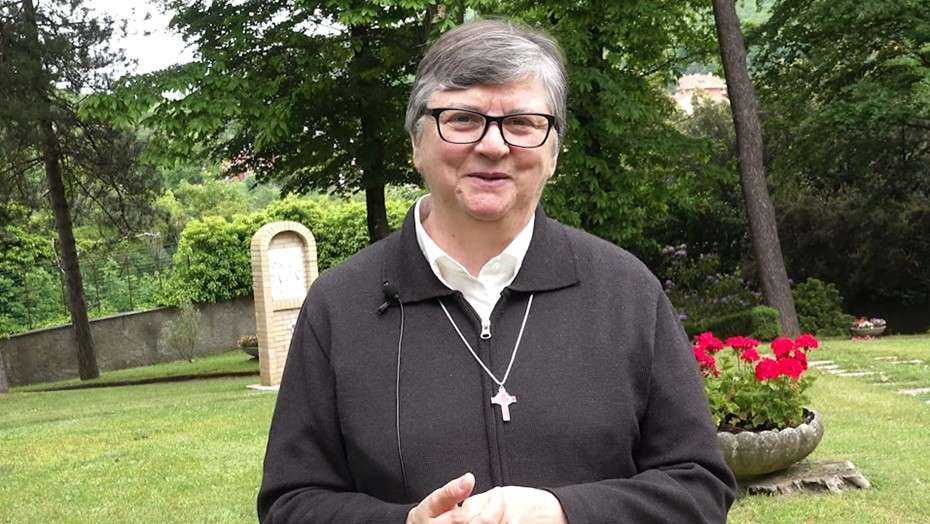
Sr Tiziana Merletti has been appointed secretary to the Dicastery for Institutes of Consecrated Life and Societies of Apostolic Life.
SMA Media International / Youtube screenshot
Authorities in Brazil issued an arrest warrant for a policeman who murdered a Spanish Jesuit missionary 38 years ago.
Ronaldo Osmar was found guilty in 2017 of having killed Vicente Cañas in the Amazonian state of Mato Grosso in April 1987. Cañas had been in quarantine, planning to rejoin the indigenous Enawenê-Nawê people whose language and habits he learned over a 10-year period.
The Enawenê-Nawê had little previous contact with non-indigenous Brazilians. Cañas belonged to a working group who were to provide the Brazilian government with the Enawenê-Nawê’s definition of the parameters of their territory – which had previously been ignored by the state while ranchers and loggers occupied their traditional lands.
Shortly before his death, Cañas warned friends his life was in danger. His body was found in a hut 30 days after his murder. Osmar led – and obstructed – the initial inquiry, having the Jesuit’s skull sent for analysis to the state of Minas Gerais. It disappeared, but was later re-discovered in a box in the street by a shoeshine boy.
The deadline for Osmar, who is hospitalised, to appeal his conviction expired earlier this month.
The Mexican bishops’ conference condemned the murder of seven youths in a shooting at an event organised by the Church in the central state of Guanajuato.
They described the killings on 19 May as “an alarming sign of the weakening of the social fabric, impunity and the absence of peace in vast regions” of the country. “We cannot remain indifferent in the face of the spiral of violence that is wounding so many communities,” they said.
Archbishop Jaime Calderón of León also released a statement, blaming the attack on a fight for territory between two rival cartels. Gunmen opened fire on a group who had stayed behind in the central square of the village of San Bartolo de Berrios after a parish celebration. A witness reported that the scene resembled “a bloodbath” with the bodies of the seven youths, two of them aged under 18, lying on the pavement.
While attacks on nightclubs and bars are not unusual in Mexican states hit by cartel violence, an attack on a Church event is rare. Guanajuato recorded 3,151 homicides last year, the most of any state, accounting for 10.5 per cent of murders nationwide.
The day after the shooting, two senior officials in the Mexico City government were assassinated. In a further statement, the bishops said the killings joined “a painful chain of violent events” and prayed for “a Mexico where life, justice, and peace flourish”.
The Archdiocese of New Orleans agreed to pay $180 million to victims of clergy abuse after years of bankruptcy proceedings, one of the largest settlement figures from any diocese in the United States. Archbishop Gregory Aymond said it could begin “a path to healing for survivors and for our local Church”.
The law firm representing abuse victims in the proceedings said the sum represented “more than 20 times the archdiocese’s initial settlement estimate” when it first filed for bankruptcy in 2020. The settlement, if accepted by the abuse survivors, would end five years of disputes over how the archdiocese handled sex abuse cases in the past and how it planned to compensate victims of clergy abuse.
In addition to the multimillion-dollar settlement, the archdiocese will be required to publish “perpetrator files and other abuse-related documents”, and establish “a public archive that will serve as a repository of the history of abuse” within the archdiocese. The archive will be administered by a secular college or university.
Archbishop Timothy Broglio, president of the US bishops’ conference, sent a letter to members of Congress as they debated catch-all legislation that would severely cut social programmes in order to fund tax cuts for the wealthiest Americans.
“To our elected lawmakers, I echo the call of my brother bishops and urge you to remain consistent in protecting human life and dignity and supporting the common good so that families can flourish,” Broglio said in a statement accompanying the letter.
“I also underscore the grave concerns expressed by my brother bishops and implore you to address the real and substantial harms that would result from provisions in this bill before it advances further. Raising income taxes on the working poor, cutting nutrition and healthcare programmes for those most in need, and eliminating investments in environmental stewardship would place a terrible burden on the least of our brothers and sisters.”
A Catholic nun was one of five Christian activists arrested at a peaceful climate change protest at the Royal Bank of Canada (RBC) headquarters in Toronto on 21 May.
Sr Mary Ellen Francoeur of the Sisters of Service was part of a group of 25 – including Catholics, Anglicans, Unitarians, and Quakers – who gathered to protest against the potential financing of liquified natural gas pipelines by Canada’s major banks, particularly the Prince Rupert Gas Transmission project, slated to carry fracked gas across 800 kilometres of sensitive terrain, affecting over 1,000 waterways and indigenous lands. After a mock funeral procession, the five entered the bank to pray and were charged with trespassing.
Anglican deacon Michael Van Dusen said Pope Francis’ encyclical Laudato Si’ and, more recently, Laudate Deum had inspired the group. “We wanted to bring to people’s attention the fact that RBC is investing in planet-destroying technologies and extraction technologies,” he said, adding that, “faith is about caring for our neighbour, and in this situation, the whole planet is our common home, to use the words of Pope Francis”.
Pope Leo XIV appointed Michael Pham as the seventh bishop of the Diocese of San Diego, making him the first Vietnamese American to head a diocese in the United States. The 58-year-old Pham was the first American bishop named by Leo, the first North American pope.
Born in Da Nang, Vietnam, Pham was a 13-year-old Vietnamese refugee when he and other family members fled the country in 1980. They reached San Diego in 1985, after which Pham finished his academic degrees and then entered the seminary. He was eventually ordained to the priesthood in 1999. In 2023, he became auxiliary bishop in the diocese, and in mid-March this year was named diocesan administrator.
Speaking on 22 May, Pham said it was “wonderful news” that he was representing his heritage as a Vietnamese American. He hoped the Church would “come to recognise” its multicultural character, so that people “can all come together, celebrate our faith, united in Christ in this country”.
He continued: “I believe, if we can do that, we will be such a sign of the beacons of light, the beacons of hope, for our country and for our society.” He challenged the US, which “consists of many races, ethnicities, and languages”, to come together in “such a beautiful sign of unity as a Church, as a people, as a human family”.
Elder Patrick Kearon, a senior leader of the Church of Jesus Christ of Latter-day Saints, visited Filipino Cardinal Pablo Virgilio David on his first day back in Manila following the conclave in Rome.
Kearon, born and raised in England but now based in Salt Lake City, Utah, paid David a courtesy call on 21 May as part of a 10-day trip to the Philippines. David, 66, is the Bishop of Kalookan and the president of the Catholic Bishops’ Conference of the Philippines. Kearon said it “was wonderful” to see David again.
“He is constantly caring for those who might be forgotten. I was reminded of the saviour’s teaching in Matthew 25:40 – ‘Inasmuch as ye have done it unto one of the least of these my brethren, ye have done it unto me,’” he said.
During Kearon’s visit, his Church donated 250 food kits and 250 hygiene kits to the Diocese of Kalookan’s drug rehabilitation ministry. David was a leading opponent of former president Rodrigo Duterte’s war on drugs, and is known as an advocate of interfaith dialogue.
“I think we’re finding spaces to be able to collaborate, to be able to walk with people of other faiths, other religions, other denominations within Christianity – to be able to work together for social justice, for the poorest of the poor, for human rights, for the integrity of creation,” David said in an interview in October 2024.
A Buddhist monk lost his post for allowing a Catholic musician to performed in the grounds of an ancient temple in Sri Lanka.
Katumuluwe Sumanaratne Thera permitted Anton Charles Thomas, a Catholic lay preacher and musician, to perform a show titled “Sihinaya” (“Dream”) on the premises of the Padeniya Rajamaha Viharaya temple in north-western Sri Lanka during Vesak, a major, annual Buddhist celebration.
Thibbatuwawe Sri Siddhartha Sumangala Thera, chief prelate of the Malwatta Chapter of Buddhism, ordered Thera’s removal as leader of the Devamedi Hathpattuwa, a position involving the oversight of disciplinary matters within the Buddhist order, after the performance on 17 May. Thera stated that Thomas’ programme was “unauthorised” and had “violated the traditions and ancient customs of Buddhist heritage”.
Thomas said his show was held at the request of the temple’s monks to raise funds for constructing Asia’s largest Samadhi Buddha statue. He told UCA Asia News: “The programme promotes human values, not religious conversion. In three decades, I haven’t converted a single Buddhist and have already presented the programme in over 20 Buddhist temples across the country.”
Pakistani Christians criticised the national government for failing to include any Christian representatives in its delegation to the inauguration of Pope Leo XIV at the Vatican on 18 May. The three-member Pakistani delegation included a Muslim chairman of the Senate, an Hindu State Minister for Religious Affairs and Interfaith Harmony, and a Sikh Minister for Minority Affairs in the Punjab provincial government.
Christian groups marched in Lahore, the capital of Punjab province, describing the omission as “deeply embarrassing” for the nation’s estimated three million Christians. Pastor Amjad Niamat, chairman of the Ecumenism and Interfaith Harmony Commission of the Presbyterian Church of Pakistan, said “such an exclusion reflects a disregard for the dignity and voice of Pakistan’s Christian minority”.
However, the Christian politician Mary James Gill posted a photo of Pakistani Cardinal Joseph Coutts, who participated in the conclave, alongside the official delegation on her Facebook page with the caption: “Hindu, Muslim, Sikh, Christian, all representing Pakistan at Pope Leo’s swearing-in ceremony at the Vatican. This is my Pakistan.” She said Christians “must not turn it into a sectarian issue”.
A meeting of Maronite bishops in Lebanon, presided over by the Patriarch of Antioch Béchara Boutros Raï, expressed “their satisfaction at the lifting of the financial and economic sanctions imposed on Syria” because it “will have a positive impact on the security, stability, and unity of the Syrian people, enabling the country to have the necessary investment capacity to ensure jobs and economic recovery”.
This, their statement continued, “will reduce the burden of the displacement of its populations in neighbouring countries, especially Lebanon, as a prelude to their return to their homeland and their contribution to its reconstruction and development”. The bishops said Lebanon “faces a unique opportunity on the path to security and reform that should be seized”.
Local bishops have repeatedly expressed concern about the destabilising impact of the more than one and a half million Syrian refugees in Lebanon, often calling for international assistance to support displaced people in their home country, rather than in Lebanon.
The Justice and Peace Department of the Kenya Conference of Catholic Bishops condemned the killings of two Catholic priests as “a tragic loss to the Church and the nation”. They demanded “urgent government action to ensure justice, safety, and an end to impunity”.
Fr Alloice Cheruiyot Bett was shot dead on 22 May in the Tot area of the troubled Kerio Valley, in the former Rift Valley Province. He was attacked while walking back to his parish after celebrating Mass in a village. The murder came days after Bishop Dominic Kimengich of Eldoret expressed alarm over the resurgence of banditry in Kerio Valley.
On 15 May, Fr John Ndegwa Maina, of St Louis Parish in Igwamiti, Laikipia, died in hospital after being found seriously injured on the side of the Nakuru-Nairobi highway following an abduction.
Marking Africa Day on 25 May, commemorating independence across the continent, Zimbabwe’s Catholic Commission for Justice and Peace called for “justice for Africans and people of African descent through reparations”.
Activists have linked many problems in Africa directly to colonial legacies that denied millions of economic opportunities. While Western countries have acknowledged the injustices of colonialism, very little has been done in terms of reparations.
“People of African descent have faced profound and far-reaching historical injustices. These injustices have had a lasting impact on African societies and economies,” CCJP said in a statement. “The Church’s advocacy for reparations is a manifestation of the biblical call to justice, as we seek to defend the rights of the oppressed and promote the common good.”
However, it specified that ordinary people rather than governments must benefit from such measures. “We urge African governments to ensure that reparation a benefit all people. Together we can work towards a more just and equitable future for all where the dignity of every person is respected.”
Mozambique’s bishops appealed for an end to regional violence damaging the future of young people and denying them opportunities.
“For Mozambique to walk the path of true reconciliation, there must be a commitment to healing the wounds left by years of violence,” the Episcopal Conference of Mozambique said in a pastoral letter on 19 May headed “Reconciliation and Hope: A Path to Peace and Unity”.
It continued: “The Church calls for the wounds of the past to be addressed openly, without hiding the injustices that occurred, in order to foster a genuine healing process.” The bishops also observed that “true peace will only be achieved when there is justice for all”, acknowledging the lasting damage of the civil war which ended in 1992.
A message from Pope Leo XIV to mark Cameroon’s National Day on 20 May called for an end to conflict to bring a future prosperity. The apostolic nuncio Archbishop José Avelino Bettencourt published the message appealing for peace based on the nation’s heritage.
“I entrust to the lord everyone’s efforts to build a future of peace and prosperity by drawing on the rich human and cultural heritage of your country, with a concern for justice and respect for each person,” Pope Leo said in the message addressed to Cameroon’s President Paul Biya.
The national celebrations on 20 May commemorate the transition from a federal system of governance to a unitary state in 1972. The federal system was adopted at independence after the British Southern Cameroons (formerly part of the British Empire) and La Republique du Cameroun (formerly ruled by France) chose to reunite and form a single nation.
Though billed as a moment of national unity, Anglophone Cameroonians have come to view it as the start of a process of assimilation by the Francophone majority. This year’s celebration was marred by gunshots and explosions in several parts of Cameroon’s English-speaking regions where separatists continued their campaign for independence.
Several areas also suffer an Islamist insurgency, which local clergy report using increasingly sophisticated equipment. “Boko Haram now operates with drones,” Bishop Barthélemy Yaouda Hourgo of Yagoua told The Tablet. “Who is supplying them with drones and other advanced military hardware?”
Congolese bishops expressed deepening concern at the persistence of violence in the Democratic Republic of Congo and the wider region, warning that such crises could threaten national unity.
In a statement published on 17 May during their plenary assembly in Kinshasa, the bishops said that “war and inter-community conflicts that have been raging for several years, regularly plunging the DRC into mourning and bloodshed in the Great Lakes region, are spreading and seriously threatening the country’s territorial integrity and national unity”.
They condemned “the loss of thousands of human lives, cases of rape and the massive displacement of populations”, and noted that the conflicts were draining national resources. They demanded the implementation of the Social Pact for Peace and Harmonious Coexistence, explaining that it is “a process designed to mobilise the Congolese people to combat everything that stands in the way of their development and integral well-being”.
The statement continued: “The Social Pact aims to lead to a consensus-based national reconciliation, laying the groundwork for an international conference for peace in the Great Lakes Region, while safeguarding the country’s constitutional order and promoting a spirit of brotherhood and tolerance.”
According to the Council on Foreign Relations’ Global Conflict Tracker, around six million people have been killed over three decades of fighting in DRC. More than seven million people have been internally displaced with millions of others seeking refuge in neighbouring countries. The United Nations reported that 21 million people are in urgent humanitarian need.
Archbishop Ignatius Kaigama of Abuja said faith-based organisations in Nigeria and the surrounding region had become soft targets for extremists.
“The number of churches, mosques, Christians, Muslims, priests, pastors, and imams being kidnapped and maimed by these radical extremists is alarming,” Archbishop Kaigama told The Tablet. He said the causes of violent extremism are “complex, multifaceted and intertwined”, and relate to the structural environment in which radicalisation and potentially violent extremism can take hold.
“Growing horizontal inequalities are one of the consistently cited drivers of violent extremism,” Kaigama said. “Critically, unemployment or poverty alone is not the only factor inciting violence and extremism: perceptions of injustice, human-rights violations, social-political exclusion, widespread corruption or sustained mistreatment of certain groups, are also considered important factors. When all these inequalities come together for a particular group, radical movements and violence are more likely to erupt.”
He said government measures needed to go beyond protecting civilians and instead prevent violence from breaking out in the first place. “While violent extremism requires interventions to protect the security of people and their assets, prevention of violent extremism needs to look beyond strict security concerns to development-related causes of and solutions to the phenomenon,” he said.
Archbishop Kaigama was speaking after the meeting of the Regional Episcopal Conference of West Africa in the Senegalese capital Dakar. The conference, representing Church leaders in 16 nations, issued a statement setting out their vision of a peaceful and stable region, which they said could only come about through prioritising “dialogue over division, justice over impunity, and education over ignorance”.
Pope Leo XIV appointed Sr Tiziana Merletti, the former superior general of the Franciscan Sisters of the Poor, as secretary of the Dicastery for Institutes of Consecrated Life and Societies of Apostolic Life. The prefect of the dicastery is Sr Simona Brambilla MC, the first woman to head a Vatican department, who was its secretary until her appointment in January.
A lay Dominican Catholic preacher was appointed pastor to a Dutch Protestant congregation in Friesland because the parish could not find a cleric from its own church to fill the job.
The Protestant official for the northern province said he values ecumenism but does not know what to do. Sipke Draisma had already been giving evening Bible classes in the village of Ernewâld, population 425, and was popular, even speaking the local dialect.
When he heard the church council’s problem, Draisma told Nederlands Dagblad, he said: “Hey, I’m here so often, so I might as well become your pastor. It was really meant as a joke.” It quickly became serious.
The 67-year-old Draisma said he plays down Catholic practices like devotion to Mary and does not administer sacraments, which are provided by a minister from the Reformed Church who travels to the village southeast of Leeuwarden.
However, Draisma questioned why he may not baptise children since lay believers can do that and both churches accept each other’s Christian initiation. “What is so fundamentally different?” he asked.
The Swiss Catholic Women’s Federation will drop the word “Catholic” from its title because the term is linked to clericalism and abuse. Its annual assembly in Bern on 23 May changed the name to “Swiss Women’s Federation” but added a second line – “Catholic surprisingly different” – to its logo.
The term “Catholic” was seen negatively by 80 per cent of respondents to a recent poll, said Pfarrblatt, the parish bulletin in Bern. The name change was approved by 153 to 5 votes and greeted with general applause.
“We have not managed to present ‘Catholic’ in a positive light,” said co-president Katharina Jost. “We believe Jesus Christ would say: You will not recognise them by their name, but by their deeds.” Sarah Paciarelli, the spokeswoman for the “open, ecumenical and inter-religious” group, said: “With ‘Catholic’ in our name, we have to explain everything we are not.”
In his address to the meeting, Bishop Jean-Marie Lovey of Sion criticised the proposed name change, but did not stay for the vote.
Stay updated — add us as a preferred news source on Google:

Dicastery for Institutes of Consecrated Life and Societies of Apostolic Life
Kenyan Conference of Catholic Bishops
The Catholic Church in Switzerland

Help us keep The Tablet’s voice independent, clear and far-reaching.
Founded in 1840, The Tablet is the leading independent English-language Catholic weekly, celebrated for great writing, astute analysis, brilliant arts and books reviews and trustworthy reporting from correspondents in Britain, Ireland, Rome and across the world.
Independent, high-quality journalism is at the heart of what we do. The Tablet does not have deep pockets and we are not funded by rich donors. If you appreciate our work please consider supporting The Tablet’s Development Fund. It only takes a moment and you can cancel at any time.
- Support with £5 per month
- Support with £10 per month
- Support with other amount.

MOST READ ARTICLES
-
1
Archbishop of Cardiff-Menevia meets with other worldwide Catholic Church leaders to discuss liturgy
-
2
Let there be light
-
3
World Humanitarian Day: aid workers face a ‘crisis of protection’
-
4
Ruling allows French private hospitals limited exemption from assisted suicide
-
5
A tract for our times
-
6
The wisdom of the saints
FROM THE EDITOR'S DESK