News Briefing: Church in the World


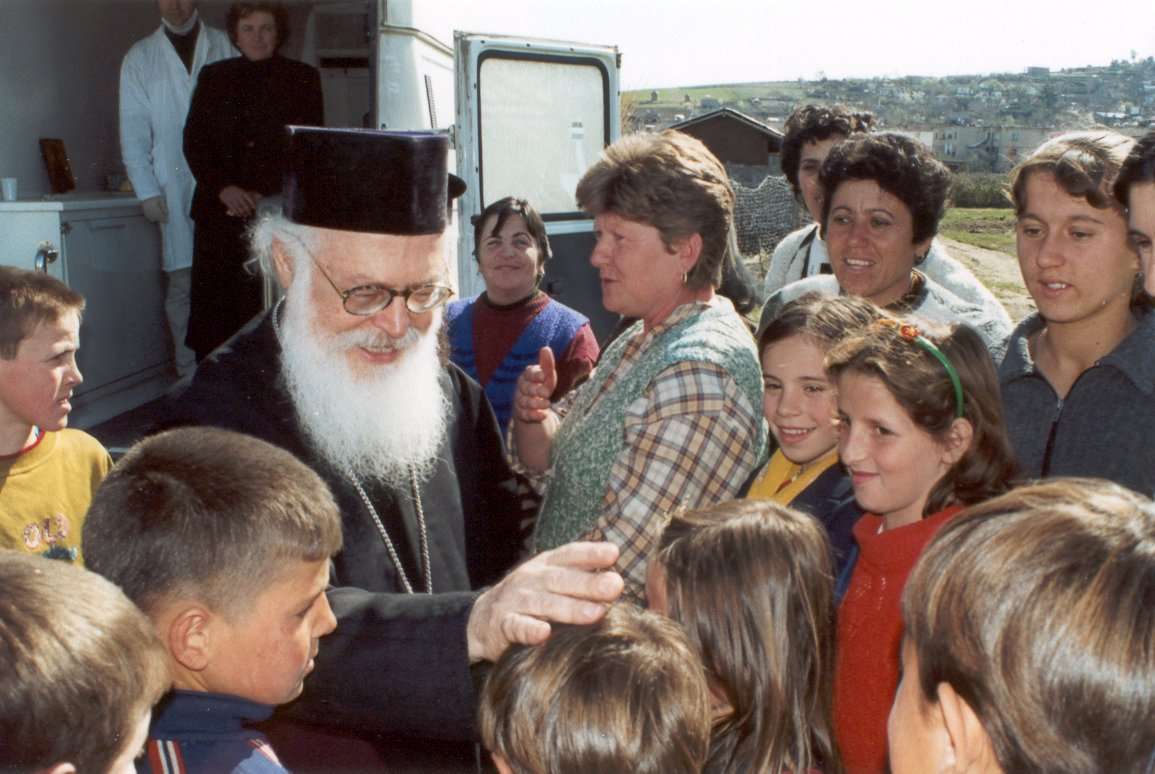
Archbishop Anastasios, the Orthodox primate of Albania who died aged 95 on 25 January, was remembered for his “zealous pastoral service” in restoring his Church.
Jim Forest / flickr | Creative Commons
The Nicaraguan government last week seized a diocesan seminary and diocesan centre. Around half of the 60 seminarians studying at the Diocese of Matagalpa’s San Luis Gonzaga seminary were present when police confiscated the building, while others had not returned from holiday.
One source claimed the seminarians would be transferred to an inter-diocesan seminary in the capital Managua. The authorities also seized La Cartuja, the diocesan centre which previously served as a retreat house and hub for clergy meetings and diocesan activities.
Fr Erick Diaz, an exiled Nicaraguan priest, said the seminary was “the heart of the Church and the diocese”. The appointment of Bishop Rolando Álvarez to Matagalpa in 2011 was followed by a vocation boom followed, with up to 100 men entering the seminary. Diaz described Matagalpa, in central Nicaragua, as “the diocese that had been the most heavily attacked” by President Daniel Ortega’s regime.
Exiled Bishop Álvarez ‘close’ to fellow priests outside Nicaragua
Nicaragua threatens foreign clergy with expulsion in latest clampdown
Bishop José Ignacio Munilla of Orihuela-Alicante attacked the Spanish government for opening an investigation into seven dioceses for purportedly hosting “conversion therapy” events.
Writing on social media, Munilla said “conversion therapy” did not exist, but was an “ideological construct of Marxism” to prevent the Church from offering the homosexually-inclined pastoral accompaniment to help them live out “the virtue of chastity”. He added: “It’s ironic that those who defend the freedom to change sex – including taking hormones or having operations – forbid homosexuals from the freedom to request so-called ‘conversion therapy’.”
Munilla’s stance put him at odds with the Archdiocese of Valencia, which has condemned conversion therapies. La Asociación Española contra las Terapias de Conversión (The Spanish Association against Conversion Therapies) has lodged a legal complaint against seven Spanish dioceses, including Valencia, Madrid, Barcelona, Getafe, Alcalá, Málaga and Sigüenza-Guadalaja for hosting events promoting the therapies, which were outlawed in Spain in 2023.
A bishop condemned nationalist rhetoric that degrades and dehumanises migrants in a public lecture in Cape Verde. Bishop Fernando García Cadiñanos of Mondoñedo-Ferrol, in northern Spain, said migrants make important contributions to their host countries.
Speaking at the Catholic University in Cape Verde (EU Católica) on the theme “International Human Mobility from a Christian Perspective”, he said xenophobic and populist rhetoric in many Western nations, including the US, blamed all local problems on migrants.
“Today, there is a growing nationalist discourse that portrays immigrants as threats to identity, security, and economic welfare,” he said. “This ideology promotes the idea that resources should be reserved exclusively for natives, reviving slogans like ‘America for Americans.”
Bishop Cadiñanos, who serves as president of the Spanish bishops’ sub-commission for Migration and Human Mobility, was in Cape Verde on 15-20 January at the head of a sociocultural and pastoral exchange visit to the Diocese of Santiago. He said nationalism “generates social conflict, fostering feelings of xenophobia and racism tied to aporophobia – hatred of the poor”. Explaining that migrants bring enormous benefits to host communities, the cleric urged a more humane approach to migration.
Vatican backs Spanish app to give migrants accurate information
Our housing system is broken for refugees
The Malian government said it would end subsidies to Catholic schools which cover 80 per cent of teachers’ salaries in the 2025-26 academic year.
Prime Minister Choguel Kokala Maiga said the 1972 agreement under which Catholic education received state funding, although Christians make up just three per cent of the population, had become a financial burden, and emphasised the need for greater accountability in the management of resources.
“We need to know where the subsidies are going, especially given the lack of funding from donors and the exponential growth of schools of all kinds, some of which have been set up with false papers or even by civil servants,” he said.
Maria Lozano of Aid to the Church in Need (ACN) told The Tablet that the decision to freeze subsidies to Catholic schools in Mali was
of “deep concern”. She said it could lead to mass unemployment for the 2,000 teachers working at Mali’s 138 Catholic schools, and disrupt the education of the 40,000 pupils that attend them.
The Rector of the National Missionary Seminary of St Paul in Nigeria argued that Islamic fundamentalism may not be the only reason why kidnappers target Catholic priests. Fr Raymond Aina MSP pointed out that kidnappers believe the Church can therefore afford to pay large ransoms for kidnapped priests.
“Kidnappers may think priests are living flamboyant lives, judging by the cars they see priests driving. This makes them think that if priests are kidnapped, the Church will pay ransom,” he explained to the Catholic outlet ACI Africa. He said kidnapping had become a business in Nigeria, and Catholic clergy were “soft targets”. According to ACN, 11 priests and religious were kidnapped in Nigeria, down from a total of 25 kidnapped in 2023.
The Nigerian Diocese of Warri suspended a priest from ministry after his wedding in the United States. Social media footage showed Fr Okanatotor Oghenerukevwe marrying Dora Chichah on 29 December 2024, at the Streams of Joy Church in Dallas, Texas.
A statement signed by Bishop Anthony Ovayero Ewherido and the diocese’s chancellor Fr Clement Abobo announced the suspension on 16 January, ruling that Oghenerukevwe had “incurred a latae sententiae suspension in accordance with the provisions of Canon 1394 §1”. The diocese said Oghenerukevwe had requested release from all canonical obligations on 30 November, but married without completing the necessary procedure.
Government representatives met Church leaders in the Democratic Republic of Congo to organise an ecumenical service on 9 February to pray for peace in the east of the country.
Mgr Donatien Nshole, the secretary general of the Congolese bishops’ conference, met the Minister of Justice Constant Mutamba Tungunga on 21 January to discuss the initiative for interfaith prayer for the Armed Forces of the Democratic Republic of Congo (FARDC) and the population of the east of the country.
“I told him that it is our mission as a church to pray,” Mgr Nshole said after the meeting. “We are aware of the situation in the east. The security situation, the humanitarian situation is catastrophic, even the lives of our soldiers.” On 27 January, fighters from the M23 rebel group backed by the Rwandan government entered Goma, the capital of North Kivu province and the largest city in the region, claiming control as civilians and FARDC troops fled.
Nshole last week described conditions on a past visit to the region: “Let’s think of all the displaced people, all the families, all the people living in the forest, all the victims, the orphaned children. So they need peace, they need prayer. This would be an opportunity to intensify the prayers we are already making for peace.”
Cafod reports hospital bombing as Church pleads for peace in east DRC
Congolese cardinal demands end to ‘plundering’ of resources
Archbishop José Manuel Imbamba of Saurímo, president of the Bishops’ Conference of Angola and São Tomé and Príncipe (CEAST), praised the presidential pardon granted by Angola’s President João Manuel Gonçalves Lourenço to 51 prisoners.
The pardons included one extended to the son of Jose Eduardo dos Santos, the former president. Jose Filomeno dos Santos was given a prison term of five years for embezzling $500 million during his tenure as the head of Angola’s sovereign wealth fund.
Speaking to Vatican News, Archbishop José Manuel Imbamba, emphasised that the pardons foster reconciliation and inclusion, aligning perfectly with the spirit of the Jubilee and the anniversary of Angola’s independence.
“We are very pleased with this gesture from our Angolan head of state, especially as we are also celebrating the Jubilee of our country’s independence,” Archbishop Imbamba said. He said the this “must signify a turning point for the nation in terms of reconciliation, inclusion, development, fraternity, and the promotion of authentic citizenship among all of us”.
“This gesture [pardon] truly aligns with that aspiration. After all, a jubilee inherently carries the connotation of remission, forgiveness, and the reintegration of those who have strayed back onto the path of truth, justice, and goodness,” he said.
Bishop Frank Nubuasah of Gaborone condemned high incidents of rape and gender-based violence in Botswana and called for Catholic men to lead efforts to address the social challenges facing the country. Speaking at an event launching the Jubilee Year, he responded to police reports of a “culture of violence” with most of the country’s murders resulting from gender-based violence.
“Catholic men should be ashamed of the violence instigated against women and children. On behalf of men, I am sorry,” Bishop Nubuasah said, noting recent statistics that showed a spike during the festive season. Referring to the Jubilee candles distributed to parishes, he said: “This light is not just for our altars, but for every corner of our society. Let it guide us in building a community of hope and compassion.” He encouraged parishes to establish their own platforms to address gender-based violence.
Pope Francis proclaims Year of Jubilee themed around ‘hope’
Jubilee 2025 – a cry for global economic justice
A South African bishop called for the government to formalise the activities of small-scale mining operations after scores of miners were trapped underground for more than two months.
Illegal mining by individuals and small groups (referred to as “artisanal mining”) attracted national attention last November when hundreds of miners failed to emerge from an abandoned gold mine in Stilfontein, in North West Province. Authorities refused to offer any assistance while the miners feared arrest after a rescue effort, resulting in the deaths of scores of the miners before an operation launched in early January.
Bishop Victor Phalana of Klerksdorp said the government had done little to protect the lives of the miners. “The government must regulate artisan mining so that it does not become an illegal activity,” said Bishop Phalana in a Vatican Radio broadcast, adding that some mining companies have ignored regulations and endangered the lives of miners. “Some companies exploit and then abandon the mines without rehabilitating them or caring for the affected communities,” he said.
The United States Supreme Court said it would hear an appeal that could result in permission for the nation’s first publicly-funded religious charter school. The Oklahoma supreme court previously ruled such public funding unconstitutional after the state’s school board voted to approve aid to the Catholic charter school.
Charter schools operate independently of local school boards, but receive public funds, offering parents a choice about where to send their children. Critics argue that such competition is suitable for consumer goods but not children’s education.
Religious schools have long been barred from receiving public monies by several previous Supreme Court rulings dating back to the nineteenth century, but a series of recent court decisions have granted more rights to religious groups, such as not requiring compliance with non-discrimination laws that pertain to non-religious groups on the grounds that enforcing such compliance would involve too much entanglement between the government and the religious groups.
Pope Francis appointed Cardinal George Jacob Koovakad as prefect of the Dicastery for Interreligious Dialogue, succeeding the late Cardinal Miguel Ángel Ayuso Guixot who died in office last year. The announcement on 24 January confirmed that Koovakad, the 51-year-old Syro-Malabar priest responsible for papal visits around the world, would also retain his role as coordinator of apostolic journeys.
“I was born and raised in a multicultural and multireligious society where all religions are respected and harmony is preserved,” he told Vatican News. “The context of the Dicastery for Interreligious Dialogue is entirely new to me. However, I believe that the experience I have gained during papal trips to Mongolia, Kazhakhstan and Bahrain as well as my past diplomatic service in Algeria, South Korea and Iran will greatly help me in carrying out my responsibilities.”
Koovakad was created cardinal at last December’s consistory, becoming the first Indian to receive a red hat before being made a bishop. He has a doctorate in canon law from the Pontifical University of the Holy Cross and has served in the Holy See’s diplomatic service since 2006.
He is the third Indian cardinal appointed as a prefect, after Cardinal Simon Lourdusamy who served as the prefect for the Congregation for the Oriental Churches 1985-91 and Cardinal Ivan Dias who headed the Congregation for the Evangelisation of Peoples 2006-11.
New cardinals reflect Church’s ‘universality’
Pope urges new cardinals to return to essentials
The Pope accepted the resignation of Cardinal Oswald Gracias as Archbishop of Bombay on 25 January and elevated his coadjutor Bishop John Rodrigues to the Indian see. In a statement, Rodrigues described Gracias – who turned 80 on 24 December – as “a giant of a man, and now I have mighty big shoes to fill”. Appointed Archbishop of Bombay in 2006, Gracias has served on the Pope’s Council of Cardinal Advisors since 2013.
Cardinal Claudio Gugerotti, the prefect of the Dicastery for Eastern Churches, visited Syria on 24-29 January, so that “the nation’s Catholics may feel the affection and support of the entire Catholic Church, and in particular of the Bishop of Rome, who continues to pray for them” following the fall of Bashar al-Assad’s regime, according to a Vatican statement.
His delegation was to visit the cathedrals of the various Eastern Catholic Churches represented in the country as well as Orthodox leaders, emphasising that “in the present circumstances, Christian unity is an essential imperative”, the statement said.
A unnamed local source told Aid to the Church in Need that international attention “pressures the former rebels to be more peaceful, and to maintain the positive image they have”. She said Christians ““do not want to define themselves as minorities”, for fear “they might lose their representation in the new constitution and state institutions”, the charity reported.
‘Hope for the future’ for Syria’s Christians after regime meetings
Rebuilding Damascus – the liberation of Syria
Archbishop Anastasios, the Primate of the Orthodox Church of Albania, died in Greece on 25 January after weeks in intensive care. The 95-year-old fell ill at the end of December in Tirana, where he was admitted to hospital, but his condition deteriorated and he was airlifted with a Greek military transport to the Evangelismos Hospital in Athens for an operation, but later died of organ failure.
Anastasios, an ethnic Greek born in Piraeus, was appointed primate by Patriarch Bartholomew of Constantinople in 1992, as Albania emerged from the communist reign of Enver Hoxha. Leaders of neighbouring Orthodox churches expressed their condolences, and the Greek Prime Minister Kyriakos Mitsotakis said that Archbishop Anastasios’ contributions to the Church were “immeasurable” and left “indelible mark not only on our neighbouring country but in every corner of the world where Hellenism thrives”.
In a message to to the Metropolitan John of Korça, Locum Tenens of the Albanian Orthodox Church, Pope Francis remembered Anastasios “zealous pastoral service” and offered “prayers that God our merciful Father may grant him the reward of his labours”.
The Diocese of Bolzano-Bressanone published an inquiry billed as the first independent analysis of clerical abuse in Italy. The Munich-based law firm Westpfahl Spilker Wastl reported there had been nearly 60 cases of clergy abuse in the north-eastern diocese which covers the region of South Tyrol.
A spokesman for the law firm described the study as the first in an Italian diocese “to reconstruct and examine in a completely independent manner the episodes of sexual abuse”. The 631-page report is based on approximately 1,000 files and interviews. It states that from the diocese’s establishment in 1964 until 2023, it was “mostly probable or proven” that 59 people had been subjected to sexual abuse by priests.
A poll found that three-quarters of Italians consider Pope Francis the country’s most trustworthy public figure. The Demopolis National Research Institute reported that 76 per cent of the 3,000 people who took part in a survey in January on the challenges facing the Catholic Church in Italy and the Jubilee of Hope ranked the Pope the most trustworthy public figure. The institute’s director Pietro Vento and his researchers presented the results of the poll to the Pope during an audience at the Vatican.
The Vatican published a document “on the relationship between artificial intelligence and human intelligence” on 28 January, discussing the place of the “wisdom of the heart” in developing “the human-centred use of this technology”.
Sacred Heart shows way in ‘superficial’ age, says Pope in new encyclical
Liz Dodd goes looking online for an AI Jesus
Stay updated — add us as a preferred news source on Google:


Help us keep The Tablet’s voice independent, clear and far-reaching.
Founded in 1840, The Tablet is the leading independent English-language Catholic weekly, celebrated for great writing, astute analysis, brilliant arts and books reviews and trustworthy reporting from correspondents in Britain, Ireland, Rome and across the world.
Independent, high-quality journalism is at the heart of what we do. The Tablet does not have deep pockets and we are not funded by rich donors. If you appreciate our work please consider supporting The Tablet’s Development Fund. It only takes a moment and you can cancel at any time.
- Support with £5 per month
- Support with £10 per month
- Support with other amount.

MOST READ ARTICLES
-
1
Archbishop of Cardiff-Menevia meets with other worldwide Catholic Church leaders to discuss liturgy
-
2
Let there be light
-
3
World Humanitarian Day: aid workers face a ‘crisis of protection’
-
4
Ruling allows French private hospitals limited exemption from assisted suicide
-
5
A tract for our times
-
6
The wisdom of the saints
FROM THE EDITOR'S DESK