News Briefing: Church in the World


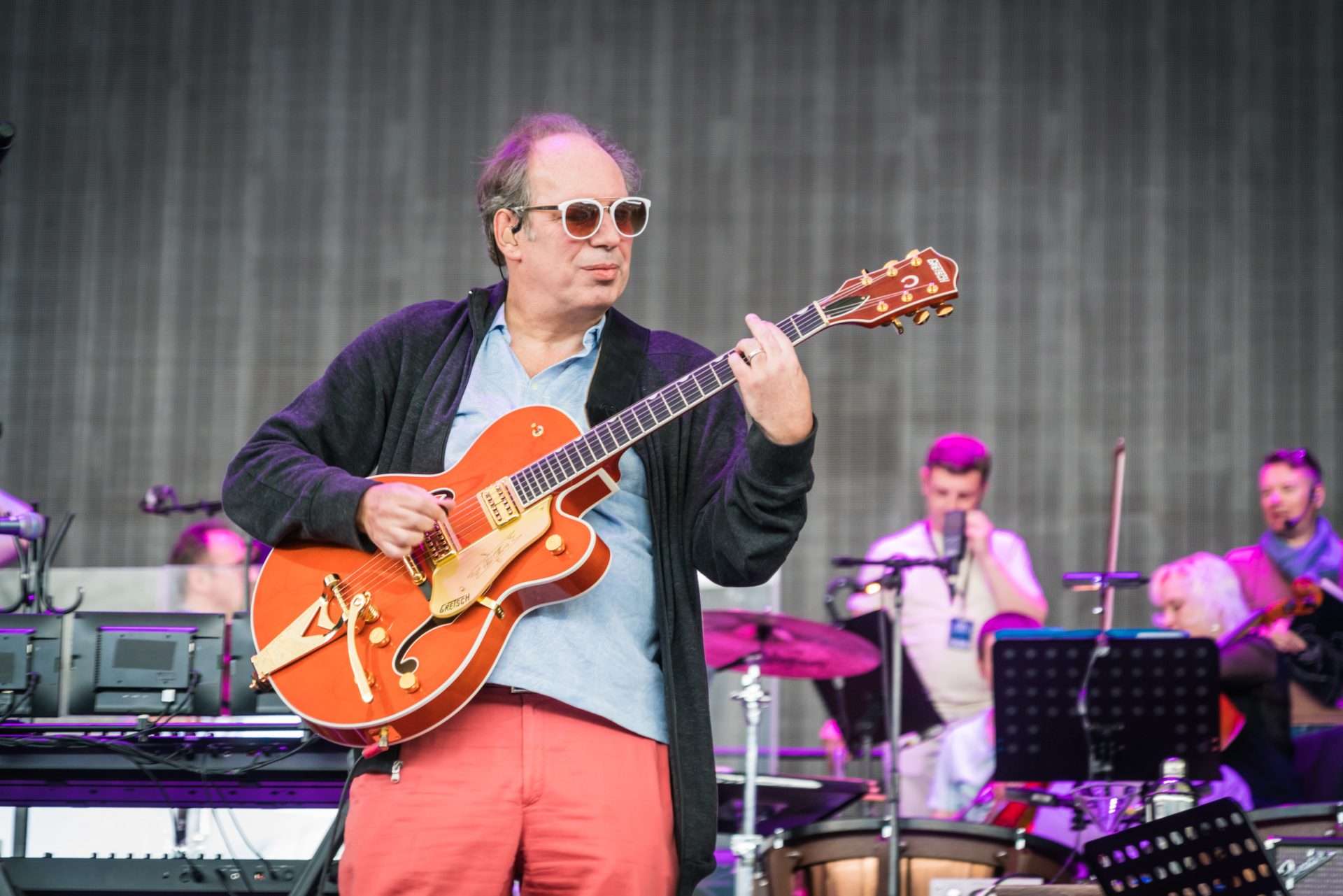
Hans Zimmer, pictured playing in Frankfurt in 2017, who conducted the Vatican’s Concert with the Poor on 7 December.
Curtis Simmons
Pope Francis created 21 new cardinals at a consistory on 7 December, urging them to “walk in the way of Jesus: together, with humility, wonder and joy”. “In spiritual life as in pastoral life, we risk focusing on what is incidental and forgetting what is essential,” he said.
The Pope said their origins, spanning six continents, “express the universality of the Church, which continues to proclaim God’s merciful love to all people on earth”. India’s Prime Minister Narendra Modi said the elevation of George Jacob Koovakad, the Kerala-born Syro-Malabar priest responsible for arranging papal visits, was a cause of “great joy and pride for India”.
The Holy See admitted keeping a dossier on the “Vatican girl”, the 15-year-old daughter of minor official in the papal household who vanished in 1983. The disappearance of Emanuela Orlandi – subject of a four-part 2022 Netflix series – has never been resolved.
The Vatican’s Promoter of Justice Alessandro Diddi said the dossier existed but “the contents were confidential”. Mgr Sergio Pagano, prefect of the Vatican Archives, denied its existence during an interview on Italian television.
Domenico Giani, a former head of the Vatican gendarmerie, said the file was compiled and entrusted to him in 2012 at the request of Archbishop Georg Gänswein, former personal secretary to Pope Benedict XVI. He told an Italian parliamentary commission it was simply an “historical reconstruction” of the Orlandi case but contained no new information. “The Holy See did not undertake any investigative activity,” he said.
Italian police placed a 57-year-old nun under house arrest on suspicion of conveying messages from the mafia to prisoners. They alleged Sr Anna Donelli of the Institute of the Sisters of Charity in Milan acted as an intermediary for the ‘Ndrangheta to inmates in the city’s San Vittore prison. During a wire- tapped phonecall, a gang member said Donelli was “one of ours”, adding, “if you need something inside, she’s available”.
In a statement, police said the Tripodi clan, part of the ‘Ndrangheta, had used “the support of trusted and unsuspected people”, persuading Sr Donelli to take advantage of her “spiritual assignment” which allowed her free access to the prison inmates. Last week, the public prosecutor Francesco Prete said Donelli had carried “orders, directives, moral and material aid to associates, receiving in turn from the prisoners useful information to better plan criminal strategies”.
The German composer and music producer Hans Zimmer called on musicians to use their creativity as a force for justice and peace. “Do something that shakes people awake,” he said.
Zimmer, known for his iconic film scores, urged musicians to take a stand on social justice issues. Speaking ahead of the Vatican’s Concert with the Poor on 7 December, Zimmer said that the event was more than a solace for the poor, but a “rallying cry” to confront challenges of our times. He cited LiveAid in 1985, where musicians inspired action on hunger in Africa. “We need to look the poor in the eye and treat them as human beings,” he said.
Zimmer also said he hoped to see a revival in sacred music. He highlighted that the film industry commissions music at on a large scale. “That is something the Church used to do,” he said, “and we need to find a way to bring that back, to be there for each other and keep music alive”.
Is it time to tear off the Band Aid?
Switzerland’s bishops faced a storm of criticism after electing Bishop Charles Morerod of Lausanne, Geneva and Fribourg president of their conference. He was one of six Swiss prelates reprimanded by the Vatican in October for “not correctly” addressing clerical sexual abuse.
“This election is a disgrace for the Church,” commented the Bern daily Der Bund after the 5 December vote. “Does nothing ever change?” the Neue Zürcher Zeitung asked, while the Lausanne daily 24 Heures said there were “new justifications” for Morerod’s election. The nine-member conference had little choice but to elect the 63-year-old Dominican, who underwent an emergency brain operation last year, because other candidates were either too old or unable to serve.
The Vatican upbraided the six bishops for their inadequate response to allegations of clerical sexual abuse, but did not find grounds for a canonical trial. The bishops’ vague reactions to the reprimand prompted further charges in Switzerland that they were covering-up the Vatican’s findings. Bishop Morerod released the Vatican letter in full, claiming this exonerated him, but more questions remained.
A 2023 study found 1,002 cases of abuse and 510 perpetrators since the 1950s, calling these figures the “tip of the iceberg”. “The Swiss bishops want to fundamentally change the Catholic Church without fundamental changes,” the Neue Zürcher Zeitung concluded.
Catholic bishops in Belarus have ordered clergy to limit their media appearances, as an elderly priest faced a 15-year jail term on unspecified treason charges.
“Clerics and religious must remember they are called to preach Christ’s teaching, not their own opinions and views, especially those that could cause confusion, scandal or division … This includes abstaining from political statements and expressions,” a statement from the bishops’ conference said. “Spiritual and religious persons who speak to the media must show fidelity to the Gospel, appropriate knowledge and competence, prudence and responsibility for the spoken word, concern and love for the truth, respect for others and a sincere search for the common good, so the Church may effectively carry out her mission.”
The order appeared as Fr Henrykh Akalatovich faced trial in Minsk behind closed doors. Akalatovich, a parish rector from Valozyn, was detained in November 2023 for “treason against the state” and later suffered a heart attack and underwent gastric cancer surgery in prison.
Belarusian bishops restrict clergy media role as priest faces trial
A funeral for 12 indigenous Christian youths took place in India’s north-eastern state of Manipur on 5 December, 25 days after they were shot dead in sectarian violence. Their burial had been delayed after the Indigenous Tribal Leaders’ Forum, representing Manipur’s largely Christian Kuki-Zo tribal people, insisted on post-mortem reports. The forum thanked everyone who attended the funeral, saying their presence was a “testament to the love and admiration for martyrs” who died protecting their tribal community.
The 12 were killed during clashes with groups from the state’s Hindu-majority Meitei people. Violence began in Manipur on 3 May 2023 amid Kuki protests against a government decision to grant tribal status to the more numerous Meitei. More than 250 people have died in the violence, which has displaced 60,000 people and led to the destruction of more than 300 Christian places of worship. Roughly 43 per cent of the state’s population belong to tribal groups.
Last month, Archbishop Linus Neli of Imphal, who heads the Catholic Church in Manipur, told Aid to the Church in Need gatherings in Ireland that, conditions there “are very hard” and the Christian community “really needs help”.
Prof Muhammad Yunus, the chief adviser of Bangladesh’s interim government, met with religious leaders in the capital Dhaka on 5 December.
Yunus, a Nobel Peace Prize laureate, spoke with leaders representing Islam, Hinduism, Buddhism, and Christianity in a specially designed dialogue programme. All promised to uphold national unity and harmony amid diplomatic tension between Dhaka and New Delhi over the alleged repression of minorities in the Muslim-majority country. Yunus also met political parties’ representatives and student leaders.
“There is some level of tension amid some provocative media campaign outside Bangladesh on religious repression in Bangladesh,” said Fr Albert Thomas Rozario, parish priest of St Mary’s Cathedral in Dhaka, who joined the programme. “This is a sensitive time,” he added, “and we all need to have unity and patience.” Rozario, a Supreme Court lawyer and chairman of the Bangladesh Christian Lawyers’ Association, said he asked Yunus to meet faith leaders regularly and take initiatives to heal the wounds created by recent political unrest.
The foreign secretaries of Bangladesh and India met in Dhaka on Monday to discuss growing tensions since the fall of former prime minister Sheikh Hasina in August. The Indian government has objected to the alleged targeting of Hindus in Bangladesh, Dhaka’s consular mission in India has been subject to attacks.
Clergy and laity of the Archdiocese of Yangon prayed for peace in Myanmar at a service in Yangon Cathedral on 8 December marking the Feast of the Immaculate Conception.
“In our region, the fury of the civil war is not felt, but the effects of the war are noticeable: the cost of living is very high and there is great poverty,” reported diocesan priest Fr Terence Anthony. “In many other parts of the country, however, the conflict continues and many of our friends and believers cannot even go to church or have been displaced by the war; we are very close to them.” He thanked Pope Francis, “who does not fail to remember us in his prayers” and “does not fail to remind the international community of our difficult situation.”
Since the military seized power nearly three years ago, thousands have been killed in indiscriminate attacks, often targeting civilian homes and infrastructure.
Myanmar’s Christians pray for peace on coup anniversary
South Korean bishops condemn ‘illegitimate’ martial law
President Yoon Suk Yeol declaration of martial law in South Korea on 3 December met sharp criticism from the country’s Catholic bishops, who urged him to take responsibility for what they described as a “procedurally illegitimate” decision.
In a statement on 4 December, the bishops emphasised the importance of safeguarding democracy and called for an explanation and apology from Yoon. “Unless there is an urgent need, the government and administrative procedures of a state should be carried out in a normal manner and be known to the citizens,” they said. “The Catholic Church in Korea actively supports and stands in solidarity with the Korean people to protect our democracy.”
Korea’s National Council of Churches Korea also issued a statement on 4 December, saying the president’s “insistence on declaring martial law and plunging the nation into anxiety is an act that demands public apology and full accountability under the law”.
Pope Francis welcomed members of the Hidden Christians Research Association to the Vatican on 30 November, praising their significant work in preserving the history and legacy of Japan’s hidden Christian sites.
He told members of an association that deals with the protection of the hidden Christian sites of the Nagasaki region that the history of the Japanese people is marked by the “living testimony to the fidelity of so many Japanese Christians who passed on the precious treasure of the faith as a legacy from generation to generation”.
The meeting took place on the eve of the Feast of St Francis Xavier, one of the first missionaries to bring the Gospel to Japan in the sixteenh century. After Christianity was banned in 1620 it ceased to exist publicly. However, many Catholics went underground, becoming hidden Christians without priests or churches.
Caritas Aotearoa and Pax Christi Aotearoa joined other Christian organisations to oppose the Treaty Principles Bill proposed last month in the New Zealand parliament. They said it would undermine years of work to rebuild the treaty relationship between the Crown and Māori indigenous.
Caritas said the bill “severely distorts the text of Te Tiriti and its principles”. Pax Christi said the Crown’s process to develop the bill “breached the principle of partnership, the Crown’s good faith obligations, and the Crown’s duty actively to protect Maori rights and interests.”
The 1840 Treaty of Waitangi or Te Tiriti o Waitangi covers land and cultural rights and Māori relations with ruling authorities, among other subjects. Opponents to the new bill say it would unilaterally change the meaning of Te Tiriti and its effect in law, without the agreement of Māori as Treaty partners. Māori leaders have led public opposition to the proposal, supported by many faith leaders.
Brazilian federal prosecutors investigating the attack on the presidential palace, Congress and the Supreme Court on 8 January 2023 have charged a Catholic priest with involvement in what is regarded as an attempted coup d’état.
Fr José Eduardo de Oliveira e Silva from the São Paulo district of Osasco was accused of helping to draft a document justifying the attempted coup by supporters of Jair Bolsonaro, the former president who lost the 2022 election. Fr de Oliveira e Silva was also said to have drafted a sort of “coup prayer” calling on Catholics and Protestants to pray for a government minister and 16 generals “that God may give them courage to save Brazil, help them to overcome cowardice and encourage them to act with an historic conscience and not just like civil servants in uniform”.
The priest’s lawyers said that the prosecutors’ claims were based on insinuations rather than hard evidence.
Brazilian priest charged with support for coup attempt
Archbishop José Luis Escobar Alas of San Salvador criticised President Nayib Bukele for lifting El Salvador’s ban on gold mining. “God has placed a giant treasure under our feet,” Bukele wrote on social media. “Exploiting this wealth could transform El Salvador … And all this with modern and sustainable mining, taking care of our environment.”
The archbishop decried the move as the cause of “grave, irrevocable damage to people’s lives and health … and that doesn’t have a price.” He said mining “without exception” damaged the environment and accused multi-national mining companies in Central America of “plunder”. He continued: “They take everything. What they have left to these countries is one percent of what they declare.” In 2017, metal mining was banned to avoid the contamination of the water supply of El Salvador.
The Catholic bishops of New Mexico issued a statement opposing a policy of mass deportation of unauthorised immigrants from the United States that President-elect Donald Trump has promised to support.
It “will not fix the broken immigration system but, rather, create chaos, family separation, and the traumatisation of children,” said Archbishop John Wester of Santa Fe, Bishop Peter Baldacchino of Las Cruces, and Bishop James Wall of Gallup last week.
The bishops said they “stand ready to work with the new administration on achieving immigration policies which are just, humane, and reflect the values of America.” They agreed that the immigration system “is broken and is in need of reform”, but policies “that ignore the human rights of those who come to the border and undermine human dignity are not the way to fix things”.
The US Supreme Court heard oral arguments in a case challenging a Tennessee law that bans puberty blockers and other irreversible medical treatments for minors, the first case involving transgender treatment to reach the court. Six justices on the court’s conservative wing expressed scepticism about the wisdom of overturning the law.
The Biden administration was among those challenging the law, arguing that such a ban violates the constitutional guarantee of equal protection under the law. The US Conference of Catholic Bishops (USCCB) filed an amicus curiae brief, urging the court to uphold to the Tennessee law. It argued that previous court decisions that tried to balance various interests had failed to adequately protect the Catholic Church.
US bishops back Tennessee puberty-blockers ban before Supreme Court
Trump, Catholicism and the US elections
The Catholic Health Association (CHA) joined others in the health care industry to express shock at the murder of the UnitedHealthcare chief executive Brian Thompson, who was shot dead in midtown Manhattan on 4 December.
“We offer our prayers for healing and consolation for the loved ones of Mr. Thompson,” said Sr Mary Haddad, president of the CHA. “We also extend our sympathy and condolences to the UnitedHealthcare community during this deeply troubling time. As a Catholic health ministry, we affirm the sacredness of life and call on everyone to join us in condemning this and other senseless acts of violence.”
Surveillance footage showed a lone gunman shooting Thompson multiple times at point blank range. After a largescale manhunt, police detained a man in Pennsylvania. Cartridge casings from the bullets found at the scene were labelled “deny”, “defend” and “depose” – a reference to alleged health insurance company legal tactics to avoid paying on large claims – which led the authorities to conclude it was an assassination.
The Symposium of Episcopal Conferences of Africa and Madagascar (SECAM) appealed for peace in the troubled Great Lakes region, where civil war and militia attacks in several countries have claimed thousands of lives. Burundi, Rwanda and the Democratic Republic of Congo were among the countries where persistent but unacknowledged violence over recent months caused deaths and displacement.
“Countries across Africa are at war, and the continent faces security crises. This is especially true in the Great Lakes Region, where conflicts have frustrated cordial diplomatic relations between Rwanda, the Democratic Republic of Congo and Burundi,’ said Cardinal Fridolin Ambongo Besungu of Kinshasa, the SECAM president. “Our wish as the Church in Africa is that our leaders be able to sit together as brothers and sisters to sort out any disagreements,” he said.
Church backs ceasefire between DR Congo and Rwanda
Beatified martyrs are ‘seeds of peace’ for Congo
Congolese bishops condemn ‘attacks on human dignity’ after prison massacre
Bishop Barthélemy Yaouda Hourgo of Yagoua, in Cameroon’s Far North Region, mourned the suffering caused by devastating floods.
Heavy rainfall between July and October led to rising water levels in major rivers, including the Chari River, causing severe flooding that had affected more than 400,000 people as of 11 November 2024, according to Unicef. The UN agency said some 262 schools were flooded, 65 health centres affected, 56,084 houses damaged or destroyed, 5,510 heads of livestock lost, and 85,253 hectares of agricultural land flooded.
In his Advent pastoral letter published on November 27, Bishop Hourgo said the floods had caused “extensive material damage and suffering to many families”, including his diocese. “This year, our diocese has been deeply affected by devastating floods that have caused extensive material damage and suffering to many families. I am thinking of lives turned upside down, homes destroyed and livelihoods lost,” he said.
The bishop also called for prayers to end inter-communal clashes over water resources. “In these difficult times, it’s essential to remember that God is always with us, even in the darkest trials. He is our refuge and our strength, and we must unite in prayer and fraternal action to overcome these challenges together,” Hourgo said.
Archbishop Liborius Nashenda of Windhoek praised Namibia’s peaceful election last week, despite allegations of voting irregularities at the polls.
“We thank the Namibian people for exercising their democratic right in a peaceful and orderly manner,” he said, praising the people’s commitment to exercise their democratic right although other polls in the region have been marred by political violence. “In the same vein, I commend the registered voters for coming out in big numbers despite the heat and standing in long queues. I hereby call upon the Namibians to continue maintaining the spirit of unity and political maturity,” the archbishop said in a statement on 6 December.
Netumbo Nandi-Ndaitwah’s victory made her Namibia’s first female president, extending the rule of the South West Africa People’s Organisation which has been power since 1991. “Our prayer is that we may continue nurturing our democracy, national reconciliation and nation-building by encouraging each one to contribute through their gifts towards this endeavour,” said Archbishop Nashenda.
A bishop has challenged members of Malawi’s parliament to take politics as a vocation and promote human dignity, following deaths in political unrest blamed on inflammatory rhetoric.
“Catholic Social Teaching is pro-poor and it provides vision for a more just society, protects the dignity of every person and enables integral human development,” said Bishop Alfred Mateyu Chaima of Zomba during a meeting with parliamentarians. “As bishops, we will always be happy if you do the right things no matter what political party you belong to,” he said.
“If you do this, you will live your calling according to God’s will. As Jesus fed a lot of people with four loaves of bread, the resources we have as a country should be used to benefit all the people of Malawi.”
Stay updated — add us as a preferred news source on Google:


Help us keep The Tablet’s voice independent, clear and far-reaching.
Founded in 1840, The Tablet is the leading independent English-language Catholic weekly, celebrated for great writing, astute analysis, brilliant arts and books reviews and trustworthy reporting from correspondents in Britain, Ireland, Rome and across the world.
Independent, high-quality journalism is at the heart of what we do. The Tablet does not have deep pockets and we are not funded by rich donors. If you appreciate our work please consider supporting The Tablet’s Development Fund. It only takes a moment and you can cancel at any time.
- Support with £5 per month
- Support with £10 per month
- Support with other amount.

MOST READ ARTICLES
-
1
Pope returns to Vatican after hospital discharge
-
2
Diverse schools that are 100 per cent Catholic
-
3
Under endless skies
-
4
Battling confession fatigue
-
5
Nigerian bishop scorns suggestion of running in presidential election
-
6
Schismatic Spanish nuns strip contents of convent before eviction
FROM THE EDITOR'S DESK


