Religious leaders demand ‘radical’ action at COP29


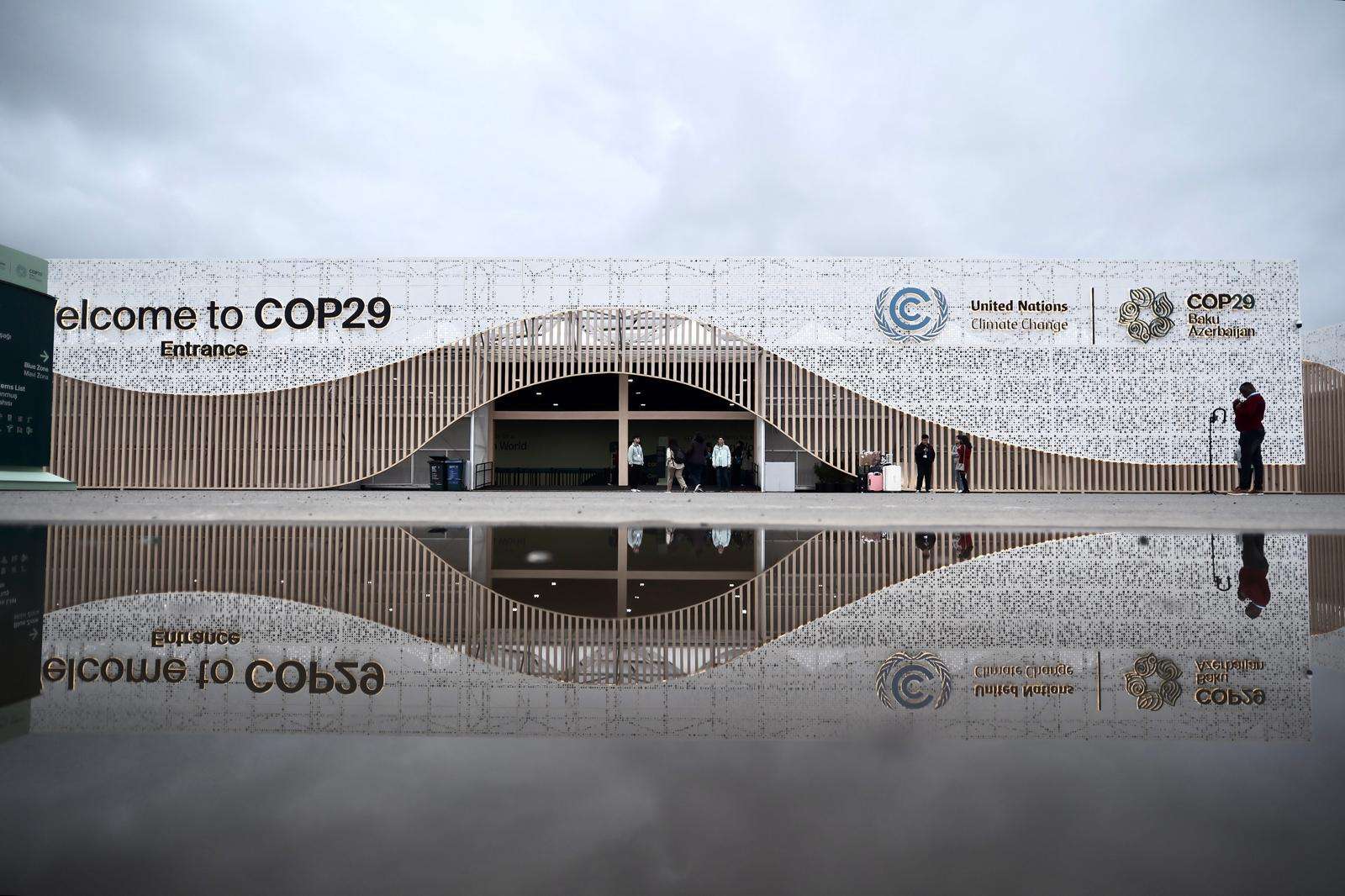
The venue for the 29th Conference of Parties (COP29) to the United Nations Framework Convention on Climate Change in Baku.
International Renewable Energy Agency
Cardinal Gugerotti emphasised the importance of funding at the “finance COP”, saying it was “important to keep the tension high”.
The need for a “radical” response to the climate crisis makes it essential that religions participate, a senior Vatican official said ahead of the COP29 summit in Baku.
Cardinal Claudio Gugerotti, the prefect of the Dicastery for Eastern Churches, said the “radical proposition” religions make was key to motivating a global response because the overwhelming majority of people have some sort of religious adherence.
“In Europe we are not the world,” he told The Tablet, criticising the “very colonial” approach of western powers to the climate crisis.
Gugerotti was speaking during a meeting of religious leaders in Azerbaijan’s capital ahead of the 29th Conference of Parties (COP29) to the United Nations Framework Convention on Climate Change, which opened on 11 November. He noted the importance of funding at what some dubbed the “finance COP”, saying it was “important to keep the tension high”.
The leaders meeting on 5-6 November under the slogan “World Religions for a Green Planet” issued a statement emphasising their common commitment to “the sanctity of human life and nature” and calling for “an inclusive process in combatting climate change”.
Bishop Julio Murray of Panama, the Anglican primate for Central America, had earlier addressed the summit on the urgency of a financial settlement for countries facing the worst effects of climate change. “It’s nice to say ‘thank you’,” he told The Tablet, “but I was hoping for more.”
Murray said COP29 needed to fund mitigation for these countries, through a system of grants rather than loans.
On Sunday, Pope Francis urged world leaders meeting at COP29 this week to “give an effective contribution” to protect the environment.
A significant religious presence at the summit included a “Faith Pavilion”, bringing together a coalition representing 11 different religions. The International Cooperation for Development Solidarity (CIDSE), an umbrella platform of Catholic social justice organisations, sent a delegation including representatives of Cafod, Sciaf and Trócaire, as well as the Maryknoll Office for Global Concerns and Germany’s Misereor agency.
However, religious leaders and human rights groups also criticised Azerbaijan’s government, accusing it of holding political prisoners and hostages from conflicts with Armenia in cruel conditions.
The head of the Armenian Apostolic Church, Catholicos Garegin II, asked churches to “unite in a special day of prayer for all forcibly displaced suffering people” on 10 November, particularly those affected by fighting over Nagorno-Karabakh. Christian Solidarity International said that more than 100,000 Armenian Christians had been forced out of the region.
COP29’s organisers faced further controversy ahead of its opening when the conference’s president Mukhtar Babayev, Azerbaijan’s environment minister, said “the onus cannot fall entirely on government purses” to fund climate mitigation and that businesses should invest in a low-carbon economy. Mariana Paoli of Christian Aid responded that this would lead to more loans, exacerbating the Debt Crisis for poor countries.
Jesuits petition government for climate action
Re-greening Africa – driving positive change on the continent
Churches back measures to protect the environment
Separately, the conference’s chief executive Elnur Soltanov was recorded apparently offering to facilitate oil and gas deals for sponsors.
On 12 November, the ecumenical group Operation Noah made its latest Global Divestment Announcement, listing 27 religious institutions that had withdrawn investments from fossil fuel companies, including nine Catholic religious orders and seven Italian and two French dioceses.
James Buchanan, Climate Finance Campaign Manager at the Laudato Si’ Movement, told The Tablet this was “a powerful and prophetic step”.
They joined more than 500 other institutions to have done so, including the British, Canadian, Australian and Euro-Mediterranean provinces of the Society of Jesus and the National Investing Bodies of the Church of England.
The Faith Pavilion was scheduled to host over 40 discussion sessions on the integration of spirituality and ethics into climate action, and schemes such as faith-inspired eco-villages, innovative climate financing, and intergenerational dialogue.
Christian groups worldwide planned marches, pilgrimages and petitions for climate justice organised over the12 days of the conference.
Bishop John Arnold of Salford, the Catholic bishops’ conference lead on the environment, and the Anglican Bishop of Norwich Graham Usher wrote to the UK government on 8 November, urging ministers to tax fossil fuel companies to support countries most affected by climate change and calling for justice and sustainable finance solutions.
They emphasised the urgency of grants over loans and encouraged the government to tax high-polluting activities by wealthy corporations and individuals.
The faith lobby for climate justice prepares for COP29
How this Catholic charity is helping to feed the hungry in the face of the ravages of climate change
Christian Climate Action held a protest the same day outside the Foreign and Commonwealth Development Office in Whitehall, urging the UK government to take a leading role at COP29 and advocate for increased funding. They brought a tower of boxes showing that food, livelihoods, health, peace, dignity, and childhood depend upon climate stability.
In Scotland, Archbishop William Nolan of Glasgow was to say a Mass for the COP29 Climate Summit on 14 November in St Andrew’s Cathedral.
Christian Aid helped organise an interfaith service and silent vigil in Edinburgh to mark the COP29 Global Day of Action on 16 November. Participants will then gather afterwards outside the Scottish Parliament for a silent vigil to remember climate victims.
Jesuit Missions produced an Ignatian Global Statement reinforcing its climate justice commitments and setting out three crucial demands for COP29: an effective Loss and Damage Fund, debt cancellation for climate investment, and a just energy transition.
Stay updated — add us as a preferred news source on Google:


Help us keep The Tablet’s voice independent, clear and far-reaching.
Founded in 1840, The Tablet is the leading independent English-language Catholic weekly, celebrated for great writing, astute analysis, brilliant arts and books reviews and trustworthy reporting from correspondents in Britain, Ireland, Rome and across the world.
Independent, high-quality journalism is at the heart of what we do. The Tablet does not have deep pockets and we are not funded by rich donors. If you appreciate our work please consider supporting The Tablet’s Development Fund. It only takes a moment and you can cancel at any time.
- Support with £5 per month
- Support with £10 per month
- Support with other amount.

MOST READ ARTICLES
-
1
Archbishop of Cardiff-Menevia meets with other worldwide Catholic Church leaders to discuss liturgy
-
2
Let there be light
-
3
World Humanitarian Day: aid workers face a ‘crisis of protection’
-
4
Ruling allows French private hospitals limited exemption from assisted suicide
-
5
A tract for our times
-
6
The wisdom of the saints
FROM THE EDITOR'S DESK